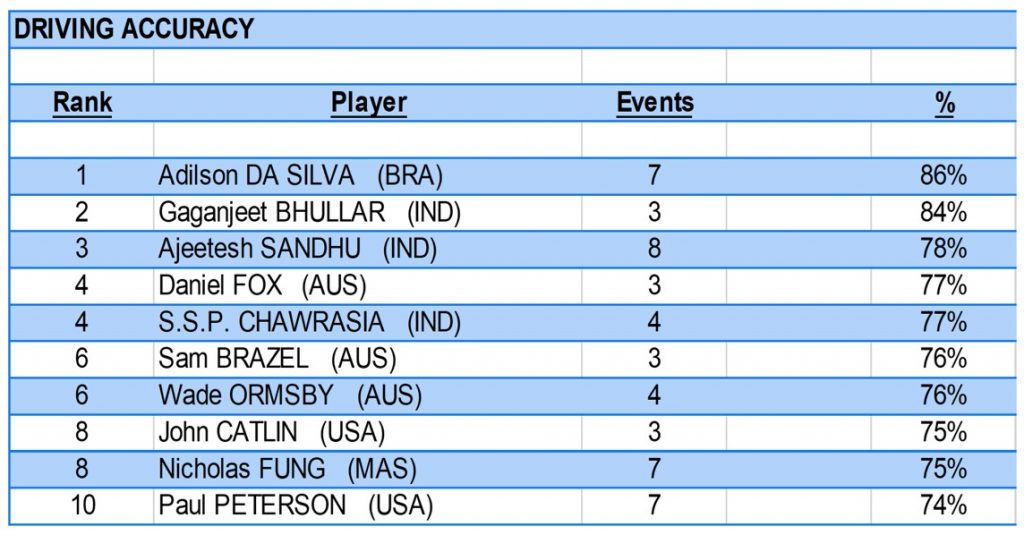
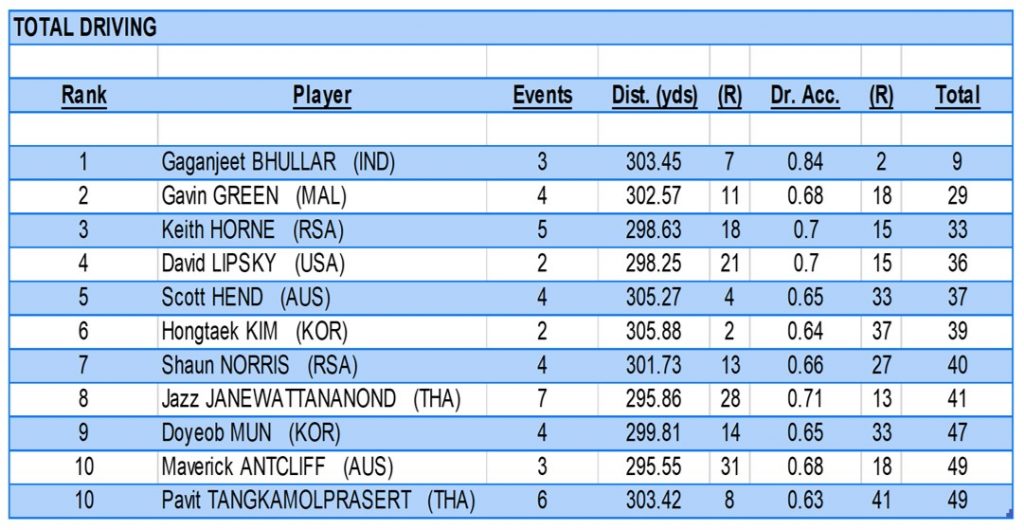
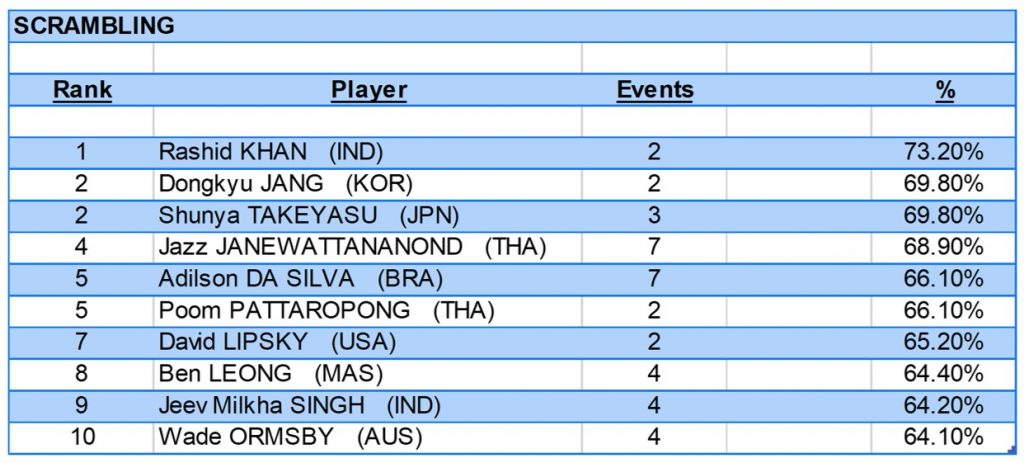
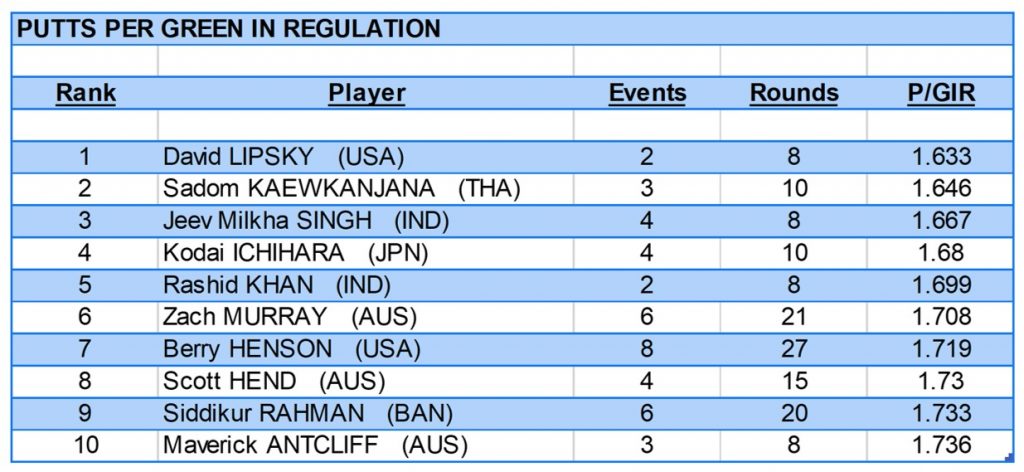
By V. Krishnaswamy
Swamy is one of India’s leading sports writers, who has covered over 20 Majors and 250 international golf tournaments.
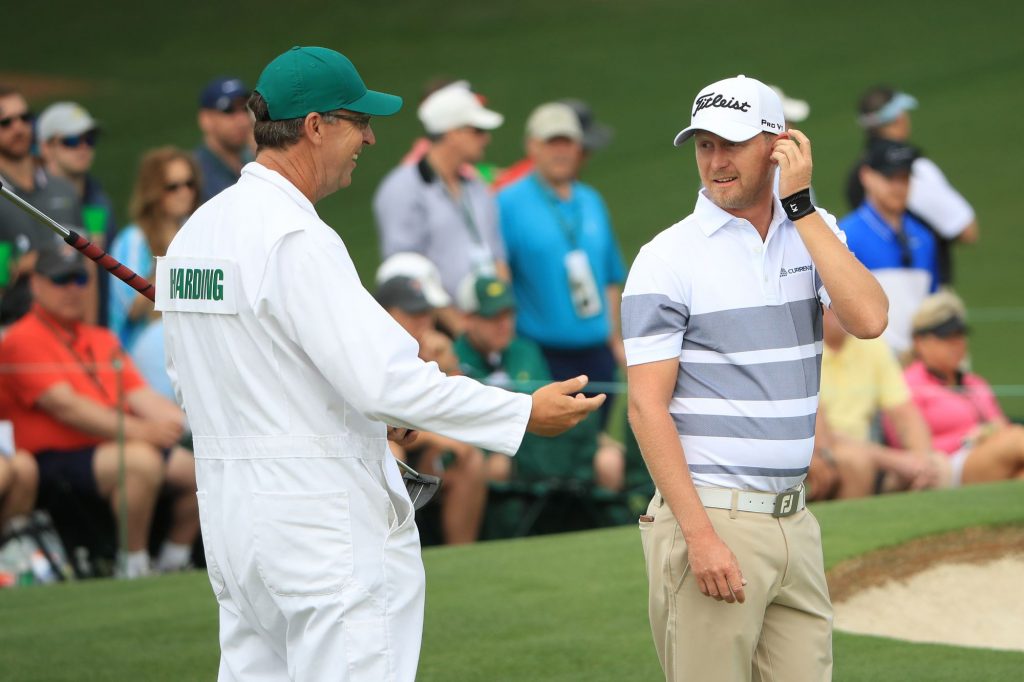
Augusta, April 15: Justin Harding needed a birdie on the 18th like none before. This final birdie was to get a recall to the Masters 2020. Harding had bogeyed the 18th the first two days and was happy to have parred it on the third. But now on the final day, he needed something more from it. Faced with a 22-foot putt on the undulating final green, Harding, who putted like a dream all week did just that. He holed it for an even par 72 and his eight-under-par 280 comprising 69-69-70-72 placed him tied-12th and ensuring an early ticket to The Masters in 2020. The 72 also ensured that he was par or better all week.
It will also boost his chances for the Presidents Cup, where he is already seventh in the standings. The only player eligible for Presidents Cup’s International Team finishing ahead of him was Jason Day in tied-fifth.
While Harding was securing his return ticket to Augusta, Tiger Woods re-affirmed his status as one of the all-time greats with a comeback that would be talked about for generations.
Fourteen years after fourth Green Jacket, he added a fifth one, and 11 years after his 14th Major, he added a 15th. In both cases he came closer to Jack Nicklaus’ Everest-like records of six Green Jackets and 18 Majors. It was also his 81st PGA Tour win, which now leaves him just one behind Sam Snead’s mark of 82.
Coming back to Harding, he said, “It was a relief to finally get a birdie on 18th and it is nice to book a return to the Masters. I have learnt a lot, but on this course it is never easy.”
Harding was the best of the 17 debutants at this year’s edition and was also among the top putters in the event.
Harding birdied the first, but bogeyed the second and fourth. He birdied the sixth, only to bogey the seventh and turned in one-over. He bogeyed the tenth at which point a finish in Top-12 looked unlikely. But birdies 12th and 13th raised hopes only to see them fall with a bogey on 15th. A final birdie on the 18th saw him sneak into tied-12th alongside Bubba Watson, Justin Thomas, Matt Kuchar and Ian Poulter.
The whole of 2018 and thus far in 2019, Harding took an arduous route and made it to the Masters in the nick of time by making the World’s Top-50 with barely two weeks left. Regardless of where he is in rankings next year at this time, he will earn a recall to the Augusta National.
This year his Carol, mother, and Stafford, father, were both there as were some friends.
Coming in as an unknown player Harding held a lot of attention. He even held a share of the lead one time and he was tied-sixth at the end of the first and second day and then tied-seventh at the end of 54 holes. On the final day, he five birdies and five bogeys. One more shot better and he would have been inside Top-10 on his debut at the Masters.
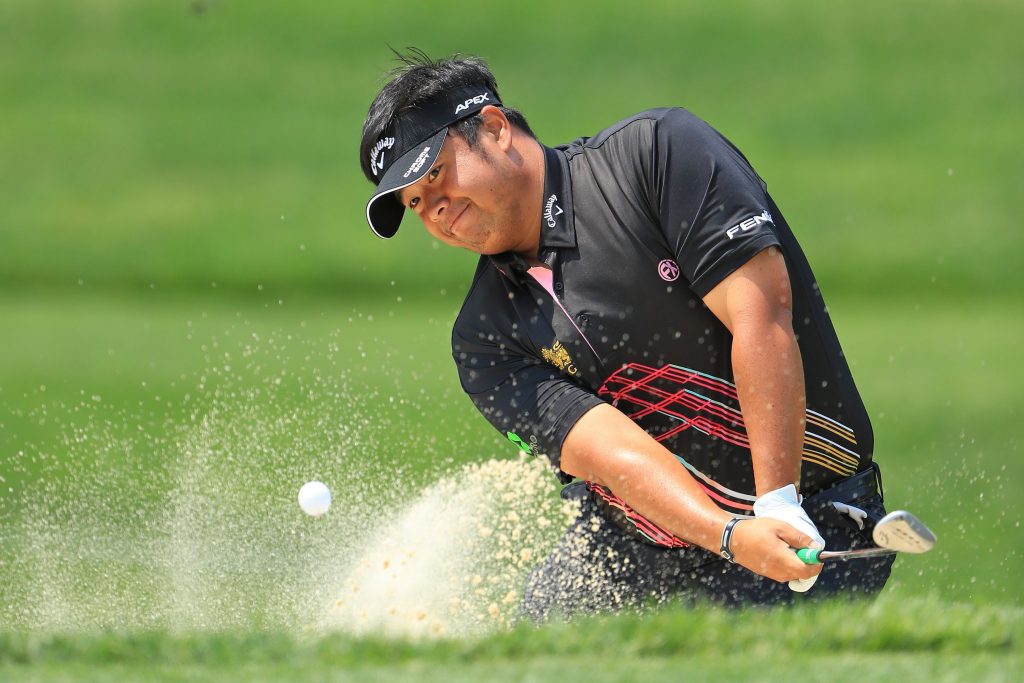
Kiradech Aphinbarnrat, making his third trip to the Masters started the week with a superb 69, the same as Harding, but thereafter struggled at times with 72-75-73 on the next three days. On Sunday, starting from the back nine he was four-under with birdies on 14th, 15th, 16th and 18th, but on the second nine he bogeyed the third and had a nightmarish finish with bogey-double bogey-bogey stretch between sixth and eighth holes to end up with 73.
He finished at one-over-par 289 in tied-49th place and will need to stay in Top-50 of the world to get a start again next year.
By. V. Krishnaswamy in Augusta National.
Swamy is one of India’s leading sports writers, who has covered over 20 Majors and 250 international golf tournaments.
Augusta, April 13: There may be no Indians in the field, but the winner of the Par-3 contest, Matt Wallace, and one of the six amateurs in the field, Devon Bling, have an Indian connection.
Masters debutant Matt Wallace of England, the winner of Par-3 contest, began his rise from a distant 151st on World Rankings to his current 36th with a win in the Hero Indian Open 13 months ago.
Wallace, who won India’s National Open went on to, made it to the Masters as he entered the Top-50 of the world comfortably.
His rise in rankings also meant he qualified for the World Golf Championships Matchplay and could not defend his title in India.
He did tweet a message wishing the tournament luck.
Wallace’s win at Par-3 came on the third play-off hole against 1988 Masters champion, Sandy Lyle, who also won the Par-3 in 1997 and 1998. Wallace’s effort included an ace which was the 100th in Par-3 contests since its inception in 1960.
It is said the winner of Par-3 is jinxed and no one has won Par-3 and the Green Jacket in the same year, though 11 players have won the two but in separate years.
Wallace with his girlfriend, Chelsea on the bag, totaled 23-under, as did Lyle, while three players carded 22-under each and one of them was Devon Bling.
Wallace did have a great start, shooting 75.
Amateur Devon, an Indian American, who holds big promise
Devon’s father Nick, an Indian by birth moved to the US in 1978 and met Sara Bling, a London-born physical therapist. Nick and Sara married in 1990.
Devon, 19, grew up in Ridgecrest, California and took to golf early. His love for the sport was nurtured by his mother, Sara, who took him around, while father travelled for his job.
Devon finished runner-up in US Amateurs in 2018 and earned an invite to the Masters, playing where was both his and his mother’s dream.
Devon’s mother Sara was instrumental in the development of his golf. But tragedy struck the family, when Sara died suddenly of a stroke in 2013. Devon has since played and dedicated his golf to his mother. Devon has taken on Sara’s second name.
Devon, who also had an ace on seventh holes, was Tied-third alongside two two-time Major winner, Bubba Watson and Martin Kaymer. Bubba won both his Majors at Augusta.
A delighted Devon said, “I wouldn’t have wanted it any other way. First Masters, first Par 3, hit a great shot, it went in, and, yeah, that’s the best thing that’s ever happened in the world.” Devon missed the last par putt to stay at 5-under and a share of the lead, and ended in a tie for third.
In the main event, Devon began with a 74.
Four of the seven Asians at Masters are Japanese

The field of 87 has six amateurs and 17 first-timers. It has seven Asians, of which four are Japanese including amateur Takumi Kanaya, who won the Asia-Pacific Amateurs last September to earn an invite to the Masters. The Japanese pros in the field are Hideki Matsuyama, Satoshi Kodaira and Shugo Imahira.
Other than the Americans, who make up for most of the field, there are nine Englishmen, six South Africans, four each from Spain, Japan and Australia. Argentina, Canada, Germany and Sweden have two each, while 11 other countries have one player each.
Golden Bear congratulates, wishes Conners on win and Masters
No one could have got a better man to wish him as he went for the tee off on Thursday. Corey Conners, who was the last man into the field by winning the Valera Texas Open, for which he Monday-qualified.
Corey was in the first group in the morning session on Thursday, who went off soon after the ceremonial tee-off by the legendary Jack Nicklaus and Gary Player. Corey got to meet Nicklaus.
Conners revealed, “He just congratulated me on the win, that felt pretty special. Never thought in a million years that Jack Nicklaus would know who I am and it just felt pretty cool. And I watched him and Mr. Player tee off, so it was pretty cool.”
Stenson back with his old caddie, but probably only for Masters
Henrik Stenson is back to his former caddie, fellow Swede, Fanny Sunesson, at least for this week. They were together at Arnold Palmer Invitational, too, though Stenson had another caddie for WGC-Matchplay.
Stenson split up with his former caddie Gareth Lord last November and Lord teamed with Justin Rose for a few events while his regular caddie Mark ‘Fooch’ Fulcher recovered from heart surgery.
Stenson and Fanny worked together from 2007 to 2011 before Sunesson retired. She had formerly caddied for Nick Faldo including during two of his three Masters titles.
Though Stenson does not seem to have any regular caddie right now, it is unlikely Sunesson will continue as she has retired from full time work.
Ernie’s nephew catches the eye
The six-strong contingent from South Africa has no less than Major winners – Louis Oosthuizen, Charl Schawartzel and Trevor Immelman, but of the other three, young Jovan Rebula, has been talked about a lot. Rebula is the nephew of four-time Major winner, Ernie Els, and won the 2018 British Amateur, which is how he made it to the Masters.
The other two South Africans are Branden Grace and Justin Harding.
Rebula shot 73 on the first day.
Fragile Jason Day hangs in
Jason Day reportedly injured his back while picking up his daughter before the first round. After an initial scare he managed to hang in and play. He shot 70, but needed on-course treatment and is continuing to play and moving up.
Ends.
By. V. Krishnaswamy
Swamy is one of India’s leading sports writers, who has covered over 20 Majors and 250 international golf tournaments. And if he were to answer the divine call, he will be the first to jump on the plane to Augusta National, which is where he is this week.
Augusta, April 12: It has literally been a journey from Z (Zambia) to A (Augusta) for Justin Harding over the past year. This week last year, the 31-year-old Harding was at home and getting ready to play the Zanaco Masters, an event on the Sunshine Tour in Zambia. He missed the cut.
Twelve months and 52 weeks on, he is playing at Augusta National. He was the clubhouse leader when he finished his round, but was later overtaken by Brooks Koepka and Bryson DeChambeau, who each shot 66.
In the period since the start of 2018 he has played 38 tournaments spread over 22 countries and made his way through into World’s Top-50 with five wins, two on Sunshine Tour in South Africa, two on Asian Tour and one on European Tour besides a whole lot of other Top-10s. In the process he climbed more 650 places on World Rankings from 712 to his current 49th. “Most of the tournaments I have play on have been new to me,” said Harding.
For Harding oldest of the 17 debutants this year, playing the Masters was the furthest from his mind as he watched it on TV last year.
A win in Qatar Masters and a second place in Kenya Open, both on the European Tour, moved him inside Top-50 to 48th place just in time before the cut-off for Masters. He was in.
When asked what was the reason for his success over the last 15 months, Harding said, “Consistency. Becoming a little better mentally. No longer really going through the highs and lows and emotional roller coaster, so to speak. But that also comes in not really playing the aggressive mindset game that I was in the past. I’m hitting three‑woods off tees a little more often now, laying back on drivable par‑fours, just trying to get a little bit smarter on the golf course, making less mistakes and hoping a couple birdies come.”
About his practice here at Augusta, Harding said, “I did nine, nine and nine. We, I had a terrible front nine on Tuesday and I decided to try it again on Wednesday morning and it was a bit better and I actually negotiated it quite nicely this morning. But I didn’t really, I didn’t want to overdo it. Everyone sometimes kinds of comes to Augusta and tries to play as many rounds as they can. I kind of wanted to stick to the same sort of game plan and setup that I normally have every other week.
On his closing bogey, Harding admitted, “So I would love to have got into the clubhouse at four‑under par, but I was actually trying to give myself another birdie chance, sometimes it doesn’t quite happen. It’s all right. We got a lot of golf left to play, I’ll be all right.”
Asked if some of the South African stars of the past had given any advice, Harding said, “I haven’t spoken to Gary (Player) yet. I spoke to Ernie (Els) and chatted to him a little bit about the back nine when I played with him in San Antonio last week. And then obviously I had practice rounds with (Branden) Grace and (Charl) Schwartzel and (Louis) Oosthuizen and Jovan Rebula. Both him (Rebula) and I were just trying to pick each other, pick the big boys’ brains and it’s just helpful.
His mother, Carol and father, Stafford, are both here in Augusta. His father got his visa in the nick of time and was glad to be here to see Harding playing.
By. V. Krishnaswamy
Swamy is one of India’s leading sports writers, who has covered over 20 Majors and 250 international golf tournaments. And if he were to answer the divine call, he will be the first to jump on the plane to Augusta National, which is where he is this week.
“If God were now to decide that I could go to only one golf tournament a year – I would choose the Masters.”
Attending a Masters tournament was never really on my bucket list when I turned down a Management programme to become a sports journalist back in 1982.
Golf was a sport that hardly got a mention in Indian newspaper sports pages and it was only the final day report/ scores that made prominent headlines (meaning double columns or more) and that, too, only occasionally.
Golf names that evoked occasional conversations were still Jack Nicklaus, Arnold Palmer, Gary Player and Greg Norman.
The first time Masters really came into a conversation in a newsroom in my presence was in 1983 and that was my first full year as a sports journalist.
One of my senior colleagues in the Sports Department of the Times of India, while appreciating Seve Ballesteros’ 1983 win at Augusta, remarked, “He (Seve) started out as a caddie in golf and look where he is now.”
In India, pro golf was still a sport played predominantly by players with caddie backgrounds.
Those days, as now, cricket ruled India, but I was obsessed by athletics and passionate about chess – PT Usha was the emerging athletics star and the future World chess champion Vishy Anand was yet to turn up on the horizon.
Covering an Olympic Games and/ or World Chess Championship was my ultimate dream. I managed both.
Over the years, Usha became a friend and so did Anand and their success, which I covered many times in different parts of the world gave me great joy.
Golf didn’t become an all-consuming passion and a full-time profession till around the turn of the century when I quit my job as a Sports Editor at one of India’s leading dailies to ‘do my own thing’.
The Masters of 1983

Coming back to the Masters of 1983, it wasn’t till recently, more specifically after the passing away of the legendary Dan Jenkins, that I learnt more about the 1983 Masters. I came across one of Jenkins’ fine pieces in the April 18, 1983 issue of the Sports Illustrated.
It was indeed a historic Masters – the 1983 Masters had its first Monday finish since 1973; it was the last time Arnold Palmer made the cut at the Masters; it was also the first Masters from which Jack Nicklaus pulled out after the first round (because of back spasms) and it was the last time Sam Snead played the Masters or for that matter any Major.
I discovered more: It was also the first time the Augusta National had allowed players the use of their own caddies and it was also the first time a female caddie was used by a player (the 1969 Masters champion George Archer) and he had his daughter, Elizabeth on the bag.
None of that was mentioned in the reports that I got to see back in 1983, but it was the year I first heard of the Masters as a 20-year-old rookie sports journalist. Yet, it did not become a part of my life till more than two decades later.
The first ‘sighting’ of Masters

Life has come a long way since. If God were now to decide that I could go to only one golf tournament a year – I would choose the Masters.
I first set foot at the Augusta National in 2007. I was lucky to get credentials despite applying ‘after the closing’ date for applications. My appeal to the committee that I should be allowed because it was the first time an Indian would be teeing off at the Masters, found sympathetic ears.
Jeev Milkha Singh, who from being 377th in the world at the end of 2005 and winless since 1999, had a stellar 2006 winning three events and topping the Asian Tour Order of Merit and rising to 37th in the world to earn an invite to the Augusta National Golf Club for the 2007 Masters.
Jeev, gracious as ever, invited me for the tournament – he would put up me and two other Indian journalists up in a house, barely a stone’s throw from the Augusta National.
What a week it was! Every Indian in Augusta seemed to be on the course or over at the house. Jeev decided to shift to a hotel to stay focused. After the first three days of an exceptionally cold Masters week, Jeev with 72-75-76 was Tied-16th and in sight of a Top-15 finish which would earn a recall in 2008.
Then he made a quadruple bogey on the slick greens of the first hole on the final day and slid to T-37. Jeev did return in 2008 with a special invite and he finished T-25th, still the best by any Indian at the Masters.
Jeev played his third and last Masters in 2009. The only other Indians to have played the Masters have been Arjun Atwal (2011), Anirban Lahiri (2015 and 2016) and Shubhankar Sharma (2018).
Why is Masters so unique?

Much has been written about the history of the course and the tournament. It is easy to find it all over the internet and the countless books, that I have collected since getting ‘smitten’ by golf. But I learnt way more than that by “being at the Masters”.
It was not until I got to the Masters in 2007 that I realised a mobile phone had become an extension of my being. As part of the conditions that I had to agree to get accredited was that I was not allowed to carry the phone onto the ‘grounds’, as the course is called. It was torture for the first few hours and then I forgot about the phone for the rest of the week!
My vocabulary, too, changed. ‘Fans’ became ‘Patrons’; mobile phones were referred to as ‘illegal instruments’; ‘Pimento cheese sandwiches’ entered my list of much-loved food items and I drank beer without knowing the brand – all I knew was whether it ‘light’, ‘medium’ or ‘imported’ for there was no mention of the brands.
Stories of Amen Corner (11th, 12th and 13th) abounded and they were all fascinating; the tradition of ‘skipping’ the ball over the lake at the 16th on the practice days is something you start loving; the Par-3 contest on Wednesday is a tradition former champions and others love, but no Green jacket hopeful wants to win, because of a jinx that no one who wins the Par-3 contest has won the main event.
There is lots more like mobile phones are never allowed and a camera is allowed only from Monday to Wednesday.
The ‘must see’ landmarks include the most famous Magnolia Drive, essentially he driveway to the club, which was unpaved for the first 15 years from 1934 to 1947. It leads to The Founders Circle where countless patrons line up to get photographed by the official lensmen, who then give you a link from where you download your picture.

Other landmarks include the three bridges named after Sarazen, Hogan and Nelson; the two water fountains with plaques named after Palmer (behind the 16th) and the Nicklaus (between 16th and 17th). A third fountain called ‘Record Fountain’ is near the 17th.
The Rae’s Creek is the water body in front of the Par-3 12th green, while The ‘Crow’s Nest’ is the house for amateurs; the ‘Ike’s Pond’ touches the 8th and 9th of the par-3 contest in the Eastern part of Augusta; and the ‘Eisenhower Tree’ used to be to the left of the 17th fairway – the past tense being because an ice storm in 2014 caused so much damage to the tree that it had to be removed. So, memories are all we have now.
For me, the most fascinating landmark is the ‘Big Oak Tree’, the most famous meeting point at a venue, where no phones are allowed. So, a ‘meet-me-at-the-‘Big Oak’-at-6-pm’ means exactly that – meet at 6 pm for changes cannot be communicated till you actually meet.
The other amazing feature is the etiquette of ‘leaving your ‘golf chair’. Choose your point, place your chair and take a stroll. When you return, the chair is exactly where it was and no one is sitting on it. You can leave your wallet with credit cards and it would still be there hours later.
At Augusta, it is all about tradition and I learn a few more each time I go. I have already been there nine times!
I know what I will do each day; where I will watch the action from; from where I am going to get my beer and Pimento cheese or Egg Salad sandwich.
I also know that this week, like every one before this, I will unfailingly buy Pin Flags, hats, a T-shirt and a Masters jacket, and my wife will never raise an eyebrow or ask, “Not another one.”
Instead she asks, “Where’s mine?” Then I pull one out one for her. Tradition rules. Hopefully I will be here next year and every year after that. Amen. Well, make that ‘Amen Corner’.
Ends.
https://www.instagram.com/p/Bv93G7CF2bj/?utm_source=ig_web_copy_link
今天一早發生了一件另人遺憾的事情,一位年輕的馬來西亞??選手也是我的好兄弟Arie lrawan在今天上午不幸在睡夢中離開了 ,直到現在我還不敢相信,一路好走兄弟!RIP my friend Arie Irawan ? You'll always be in our HEART. You're the best?
Posted by James Chan on Saturday, April 6, 2019
This is heartbreaking really. I played with Arie Irawan last year in Sarawak and was very impressed by the young man’s attitude and skills. I pray for the departed and want to pass on my condolences to the family. #GoneTooSoon https://t.co/Nfn3SFihIC
— Jeev Milkha Singh (@JeevMilkhaSingh) April 8, 2019
Sometimes life is just cruel…. RIP Mr Arie Irawan…… @Fenix_XCell brand ambassador and all round good guy. Taken way to early. You will be missed. May you make everything wherever you go.?????? pic.twitter.com/uAWjUYzD6w
— Scott Hend (@hendygolf) April 7, 2019
Arie Irawan was a guy whom I met playing golf in Asia…. Always had a smile after a rd regardless of result. Loved golf, people and his wife. Going to miss him dearly…
— Sam Chien (@s_chien51) April 7, 2019
"He always had a smile"
Obituary: Arie Irawan
August 21, 1990 – April 7, 2019https://t.co/lsy00n96K5 pic.twitter.com/XgLyeRIqln— PGA TOUR Series-China (@PGATOURChina) April 9, 2019
"That’s the thing with Arie [Irawan]. There weren’t a lot of guys who he didn’t get along with. Everybody was touched by the guy in some way, and everybody has Arie stories to tell." – Kevin Techakanokboon wrote this piece in memory of his friend. https://t.co/rJITIpuuIg pic.twitter.com/kYWBQV0vEH
— PGA TOUR Series-China (@PGATOURChina) April 9, 2019
By Olle Nordberg, Former Asian Tour and European Tour professional
The Masters week is finally here!
This week’s edition of Tour Insider will be different from the past few weeks, as this is the week that golf fans and tour players alike have been looking forward to for quite some time.
The iconic Masters Tournament at Augusta National is definitely one of a kind in golf.
The season opener when it comes to Major Championship golf, and together with The Open, these are the Majors that all Tour players have been dreaming about winning since they embarked on their professional careers.
In some cases, maybe even that’s the reason why they got into golf from the beginning, watching The Masters on TV in the spring and being inspired to spend countless hours practicing and imagining having a putt on 18 to wear the famous Green Jacket.
I know I did, and so did most of my junior golf friends growing up.
One thing that makes the Masters Tournament so special among Majors is the fact that it has always been held at the same course since inception in 1934, the players, patrons (no spectators at Augusta!) and regular TV viewers are all very familiar with the course layout. Or in any case, from hole nine onwards, where the traditional television starts.
It is one of the few events that regular golfers and professionals will watch in the middle of the night if on another time-zone. Either staying up late or getting up very early to catch the leaders going through Amen Corner, hole 11 through 13, and challenging the scorable but treacherous “second nine” as they call it at Augusta National.
There have been many famous charges on the final nine holes at Augusta on Sunday afternoons, but maybe none more so than Jack Nicklaus’ six-under-par 30 to don the Green jacket at age 46 in 1986, dashing Greg Norman and Tom Kite’s title hopes in the process.
The second nine at Augusta on Sunday afternoon is definitely one of the highlights on the golfing calendar for any serious golfer, and where history is made by the players battling it out for the victory.
This year, we have the fortune of having two Asian Tour players compete in their first Major of the year – Thailand’s Kiradech Aphibarnrat and Justin Harding of South Africa.

Kiradech Aphibarnrat of Thailand
Kiradech Aphibarnrat
Kiradech qualified by virtue of being inside the top-50 on the Official World Golf Ranking (OWGR) in the end of 2018. He has played the Masters Tournament twice previously in 2016 and 2018. His best result coming in his first appearance when he finished tied-15th. It was a very creditable result for a first-timer, especially on a course where experience is a huge factor and approach precision and strategy is of utmost importance.
In 2018 he also made the cut and finished tied-44th after a rough start with 79 in the first round, and scores of 70, 72 and 71 the last three days.
Kiradech’s record in big events has improved steadily as proven by his world-class play in Majors and World Golf Championships (WGC) the last two years: three top-fives in his last six WGC starts, and a 15th place in last year’s U.S. Open Championship.
No Asian player has won the Masters tournament in its 85-year history. Kiradech does not lack the talent and game to compete with the best players in the world. He could potentially be a dark horse, poised to be the first ever Asian player to win at Augusta National and Thailand’s first Major Championship winner.
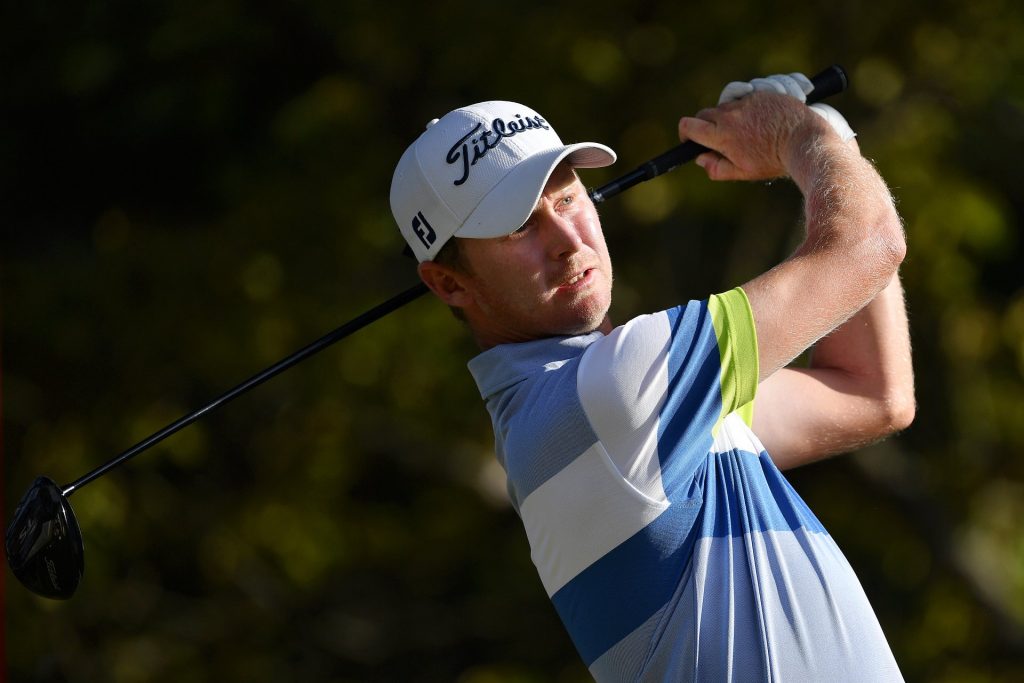
Justin Harding
Harding received his invitation by being in the current OWGR top 50 after the WGC-Dell Matchplay and cemented that position by beating Matthew Fitzpatrick and Luke List in the group stage matches. He was perilously ranked number 49 going into the week and those two wins were crucial in order to guarantee a place inside the top-50 at the March 31
He has played some fantastic golf the last 15 months in his rise in the rankings, chalking up five combined wins on the Asian Tour, Sunshine Tour and European Tour: Bank BRI Indonesia Open, Royal Cup, Investec Royal Swazi Open, Lombard Insurance Classic in 2018 and the Commercial Bank Qatar Masters this year.
Harding’s Major Championship experience is limited to the 2013 Open Championship and the 2018 U.S. PGA Championship, and will be making his rookie Masters appearance this week.
Could Harding continue to ride his wave of hot form, and rewrite the history books with a rookie win at Augusta this Sunday afternoon?

Justin Harding of South Africa
The odds are stacked against a first-timer winning at Augusta National. It has happened three times in the past, but you must go all the way back to 1979 to find the most recent one, Fuzzy Zoeller who beat Tom Watson and Ed Sneed in a play-off. The only other two players who have done so on their first try was Horton Smith at the inaugural event in 1934 and Gene Sarazen the following year in 1935.
Jordan Speith came close in 2014 by finishing tied-second to Bubba Watson, before setting the 36-, 54- and 72-hole scoring records in his 2015 win.
Whoever wins this Sunday afternoon, it promises to be an exciting week ahead as we follow two of our Asian Tour stars, battling it out with the best players in the world for the Green Jacket and Masters Tournament trophy.
With lucrative events such as World Golf Championships (WGC) and Majors looming, the Official World Golf Rankings (OWGR) becomes all important. Here we follow the Asian Tour players that are making a charge up the rankings and their quest to play their way into these events via the OWGR.
Thailand’s Kiradech Aphibarnrat, currently ranked number 42 on the OWGR, is already eligible for all the above events.
By Olle Nordberg, Former Asian Tour and European Tour professional.
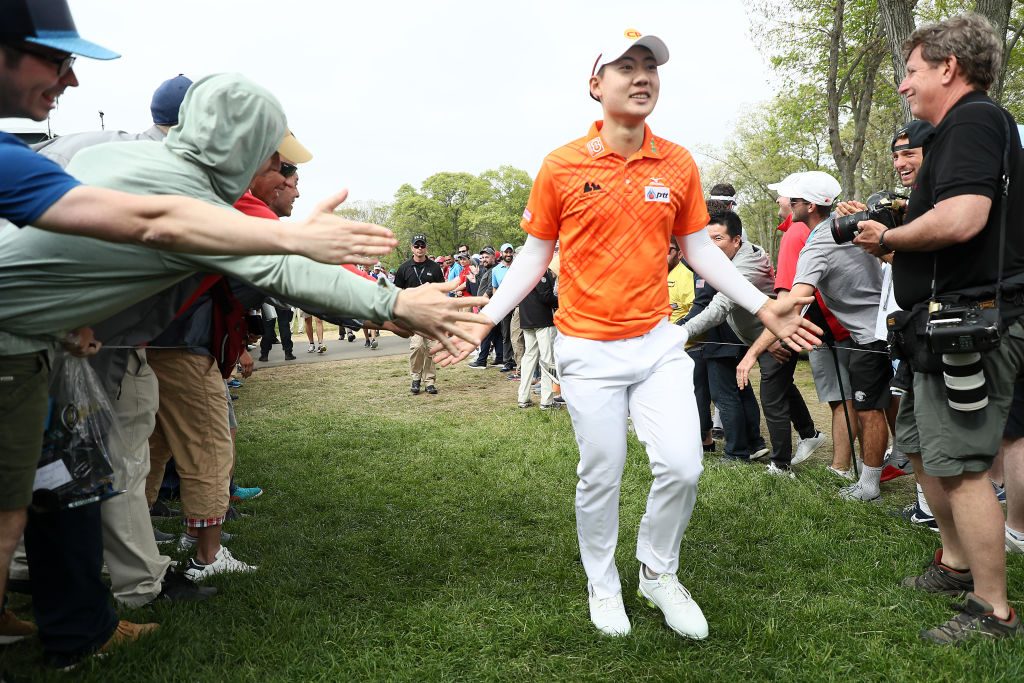
Last week’s winner of the Bangabandhu Cup Open Golf in Bangladesh, Sadom Kaewkanjana took home 14 OWGR points and rose to number 287 from 628 the previous week. He started the year ranked number 1,350 and has gained over 1,000 spots in a just over three months, a very impressive start to his professional career.

Sadom Kaewkanjana of Thailand
Other Asian Tour players who we are following closely when it comes to qualifying for the upcoming Majors and WGC events via the OWGR:
Having another solid event and top-five finish in Dhaka last week by placing tied-fifth, Jazz moves up to another career high ranking once again and lands at number 70 this week. Continuing his ascent up the OWGR and looks to have solidified his chances for a special invitation to the US PGA Championship at Bethpage Black in New York May 16-19.
The next important step on the OWGR for him will be breaking into the top-60 by either May 20 or June 10, which are the cut-off dates for exemptions into the US Open Championship at Pebble Beach Golf Links in California June 13-16.

Harding played the Valero Texas Open last week in San Antonio, Texas, but missed the cut after rounds of 73 and75 and slides down one place on the list to number 49.
Playing in the Masters Tournament this week, he will have an opportunity to make big gains with a high finish in the star-studded field, thereby improving his chances for an exemption into the upcoming US Open.
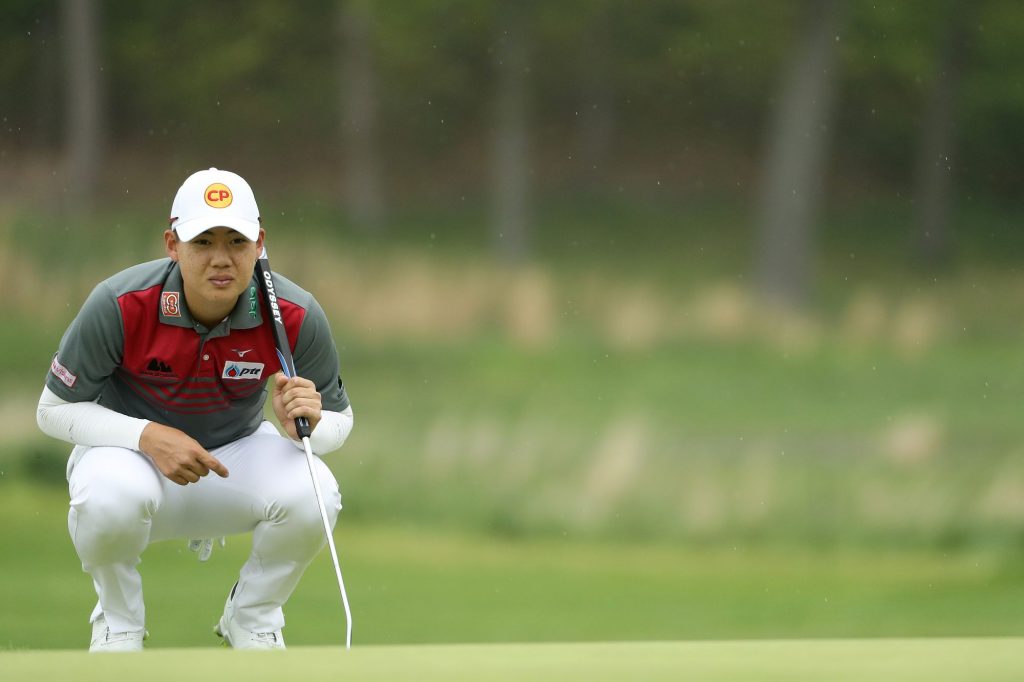
Kitayama did not play last week and slips to number 107. His immediate challenge is breaking into the top-100 and a chance for a start in the US PGA Championship.
Depending on his playing schedule, there are only two events between now and the cut-off date of May 5 on the Asian Tour and European Tour where he can make up ground , Trophee Hassan II in Morocco and GS Caltex Maekyung Open/Volvo China Open (played same week) in Seoul/Shenzhen.
Sentosa, Singapore, April 7: The Asian Tour is deeply saddened by the sudden passing and tremendous loss of Arie Irawan, who was one of Malaysia’s and the region’s most promising talents.
Arie, who passed away of apparent natural causes at his hotel in Sanya, China where he was competing at the Sanya Championship, will be fondly remembered as a true sportsman- friendly, polite, humble and a role model for many.
After turning professional in 2013, Arie enjoyed his best season in 2015 when he was briefly ranked as the top Malaysian in the world with two victories on the Asian Development Tour (ADT).
He went through a challenging 2016 season where he was injured for four months after a motorcycle accident.
But he made a strong comeback in 2017 and won the local PGM Tour’s season-ending Maybank Players’ Championship.
Arie last competed on home soil at the Maybank Championship last month.
Our thoughts and prayers go out to Arie’s wife, Marina and his parents.
We grieve together with them in this difficult time.
Arie meant so much to so many (Courtesy of PGA TOUR Series-China)

The photo shows the golfer with his arm around his caddie. They’re both smiling. They should have been. Last year playing on PGA TOUR Series-China, the player, Malaysia’s Arie Irawan, and the caddie, his wife of three weeks, the former Marina Malek, traveled to Guilin, China, where Arie played well at that week’s tournament and was in contention before eventually settling for a tie for fourth.
Although Marina knew very little about golf, she was ready for the challenge of caddying, she loved who she was working for that week and her “boss” was more than happy with her performance.
“I’m so lucky I have my wife here this week,” Arie said following his first round. “This is the first time Marina is traveling and caddying for me, and she’s also taking care of the food, so that makes it easy. It helps a lot having her out there. It just makes me more calm, and that’s why I didn’t make any bogeys today. She makes me happy.”
That joy turned to sadness in a stunning way Sunday morning in Sanya, China, as Arie never woke up, dying in his sleep in his hotel room as resuscitation efforts were unsuccessful. He was 28.
Arie was in Sanya for another tournament, this time the Sanya Championship, the second event of the PGA TOUR Series-China season. Marina was back home in Malaysia.
Arie had missed the cut a week earlier in Chongqing and didn’t play well in Sanya, not qualifying for weekend play again.
But since he was already in the resort city bordering the South China Sea, he elected to stay on site in a hotel room he was sharing with fellow player Kevin Techakanokboon.
His plan was to then travel to Haikou, about a 90-minute train ride on the north side of Hainan Island, for this week’s Haikou Championship.
News of his death stunned everybody who knew Arie, an international player who travelled all over the world playing golf. Out of deference and respect, Tour officials delayed the start of the Sanya Championship final round and then ultimately cancelled it after announcing Arie’s death.
“In the times I was with him or just around him, there was always a smile on his face—whether it was playing golf, him working out or just hanging out with friends. He always had a smile,” said Shotaro Ban, a Series member who was summoned to the scene early Sunday morning and performed CPR on Arie before emergency personnel arrived.
“I think anyone who met him or knew him realized he was an extremely genuine person. He didn’t have that much to say, but he had a great heart, and his wife is just like him.
Arie exemplified what it means to be a professional golfer, a husband and a friend in the true nature. I’m just devastated by this loss.”
The PGA TOUR’s Todd Rhinehart recently returned to the United States after living in Malaysia and serving as the CIMB Classic Executive Director.
He said it was in 2015 when Arie became more than just an acquaintance.
That year, the native Malaysian qualified for the tournament held in Kuala Lumpur. Irawan was one of three Malaysians in the field that week, the most in the tournament’s history.
“He was 24 at the time and was anxious and nervous to be playing in his first PGA TOUR event,” Rhinehart recalled.
“Over the years, I saw and talked to him at TPC Kuala Lumpur while he was practicing as well as competing in our national qualifier for the CIMB Classic.
He was not only one of Malaysia’s most-talented golfers, he was also an incredible young man who served as a passionate ambassador for junior golf in the country.”
It was in Malaysia where Arie got his start in the game, taking up golf eight years after he was born on August 21, 1990, to Ahmad and Jeny Irawan.
In 2006 and 2007, he finished runner-up at Faldo Series events in Malaysia, and as an 18-year-old, he won the Malaysian Amateur Stroke Play Championship.
With those successes, he began to attract attention from U.S. college coaches interested in securing his services. Arie elected to attend and play golf at the University of Tulsa in Oklahoma.
While in college, he earned four letters, was an Academic All-American his junior year and earned his degree in management information systems.
Upon graduation, he returned to Malaysia to embark on a professional golf career.
“His death has been tough on all of us. Golf being such a tight-knit community, it really is a shock what has happened,” said veteran Benjamin Lein, who became friends with Arie last year when he joined the Tour as a full member.
In February and back in California before the start of the PGA TOUR Series-China season, Lein put together a foursome at Industry Hills Golf Club outside Los Angeles, inviting Arie to join him and fellow Series member Gunn Charoenkul, as well as China’s Haotong Li, for a friendly game.
“It just felt like no matter where in the world we were together, he was always the same, friendly, happy Arie,” Lein noted.
Li agreed with that assessment. The 2014 PGA TOUR Series-China Player of the Year learned of Irawan’s death while preparing to play his final round at the Valero Texas Open in San Antonio. “I can’t believe it. He was such a nice guy, and I feel like it’s so unfair,” said Li, who met Arie for the first time that week in California as Li was preparing for the World Golf Championships-Mexico Championship the following week.
“We had a great time playing. It was a really fun day, his wife was there and Gunn’s wife (Vichuda) was there, too. It was very comfortable. He was like an old friend even though I just met him. There’s nothing to say, really. It’s just so very sad. I couldn’t believe it when I read the news.”
“Being on the road away from family is tough, especially numerous weeks at a time. It’s always nice to have someone who points out the positive in every situation to keep us going,” Lein added. “That’s what Arie did.
He was a selfless friend who always made everyone else around him better in different ways. I never was able to thank him for that, but he will forever be close to my heart.”
Like many golfers playing at the PGA TOUR China-Series level, Arie had his ups and downs, the two missed cuts to begin the season certainly disappointing.
His best season as a professional came in 2015 when he won two Asian Developmental Tour tournaments—the PGM Sime Darby Harvard Championship and the ICTSI Eagle Ridge Invitational.
A shoulder injury from a motorcycle accident curtailed his momentum in 2016. He was out of action from March until mid-August that season, and he had since struggled to regain the form he showed in 2015.
“We ran into each other and talked for 10 minutes about the status of his game while I was still in Malaysia,” Rhinehart added.
“He was very excited about the upcoming season on the China Series and was hoping to have a great year to qualify for the Web.com Tour as he had spent some time in California with his swing coach and enjoyed his time there.
“I can’t believe he’s gone,” Rhinehart continued. “My thoughts are about him and my prayers are with his family during this incredibly tough time.”
Perhaps Techakanokboon said it best when he described his close friend. “Arie had a lot of experience and was wise beyond his years. He really carried himself as a professional all the time. I’m going to miss him.”
PGA TOUR Series-China will honor the life of Irawan this week at the Haikou Championship, where the Tour will observe a moment of silence prior to the start of the tournament and players, staff, caddies and all others in attendance will receive an “ARIE” sticker honoring Irawan’s life.
Ends.
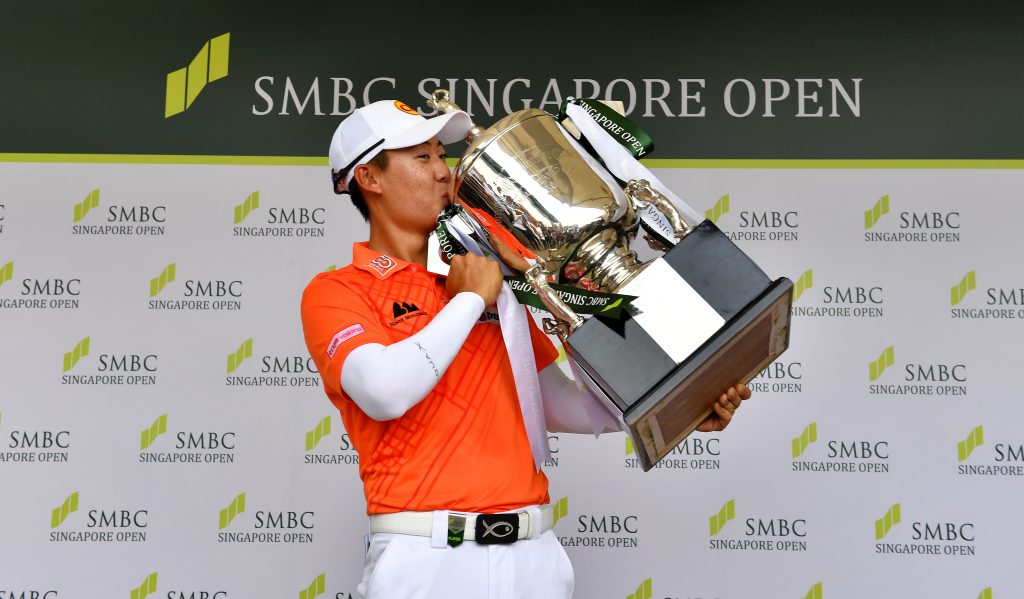
Sentosa, Singapore, April 8: A new generation of Tour rookies are taking the Asian Tour by storm and Thailand’s Sadom Kaewkanjana was quick to jump on that bandwagon on Saturday.
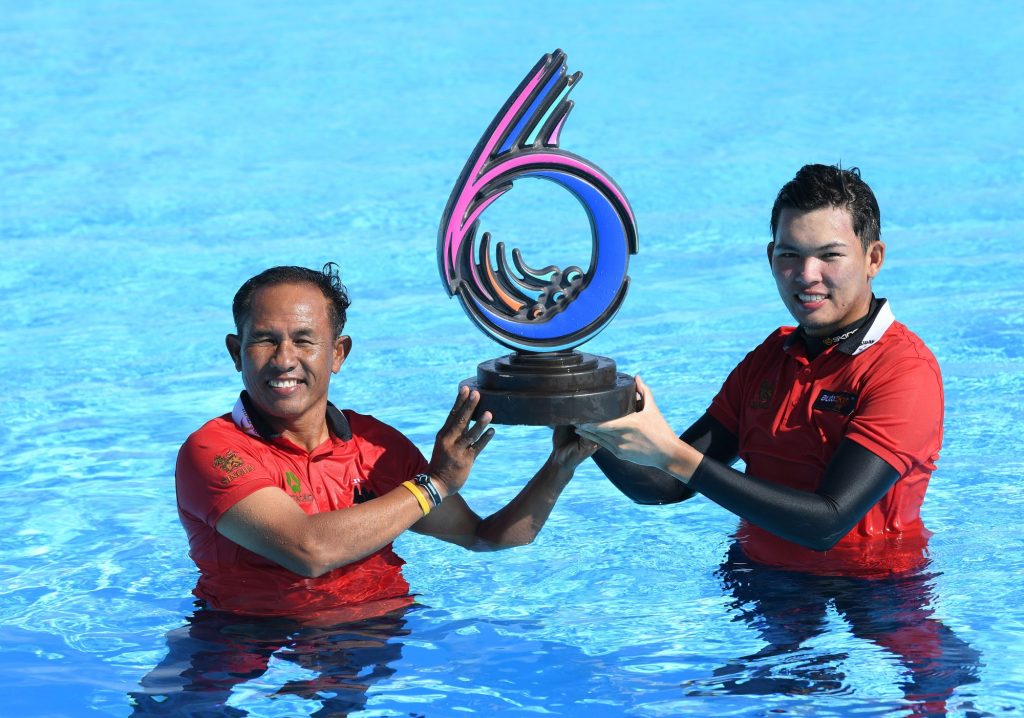
Just four months after coming through Asian Tour Qualifying School with a tied-13th result, the 20-year-old Thai claimed his maiden Tour victory in his very first start at the Bangabandhu Cup Golf Open.
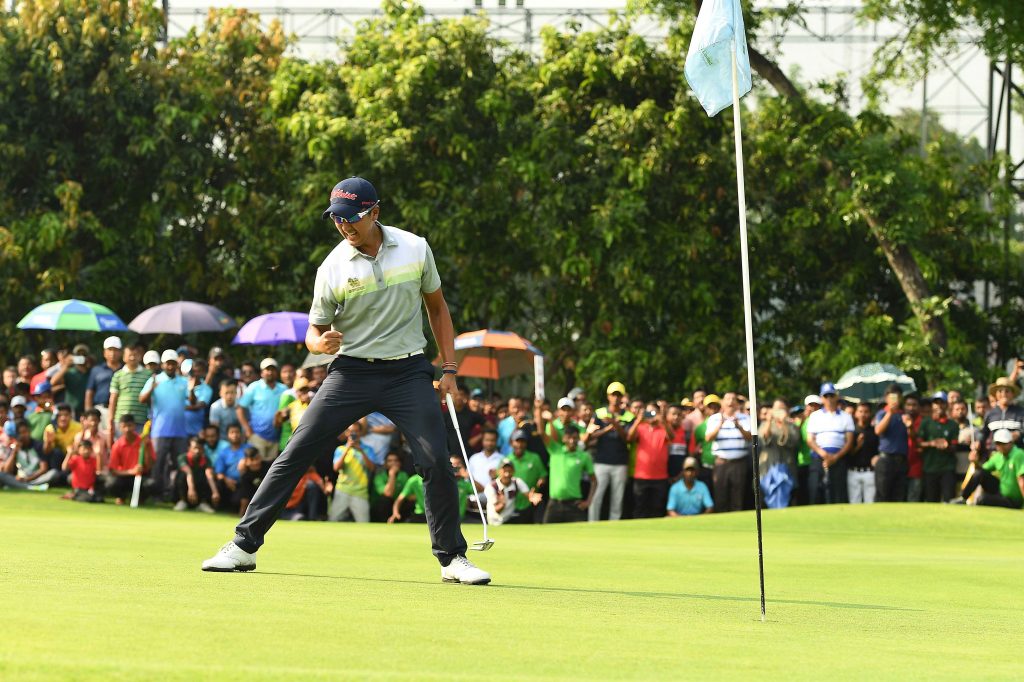
The in-form Sadom was eager to make his quick impression on the Asian Tour having lifted his first professional win at the Thongchai Jaidee Foundation 2019 in February on the Asian Development Tour (ADT).
After opening his campaign with a 65, he blitzed a stellar field at the halfway stage with a stunning 62, giving him a three-shot advantage into the final two rounds.
Displaying the confidence of a Tour veteran, Sadom extended his lead with a 68 before a closing 70 was enough for him to take home his second win in three months.
“Winning in my first start on the Asian Tour, I feel very happy. I will take a lot of positives from this week and this win will give me a lot of confidence in my game. It’s been an unbelievable journey since turning professional last December,” said Sadom, who earned a winner’s prize purse of US$63,000.
The young Thai surged into the eighth spot on the current Habitat for Humanity Standings and made history by becoming the fastest Qualifying School graduate to win on the Asian Tour.
Despite his success, Sadom believes his best is yet to come as he sets his sights on fulfilling his full potential on the big leagues.
“My initial goal was just to keep my Asian Tour card for the next season but now I have won on both the Asian Development Tour and the Asian Tour. I am really happy, I didn’t expect to do so well and I will have to work harder to get even better after this,” said the Thai.
The top-60 players on the final Asian Tour Habitat for Humanity Standings will earn their playing rights for the 2020 season. Australia’s Scott Hend continues to lead with a current haul of US$520,392 while Thailand’s Jazz Janewattananond trails in second place on US$439,594.
The Tour will head to Korea and China for the GS Caltex Maekyung Open and the Volvo China Open respectively. They will both get underway from May 2 to 5.
Ends.
Top-20 players on the Habitat for Humanity Standings
Pos Player Order of Merit
1. Scott HEND (AUS) $520,392.25
2. Jazz JANEWATTANANOND (THA) $439,593.77
3. Masahiro KAWAMURA (JPN) $249,266.67
4. Zach MURRAY (AUS) $189,140.71
5. Johannes VEERMAN (USA) $158,720.00
6. Scott VINCENT (ZWE) $83,845.03
7. Chikkarangappa S. (IND) $77,128.12
8. Sadom KAEWKANJANA (THA) $63,000.00
9. Prom MEESAWAT (THA) $61,743.10
10. Ajeetesh SANDHU (IND) $58,564.08
11. Panuphol PITTAYARAT (THA) $55,807.48
12. Ben CAMPBELL (NZL) $55,648.48
13. Jarin TODD (USA) $55,251.05
14. Nicholas FUNG (MAS) $51,160.16
15. Rashid KHAN (IND) $50,334.38
16. David LIPSKY (USA) $47,100.00
17. Berry HENSON (USA) $47,072.46
18. Siddikur RAHMAN (BAN) $45,909.67
19. Paul PETERSON (USA) $45,039.20
20. Terry PILKADARIS (AUS) $43,847.10
Justin Harding needed a birdie on the 18th like none before. This final birdie was to get a recall to the Masters 2020
By V. Krishnaswamy
Swamy is one of India’s leading sports writers, who has covered over 20 Majors and 250 international golf tournaments.
Augusta, April 15: Justin Harding needed a birdie on the 18th like none before. This final birdie was to get a recall to the Masters 2020. Harding had bogeyed the 18th the first two days and was happy to have parred it on the third. But now on the final day, he needed something more from it. Faced with a 22-foot putt on the undulating final green, Harding, who putted like a dream all week did just that. He holed it for an even par 72 and his eight-under-par 280 comprising 69-69-70-72 placed him tied-12th and ensuring an early ticket to The Masters in 2020. The 72 also ensured that he was par or better all week.
It will also boost his chances for the Presidents Cup, where he is already seventh in the standings. The only player eligible for Presidents Cup’s International Team finishing ahead of him was Jason Day in tied-fifth.
While Harding was securing his return ticket to Augusta, Tiger Woods re-affirmed his status as one of the all-time greats with a comeback that would be talked about for generations.
Fourteen years after fourth Green Jacket, he added a fifth one, and 11 years after his 14th Major, he added a 15th. In both cases he came closer to Jack Nicklaus’ Everest-like records of six Green Jackets and 18 Majors. It was also his 81st PGA Tour win, which now leaves him just one behind Sam Snead’s mark of 82.
Coming back to Harding, he said, “It was a relief to finally get a birdie on 18th and it is nice to book a return to the Masters. I have learnt a lot, but on this course it is never easy.”
Harding was the best of the 17 debutants at this year’s edition and was also among the top putters in the event.
Harding birdied the first, but bogeyed the second and fourth. He birdied the sixth, only to bogey the seventh and turned in one-over. He bogeyed the tenth at which point a finish in Top-12 looked unlikely. But birdies 12th and 13th raised hopes only to see them fall with a bogey on 15th. A final birdie on the 18th saw him sneak into tied-12th alongside Bubba Watson, Justin Thomas, Matt Kuchar and Ian Poulter.
The whole of 2018 and thus far in 2019, Harding took an arduous route and made it to the Masters in the nick of time by making the World’s Top-50 with barely two weeks left. Regardless of where he is in rankings next year at this time, he will earn a recall to the Augusta National.
This year his Carol, mother, and Stafford, father, were both there as were some friends.
Coming in as an unknown player Harding held a lot of attention. He even held a share of the lead one time and he was tied-sixth at the end of the first and second day and then tied-seventh at the end of 54 holes. On the final day, he five birdies and five bogeys. One more shot better and he would have been inside Top-10 on his debut at the Masters.
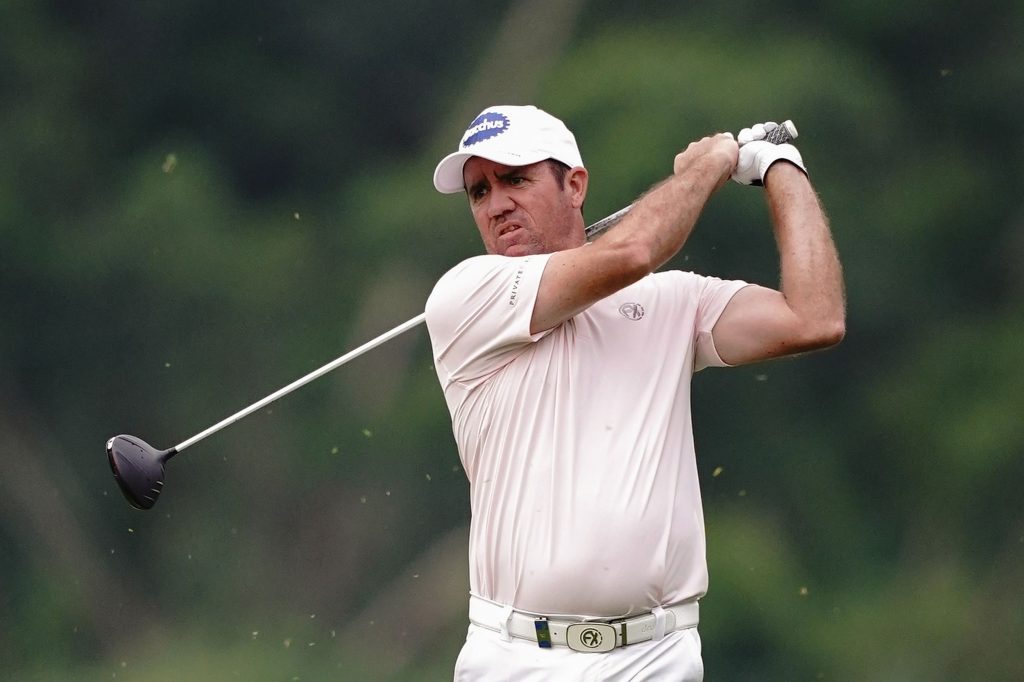
Kiradech Aphinbarnrat, making his third trip to the Masters started the week with a superb 69, the same as Harding, but thereafter struggled at times with 72-75-73 on the next three days. On Sunday, starting from the back nine he was four-under with birdies on 14th, 15th, 16th and 18th, but on the second nine he bogeyed the third and had a nightmarish finish with bogey-double bogey-bogey stretch between sixth and eighth holes to end up with 73.
He finished at one-over-par 289 in tied-49th place and will need to stay in Top-50 of the world to get a start again next year.
Swamy is covering his ninth Masters Tournament this week and shares his insight into what makes this Major so special for him.
By. V. Krishnaswamy in Augusta National.
Swamy is one of India’s leading sports writers, who has covered over 20 Majors and 250 international golf tournaments.
Augusta, April 13: There may be no Indians in the field, but the winner of the Par-3 contest, Matt Wallace, and one of the six amateurs in the field, Devon Bling, have an Indian connection.
Masters debutant Matt Wallace of England, the winner of Par-3 contest, began his rise from a distant 151st on World Rankings to his current 36th with a win in the Hero Indian Open 13 months ago.
Wallace, who won India’s National Open went on to, made it to the Masters as he entered the Top-50 of the world comfortably.
His rise in rankings also meant he qualified for the World Golf Championships Matchplay and could not defend his title in India.
He did tweet a message wishing the tournament luck.
Wallace’s win at Par-3 came on the third play-off hole against 1988 Masters champion, Sandy Lyle, who also won the Par-3 in 1997 and 1998. Wallace’s effort included an ace which was the 100th in Par-3 contests since its inception in 1960.
It is said the winner of Par-3 is jinxed and no one has won Par-3 and the Green Jacket in the same year, though 11 players have won the two but in separate years.
Wallace with his girlfriend, Chelsea on the bag, totaled 23-under, as did Lyle, while three players carded 22-under each and one of them was Devon Bling.
Wallace did have a great start, shooting 75.
Amateur Devon, an Indian American, who holds big promise
Devon’s father Nick, an Indian by birth moved to the US in 1978 and met Sara Bling, a London-born physical therapist. Nick and Sara married in 1990.
Devon, 19, grew up in Ridgecrest, California and took to golf early. His love for the sport was nurtured by his mother, Sara, who took him around, while father travelled for his job.
Devon finished runner-up in US Amateurs in 2018 and earned an invite to the Masters, playing where was both his and his mother’s dream.
Devon’s mother Sara was instrumental in the development of his golf. But tragedy struck the family, when Sara died suddenly of a stroke in 2013. Devon has since played and dedicated his golf to his mother. Devon has taken on Sara’s second name.
Devon, who also had an ace on seventh holes, was Tied-third alongside two two-time Major winner, Bubba Watson and Martin Kaymer. Bubba won both his Majors at Augusta.
A delighted Devon said, “I wouldn’t have wanted it any other way. First Masters, first Par 3, hit a great shot, it went in, and, yeah, that’s the best thing that’s ever happened in the world.” Devon missed the last par putt to stay at 5-under and a share of the lead, and ended in a tie for third.
In the main event, Devon began with a 74.
Four of the seven Asians at Masters are Japanese

The field of 87 has six amateurs and 17 first-timers. It has seven Asians, of which four are Japanese including amateur Takumi Kanaya, who won the Asia-Pacific Amateurs last September to earn an invite to the Masters. The Japanese pros in the field are Hideki Matsuyama, Satoshi Kodaira and Shugo Imahira.
Other than the Americans, who make up for most of the field, there are nine Englishmen, six South Africans, four each from Spain, Japan and Australia. Argentina, Canada, Germany and Sweden have two each, while 11 other countries have one player each.
Golden Bear congratulates, wishes Conners on win and Masters
No one could have got a better man to wish him as he went for the tee off on Thursday. Corey Conners, who was the last man into the field by winning the Valera Texas Open, for which he Monday-qualified.
Corey was in the first group in the morning session on Thursday, who went off soon after the ceremonial tee-off by the legendary Jack Nicklaus and Gary Player. Corey got to meet Nicklaus.
Conners revealed, “He just congratulated me on the win, that felt pretty special. Never thought in a million years that Jack Nicklaus would know who I am and it just felt pretty cool. And I watched him and Mr. Player tee off, so it was pretty cool.”
Stenson back with his old caddie, but probably only for Masters
Henrik Stenson is back to his former caddie, fellow Swede, Fanny Sunesson, at least for this week. They were together at Arnold Palmer Invitational, too, though Stenson had another caddie for WGC-Matchplay.
Stenson split up with his former caddie Gareth Lord last November and Lord teamed with Justin Rose for a few events while his regular caddie Mark ‘Fooch’ Fulcher recovered from heart surgery.
Stenson and Fanny worked together from 2007 to 2011 before Sunesson retired. She had formerly caddied for Nick Faldo including during two of his three Masters titles.
Though Stenson does not seem to have any regular caddie right now, it is unlikely Sunesson will continue as she has retired from full time work.
Ernie’s nephew catches the eye
The six-strong contingent from South Africa has no less than Major winners – Louis Oosthuizen, Charl Schawartzel and Trevor Immelman, but of the other three, young Jovan Rebula, has been talked about a lot. Rebula is the nephew of four-time Major winner, Ernie Els, and won the 2018 British Amateur, which is how he made it to the Masters.
The other two South Africans are Branden Grace and Justin Harding.
Rebula shot 73 on the first day.
Fragile Jason Day hangs in
Jason Day reportedly injured his back while picking up his daughter before the first round. After an initial scare he managed to hang in and play. He shot 70, but needed on-course treatment and is continuing to play and moving up.
Ends.
It has literally been a journey from Z (Zambia) to A (Augusta) for Justin Harding over the past year.
By. V. Krishnaswamy
Swamy is one of India’s leading sports writers, who has covered over 20 Majors and 250 international golf tournaments. And if he were to answer the divine call, he will be the first to jump on the plane to Augusta National, which is where he is this week.
Augusta, April 12: It has literally been a journey from Z (Zambia) to A (Augusta) for Justin Harding over the past year. This week last year, the 31-year-old Harding was at home and getting ready to play the Zanaco Masters, an event on the Sunshine Tour in Zambia. He missed the cut.
Twelve months and 52 weeks on, he is playing at Augusta National. He was the clubhouse leader when he finished his round, but was later overtaken by Brooks Koepka and Bryson DeChambeau, who each shot 66.
In the period since the start of 2018 he has played 38 tournaments spread over 22 countries and made his way through into World’s Top-50 with five wins, two on Sunshine Tour in South Africa, two on Asian Tour and one on European Tour besides a whole lot of other Top-10s. In the process he climbed more 650 places on World Rankings from 712 to his current 49th. “Most of the tournaments I have play on have been new to me,” said Harding.
For Harding oldest of the 17 debutants this year, playing the Masters was the furthest from his mind as he watched it on TV last year.
A win in Qatar Masters and a second place in Kenya Open, both on the European Tour, moved him inside Top-50 to 48th place just in time before the cut-off for Masters. He was in.
When asked what was the reason for his success over the last 15 months, Harding said, “Consistency. Becoming a little better mentally. No longer really going through the highs and lows and emotional roller coaster, so to speak. But that also comes in not really playing the aggressive mindset game that I was in the past. I’m hitting three‑woods off tees a little more often now, laying back on drivable par‑fours, just trying to get a little bit smarter on the golf course, making less mistakes and hoping a couple birdies come.”
About his practice here at Augusta, Harding said, “I did nine, nine and nine. We, I had a terrible front nine on Tuesday and I decided to try it again on Wednesday morning and it was a bit better and I actually negotiated it quite nicely this morning. But I didn’t really, I didn’t want to overdo it. Everyone sometimes kinds of comes to Augusta and tries to play as many rounds as they can. I kind of wanted to stick to the same sort of game plan and setup that I normally have every other week.
On his closing bogey, Harding admitted, “So I would love to have got into the clubhouse at four‑under par, but I was actually trying to give myself another birdie chance, sometimes it doesn’t quite happen. It’s all right. We got a lot of golf left to play, I’ll be all right.”
Asked if some of the South African stars of the past had given any advice, Harding said, “I haven’t spoken to Gary (Player) yet. I spoke to Ernie (Els) and chatted to him a little bit about the back nine when I played with him in San Antonio last week. And then obviously I had practice rounds with (Branden) Grace and (Charl) Schwartzel and (Louis) Oosthuizen and Jovan Rebula. Both him (Rebula) and I were just trying to pick each other, pick the big boys’ brains and it’s just helpful.
His mother, Carol and father, Stafford, are both here in Augusta. His father got his visa in the nick of time and was glad to be here to see Harding playing.
If Swamy were to answer the divine call, he will be the first to jump on the plane to Augusta National, which is where he is this week.
By. V. Krishnaswamy
Swamy is one of India’s leading sports writers, who has covered over 20 Majors and 250 international golf tournaments. And if he were to answer the divine call, he will be the first to jump on the plane to Augusta National, which is where he is this week.
“If God were now to decide that I could go to only one golf tournament a year – I would choose the Masters.”
Attending a Masters tournament was never really on my bucket list when I turned down a Management programme to become a sports journalist back in 1982.
Golf was a sport that hardly got a mention in Indian newspaper sports pages and it was only the final day report/ scores that made prominent headlines (meaning double columns or more) and that, too, only occasionally.
Golf names that evoked occasional conversations were still Jack Nicklaus, Arnold Palmer, Gary Player and Greg Norman.
The first time Masters really came into a conversation in a newsroom in my presence was in 1983 and that was my first full year as a sports journalist.
One of my senior colleagues in the Sports Department of the Times of India, while appreciating Seve Ballesteros’ 1983 win at Augusta, remarked, “He (Seve) started out as a caddie in golf and look where he is now.”
In India, pro golf was still a sport played predominantly by players with caddie backgrounds.
Those days, as now, cricket ruled India, but I was obsessed by athletics and passionate about chess – PT Usha was the emerging athletics star and the future World chess champion Vishy Anand was yet to turn up on the horizon.
Covering an Olympic Games and/ or World Chess Championship was my ultimate dream. I managed both.
Over the years, Usha became a friend and so did Anand and their success, which I covered many times in different parts of the world gave me great joy.
Golf didn’t become an all-consuming passion and a full-time profession till around the turn of the century when I quit my job as a Sports Editor at one of India’s leading dailies to ‘do my own thing’.
The Masters of 1983

Coming back to the Masters of 1983, it wasn’t till recently, more specifically after the passing away of the legendary Dan Jenkins, that I learnt more about the 1983 Masters. I came across one of Jenkins’ fine pieces in the April 18, 1983 issue of the Sports Illustrated.
It was indeed a historic Masters – the 1983 Masters had its first Monday finish since 1973; it was the last time Arnold Palmer made the cut at the Masters; it was also the first Masters from which Jack Nicklaus pulled out after the first round (because of back spasms) and it was the last time Sam Snead played the Masters or for that matter any Major.
I discovered more: It was also the first time the Augusta National had allowed players the use of their own caddies and it was also the first time a female caddie was used by a player (the 1969 Masters champion George Archer) and he had his daughter, Elizabeth on the bag.
None of that was mentioned in the reports that I got to see back in 1983, but it was the year I first heard of the Masters as a 20-year-old rookie sports journalist. Yet, it did not become a part of my life till more than two decades later.
The first ‘sighting’ of Masters

Life has come a long way since. If God were now to decide that I could go to only one golf tournament a year – I would choose the Masters.
I first set foot at the Augusta National in 2007. I was lucky to get credentials despite applying ‘after the closing’ date for applications. My appeal to the committee that I should be allowed because it was the first time an Indian would be teeing off at the Masters, found sympathetic ears.
Jeev Milkha Singh, who from being 377th in the world at the end of 2005 and winless since 1999, had a stellar 2006 winning three events and topping the Asian Tour Order of Merit and rising to 37th in the world to earn an invite to the Augusta National Golf Club for the 2007 Masters.
Jeev, gracious as ever, invited me for the tournament – he would put up me and two other Indian journalists up in a house, barely a stone’s throw from the Augusta National.
What a week it was! Every Indian in Augusta seemed to be on the course or over at the house. Jeev decided to shift to a hotel to stay focused. After the first three days of an exceptionally cold Masters week, Jeev with 72-75-76 was Tied-16th and in sight of a Top-15 finish which would earn a recall in 2008.
Then he made a quadruple bogey on the slick greens of the first hole on the final day and slid to T-37. Jeev did return in 2008 with a special invite and he finished T-25th, still the best by any Indian at the Masters.
Jeev played his third and last Masters in 2009. The only other Indians to have played the Masters have been Arjun Atwal (2011), Anirban Lahiri (2015 and 2016) and Shubhankar Sharma (2018).
Why is Masters so unique?

Much has been written about the history of the course and the tournament. It is easy to find it all over the internet and the countless books, that I have collected since getting ‘smitten’ by golf. But I learnt way more than that by “being at the Masters”.
It was not until I got to the Masters in 2007 that I realised a mobile phone had become an extension of my being. As part of the conditions that I had to agree to get accredited was that I was not allowed to carry the phone onto the ‘grounds’, as the course is called. It was torture for the first few hours and then I forgot about the phone for the rest of the week!
My vocabulary, too, changed. ‘Fans’ became ‘Patrons’; mobile phones were referred to as ‘illegal instruments’; ‘Pimento cheese sandwiches’ entered my list of much-loved food items and I drank beer without knowing the brand – all I knew was whether it ‘light’, ‘medium’ or ‘imported’ for there was no mention of the brands.
Stories of Amen Corner (11th, 12th and 13th) abounded and they were all fascinating; the tradition of ‘skipping’ the ball over the lake at the 16th on the practice days is something you start loving; the Par-3 contest on Wednesday is a tradition former champions and others love, but no Green jacket hopeful wants to win, because of a jinx that no one who wins the Par-3 contest has won the main event.
There is lots more like mobile phones are never allowed and a camera is allowed only from Monday to Wednesday.
The ‘must see’ landmarks include the most famous Magnolia Drive, essentially he driveway to the club, which was unpaved for the first 15 years from 1934 to 1947. It leads to The Founders Circle where countless patrons line up to get photographed by the official lensmen, who then give you a link from where you download your picture.

Other landmarks include the three bridges named after Sarazen, Hogan and Nelson; the two water fountains with plaques named after Palmer (behind the 16th) and the Nicklaus (between 16th and 17th). A third fountain called ‘Record Fountain’ is near the 17th.
The Rae’s Creek is the water body in front of the Par-3 12th green, while The ‘Crow’s Nest’ is the house for amateurs; the ‘Ike’s Pond’ touches the 8th and 9th of the par-3 contest in the Eastern part of Augusta; and the ‘Eisenhower Tree’ used to be to the left of the 17th fairway – the past tense being because an ice storm in 2014 caused so much damage to the tree that it had to be removed. So, memories are all we have now.
For me, the most fascinating landmark is the ‘Big Oak Tree’, the most famous meeting point at a venue, where no phones are allowed. So, a ‘meet-me-at-the-‘Big Oak’-at-6-pm’ means exactly that – meet at 6 pm for changes cannot be communicated till you actually meet.
The other amazing feature is the etiquette of ‘leaving your ‘golf chair’. Choose your point, place your chair and take a stroll. When you return, the chair is exactly where it was and no one is sitting on it. You can leave your wallet with credit cards and it would still be there hours later.
At Augusta, it is all about tradition and I learn a few more each time I go. I have already been there nine times!
I know what I will do each day; where I will watch the action from; from where I am going to get my beer and Pimento cheese or Egg Salad sandwich.
I also know that this week, like every one before this, I will unfailingly buy Pin Flags, hats, a T-shirt and a Masters jacket, and my wife will never raise an eyebrow or ask, “Not another one.”
Instead she asks, “Where’s mine?” Then I pull one out one for her. Tradition rules. Hopefully I will be here next year and every year after that. Amen. Well, make that ‘Amen Corner’.
Ends.
A special video tribute to honour the life of the late Arie Irawan, a consummate professional who touched the hearts and souls of the people around him.
Fellow players pay tribute to late golfer Arie Irawan on social media following his passing on Sunday.
https://www.instagram.com/p/Bv93G7CF2bj/?utm_source=ig_web_copy_link
今天一早發生了一件另人遺憾的事情,一位年輕的馬來西亞??選手也是我的好兄弟Arie lrawan在今天上午不幸在睡夢中離開了 ,直到現在我還不敢相信,一路好走兄弟!RIP my friend Arie Irawan ? You'll always be in our HEART. You're the best?
Posted by James Chan on Saturday, April 6, 2019
This is heartbreaking really. I played with Arie Irawan last year in Sarawak and was very impressed by the young man’s attitude and skills. I pray for the departed and want to pass on my condolences to the family. #GoneTooSoon https://t.co/Nfn3SFihIC
— Jeev Milkha Singh (@JeevMilkhaSingh) April 8, 2019
Sometimes life is just cruel…. RIP Mr Arie Irawan…… @Fenix_XCell brand ambassador and all round good guy. Taken way to early. You will be missed. May you make everything wherever you go.?????? pic.twitter.com/uAWjUYzD6w
— Scott Hend (@hendygolf) April 7, 2019
Arie Irawan was a guy whom I met playing golf in Asia…. Always had a smile after a rd regardless of result. Loved golf, people and his wife. Going to miss him dearly…
— Sam Chien (@s_chien51) April 7, 2019
"He always had a smile"
Obituary: Arie Irawan
August 21, 1990 – April 7, 2019https://t.co/lsy00n96K5 pic.twitter.com/XgLyeRIqln— PGA TOUR Series-China (@PGATOURChina) April 9, 2019
"That’s the thing with Arie [Irawan]. There weren’t a lot of guys who he didn’t get along with. Everybody was touched by the guy in some way, and everybody has Arie stories to tell." – Kevin Techakanokboon wrote this piece in memory of his friend. https://t.co/rJITIpuuIg pic.twitter.com/kYWBQV0vEH
— PGA TOUR Series-China (@PGATOURChina) April 9, 2019
Olle Nordberg provides his thoughts on this week’s Masters tournament, first Major tournament of the year.
By Olle Nordberg, Former Asian Tour and European Tour professional
The Masters week is finally here!
This week’s edition of Tour Insider will be different from the past few weeks, as this is the week that golf fans and tour players alike have been looking forward to for quite some time.
The iconic Masters Tournament at Augusta National is definitely one of a kind in golf.
The season opener when it comes to Major Championship golf, and together with The Open, these are the Majors that all Tour players have been dreaming about winning since they embarked on their professional careers.
In some cases, maybe even that’s the reason why they got into golf from the beginning, watching The Masters on TV in the spring and being inspired to spend countless hours practicing and imagining having a putt on 18 to wear the famous Green Jacket.
I know I did, and so did most of my junior golf friends growing up.
One thing that makes the Masters Tournament so special among Majors is the fact that it has always been held at the same course since inception in 1934, the players, patrons (no spectators at Augusta!) and regular TV viewers are all very familiar with the course layout. Or in any case, from hole nine onwards, where the traditional television starts.
It is one of the few events that regular golfers and professionals will watch in the middle of the night if on another time-zone. Either staying up late or getting up very early to catch the leaders going through Amen Corner, hole 11 through 13, and challenging the scorable but treacherous “second nine” as they call it at Augusta National.
There have been many famous charges on the final nine holes at Augusta on Sunday afternoons, but maybe none more so than Jack Nicklaus’ six-under-par 30 to don the Green jacket at age 46 in 1986, dashing Greg Norman and Tom Kite’s title hopes in the process.
The second nine at Augusta on Sunday afternoon is definitely one of the highlights on the golfing calendar for any serious golfer, and where history is made by the players battling it out for the victory.
This year, we have the fortune of having two Asian Tour players compete in their first Major of the year – Thailand’s Kiradech Aphibarnrat and Justin Harding of South Africa.

Kiradech Aphibarnrat of Thailand
Kiradech Aphibarnrat
Kiradech qualified by virtue of being inside the top-50 on the Official World Golf Ranking (OWGR) in the end of 2018. He has played the Masters Tournament twice previously in 2016 and 2018. His best result coming in his first appearance when he finished tied-15th. It was a very creditable result for a first-timer, especially on a course where experience is a huge factor and approach precision and strategy is of utmost importance.
In 2018 he also made the cut and finished tied-44th after a rough start with 79 in the first round, and scores of 70, 72 and 71 the last three days.
Kiradech’s record in big events has improved steadily as proven by his world-class play in Majors and World Golf Championships (WGC) the last two years: three top-fives in his last six WGC starts, and a 15th place in last year’s U.S. Open Championship.
No Asian player has won the Masters tournament in its 85-year history. Kiradech does not lack the talent and game to compete with the best players in the world. He could potentially be a dark horse, poised to be the first ever Asian player to win at Augusta National and Thailand’s first Major Championship winner.
Justin Harding
Harding received his invitation by being in the current OWGR top 50 after the WGC-Dell Matchplay and cemented that position by beating Matthew Fitzpatrick and Luke List in the group stage matches. He was perilously ranked number 49 going into the week and those two wins were crucial in order to guarantee a place inside the top-50 at the March 31
He has played some fantastic golf the last 15 months in his rise in the rankings, chalking up five combined wins on the Asian Tour, Sunshine Tour and European Tour: Bank BRI Indonesia Open, Royal Cup, Investec Royal Swazi Open, Lombard Insurance Classic in 2018 and the Commercial Bank Qatar Masters this year.
Harding’s Major Championship experience is limited to the 2013 Open Championship and the 2018 U.S. PGA Championship, and will be making his rookie Masters appearance this week.
Could Harding continue to ride his wave of hot form, and rewrite the history books with a rookie win at Augusta this Sunday afternoon?

Justin Harding of South Africa
The odds are stacked against a first-timer winning at Augusta National. It has happened three times in the past, but you must go all the way back to 1979 to find the most recent one, Fuzzy Zoeller who beat Tom Watson and Ed Sneed in a play-off. The only other two players who have done so on their first try was Horton Smith at the inaugural event in 1934 and Gene Sarazen the following year in 1935.
Jordan Speith came close in 2014 by finishing tied-second to Bubba Watson, before setting the 36-, 54- and 72-hole scoring records in his 2015 win.
Whoever wins this Sunday afternoon, it promises to be an exciting week ahead as we follow two of our Asian Tour stars, battling it out with the best players in the world for the Green Jacket and Masters Tournament trophy.
Olle Nordberg watches the Official World Golf Ranking and pens his thoughts for the week.
With lucrative events such as World Golf Championships (WGC) and Majors looming, the Official World Golf Rankings (OWGR) becomes all important. Here we follow the Asian Tour players that are making a charge up the rankings and their quest to play their way into these events via the OWGR.
Thailand’s Kiradech Aphibarnrat, currently ranked number 42 on the OWGR, is already eligible for all the above events.
By Olle Nordberg, Former Asian Tour and European Tour professional.
Last week’s winner of the Bangabandhu Cup Open Golf in Bangladesh, Sadom Kaewkanjana took home 14 OWGR points and rose to number 287 from 628 the previous week. He started the year ranked number 1,350 and has gained over 1,000 spots in a just over three months, a very impressive start to his professional career.

Sadom Kaewkanjana of Thailand
Other Asian Tour players who we are following closely when it comes to qualifying for the upcoming Majors and WGC events via the OWGR:
Having another solid event and top-five finish in Dhaka last week by placing tied-fifth, Jazz moves up to another career high ranking once again and lands at number 70 this week. Continuing his ascent up the OWGR and looks to have solidified his chances for a special invitation to the US PGA Championship at Bethpage Black in New York May 16-19.
The next important step on the OWGR for him will be breaking into the top-60 by either May 20 or June 10, which are the cut-off dates for exemptions into the US Open Championship at Pebble Beach Golf Links in California June 13-16.

Harding played the Valero Texas Open last week in San Antonio, Texas, but missed the cut after rounds of 73 and75 and slides down one place on the list to number 49.
Playing in the Masters Tournament this week, he will have an opportunity to make big gains with a high finish in the star-studded field, thereby improving his chances for an exemption into the upcoming US Open.
Kitayama did not play last week and slips to number 107. His immediate challenge is breaking into the top-100 and a chance for a start in the US PGA Championship.
Depending on his playing schedule, there are only two events between now and the cut-off date of May 5 on the Asian Tour and European Tour where he can make up ground , Trophee Hassan II in Morocco and GS Caltex Maekyung Open/Volvo China Open (played same week) in Seoul/Shenzhen.
Sentosa, Singapore, April 7: The Asian Tour is deeply saddened by the sudden passing and tremendous loss of Arie Irawan, who was one of Malaysia’s and the region’s most promising talents.
Arie, who passed away of apparent natural causes at his hotel in Sanya, China where he was competing at the Sanya Championship, will be fondly remembered as a true sportsman- friendly, polite, humble and a role model for many.
After turning professional in 2013, Arie enjoyed his best season in 2015 when he was briefly ranked as the top Malaysian in the world with two victories on the Asian Development Tour (ADT).
He went through a challenging 2016 season where he was injured for four months after a motorcycle accident.
But he made a strong comeback in 2017 and won the local PGM Tour’s season-ending Maybank Players’ Championship.
Arie last competed on home soil at the Maybank Championship last month.
Our thoughts and prayers go out to Arie’s wife, Marina and his parents.
We grieve together with them in this difficult time.
Arie meant so much to so many (Courtesy of PGA TOUR Series-China)

The photo shows the golfer with his arm around his caddie. They’re both smiling. They should have been. Last year playing on PGA TOUR Series-China, the player, Malaysia’s Arie Irawan, and the caddie, his wife of three weeks, the former Marina Malek, traveled to Guilin, China, where Arie played well at that week’s tournament and was in contention before eventually settling for a tie for fourth.
Although Marina knew very little about golf, she was ready for the challenge of caddying, she loved who she was working for that week and her “boss” was more than happy with her performance.
“I’m so lucky I have my wife here this week,” Arie said following his first round. “This is the first time Marina is traveling and caddying for me, and she’s also taking care of the food, so that makes it easy. It helps a lot having her out there. It just makes me more calm, and that’s why I didn’t make any bogeys today. She makes me happy.”
That joy turned to sadness in a stunning way Sunday morning in Sanya, China, as Arie never woke up, dying in his sleep in his hotel room as resuscitation efforts were unsuccessful. He was 28.
Arie was in Sanya for another tournament, this time the Sanya Championship, the second event of the PGA TOUR Series-China season. Marina was back home in Malaysia.
Arie had missed the cut a week earlier in Chongqing and didn’t play well in Sanya, not qualifying for weekend play again.
But since he was already in the resort city bordering the South China Sea, he elected to stay on site in a hotel room he was sharing with fellow player Kevin Techakanokboon.
His plan was to then travel to Haikou, about a 90-minute train ride on the north side of Hainan Island, for this week’s Haikou Championship.
News of his death stunned everybody who knew Arie, an international player who travelled all over the world playing golf. Out of deference and respect, Tour officials delayed the start of the Sanya Championship final round and then ultimately cancelled it after announcing Arie’s death.
“In the times I was with him or just around him, there was always a smile on his face—whether it was playing golf, him working out or just hanging out with friends. He always had a smile,” said Shotaro Ban, a Series member who was summoned to the scene early Sunday morning and performed CPR on Arie before emergency personnel arrived.
“I think anyone who met him or knew him realized he was an extremely genuine person. He didn’t have that much to say, but he had a great heart, and his wife is just like him.
Arie exemplified what it means to be a professional golfer, a husband and a friend in the true nature. I’m just devastated by this loss.”
The PGA TOUR’s Todd Rhinehart recently returned to the United States after living in Malaysia and serving as the CIMB Classic Executive Director.
He said it was in 2015 when Arie became more than just an acquaintance.
That year, the native Malaysian qualified for the tournament held in Kuala Lumpur. Irawan was one of three Malaysians in the field that week, the most in the tournament’s history.
“He was 24 at the time and was anxious and nervous to be playing in his first PGA TOUR event,” Rhinehart recalled.
“Over the years, I saw and talked to him at TPC Kuala Lumpur while he was practicing as well as competing in our national qualifier for the CIMB Classic.
He was not only one of Malaysia’s most-talented golfers, he was also an incredible young man who served as a passionate ambassador for junior golf in the country.”
It was in Malaysia where Arie got his start in the game, taking up golf eight years after he was born on August 21, 1990, to Ahmad and Jeny Irawan.
In 2006 and 2007, he finished runner-up at Faldo Series events in Malaysia, and as an 18-year-old, he won the Malaysian Amateur Stroke Play Championship.
With those successes, he began to attract attention from U.S. college coaches interested in securing his services. Arie elected to attend and play golf at the University of Tulsa in Oklahoma.
While in college, he earned four letters, was an Academic All-American his junior year and earned his degree in management information systems.
Upon graduation, he returned to Malaysia to embark on a professional golf career.
“His death has been tough on all of us. Golf being such a tight-knit community, it really is a shock what has happened,” said veteran Benjamin Lein, who became friends with Arie last year when he joined the Tour as a full member.
In February and back in California before the start of the PGA TOUR Series-China season, Lein put together a foursome at Industry Hills Golf Club outside Los Angeles, inviting Arie to join him and fellow Series member Gunn Charoenkul, as well as China’s Haotong Li, for a friendly game.
“It just felt like no matter where in the world we were together, he was always the same, friendly, happy Arie,” Lein noted.
Li agreed with that assessment. The 2014 PGA TOUR Series-China Player of the Year learned of Irawan’s death while preparing to play his final round at the Valero Texas Open in San Antonio. “I can’t believe it. He was such a nice guy, and I feel like it’s so unfair,” said Li, who met Arie for the first time that week in California as Li was preparing for the World Golf Championships-Mexico Championship the following week.
“We had a great time playing. It was a really fun day, his wife was there and Gunn’s wife (Vichuda) was there, too. It was very comfortable. He was like an old friend even though I just met him. There’s nothing to say, really. It’s just so very sad. I couldn’t believe it when I read the news.”
“Being on the road away from family is tough, especially numerous weeks at a time. It’s always nice to have someone who points out the positive in every situation to keep us going,” Lein added. “That’s what Arie did.
He was a selfless friend who always made everyone else around him better in different ways. I never was able to thank him for that, but he will forever be close to my heart.”
Like many golfers playing at the PGA TOUR China-Series level, Arie had his ups and downs, the two missed cuts to begin the season certainly disappointing.
His best season as a professional came in 2015 when he won two Asian Developmental Tour tournaments—the PGM Sime Darby Harvard Championship and the ICTSI Eagle Ridge Invitational.
A shoulder injury from a motorcycle accident curtailed his momentum in 2016. He was out of action from March until mid-August that season, and he had since struggled to regain the form he showed in 2015.
“We ran into each other and talked for 10 minutes about the status of his game while I was still in Malaysia,” Rhinehart added.
“He was very excited about the upcoming season on the China Series and was hoping to have a great year to qualify for the Web.com Tour as he had spent some time in California with his swing coach and enjoyed his time there.
“I can’t believe he’s gone,” Rhinehart continued. “My thoughts are about him and my prayers are with his family during this incredibly tough time.”
Perhaps Techakanokboon said it best when he described his close friend. “Arie had a lot of experience and was wise beyond his years. He really carried himself as a professional all the time. I’m going to miss him.”
PGA TOUR Series-China will honor the life of Irawan this week at the Haikou Championship, where the Tour will observe a moment of silence prior to the start of the tournament and players, staff, caddies and all others in attendance will receive an “ARIE” sticker honoring Irawan’s life.
Ends.
A new generation of Tour rookies are taking the Asian Tour by storm and Thailand’s Sadom Kaewkanjana was quick to jump on that bandwagon on Saturday.
Sentosa, Singapore, April 8: A new generation of Tour rookies are taking the Asian Tour by storm and Thailand’s Sadom Kaewkanjana was quick to jump on that bandwagon on Saturday.
Just four months after coming through Asian Tour Qualifying School with a tied-13th result, the 20-year-old Thai claimed his maiden Tour victory in his very first start at the Bangabandhu Cup Golf Open.
The in-form Sadom was eager to make his quick impression on the Asian Tour having lifted his first professional win at the Thongchai Jaidee Foundation 2019 in February on the Asian Development Tour (ADT).
After opening his campaign with a 65, he blitzed a stellar field at the halfway stage with a stunning 62, giving him a three-shot advantage into the final two rounds.
Displaying the confidence of a Tour veteran, Sadom extended his lead with a 68 before a closing 70 was enough for him to take home his second win in three months.
“Winning in my first start on the Asian Tour, I feel very happy. I will take a lot of positives from this week and this win will give me a lot of confidence in my game. It’s been an unbelievable journey since turning professional last December,” said Sadom, who earned a winner’s prize purse of US$63,000.
The young Thai surged into the eighth spot on the current Habitat for Humanity Standings and made history by becoming the fastest Qualifying School graduate to win on the Asian Tour.
Despite his success, Sadom believes his best is yet to come as he sets his sights on fulfilling his full potential on the big leagues.
“My initial goal was just to keep my Asian Tour card for the next season but now I have won on both the Asian Development Tour and the Asian Tour. I am really happy, I didn’t expect to do so well and I will have to work harder to get even better after this,” said the Thai.
The top-60 players on the final Asian Tour Habitat for Humanity Standings will earn their playing rights for the 2020 season. Australia’s Scott Hend continues to lead with a current haul of US$520,392 while Thailand’s Jazz Janewattananond trails in second place on US$439,594.
The Tour will head to Korea and China for the GS Caltex Maekyung Open and the Volvo China Open respectively. They will both get underway from May 2 to 5.
Ends.
Top-20 players on the Habitat for Humanity Standings
Pos Player Order of Merit
1. Scott HEND (AUS) $520,392.25
2. Jazz JANEWATTANANOND (THA) $439,593.77
3. Masahiro KAWAMURA (JPN) $249,266.67
4. Zach MURRAY (AUS) $189,140.71
5. Johannes VEERMAN (USA) $158,720.00
6. Scott VINCENT (ZWE) $83,845.03
7. Chikkarangappa S. (IND) $77,128.12
8. Sadom KAEWKANJANA (THA) $63,000.00
9. Prom MEESAWAT (THA) $61,743.10
10. Ajeetesh SANDHU (IND) $58,564.08
11. Panuphol PITTAYARAT (THA) $55,807.48
12. Ben CAMPBELL (NZL) $55,648.48
13. Jarin TODD (USA) $55,251.05
14. Nicholas FUNG (MAS) $51,160.16
15. Rashid KHAN (IND) $50,334.38
16. David LIPSKY (USA) $47,100.00
17. Berry HENSON (USA) $47,072.46
18. Siddikur RAHMAN (BAN) $45,909.67
19. Paul PETERSON (USA) $45,039.20
20. Terry PILKADARIS (AUS) $43,847.10


Recent Comments