Liang Wen-chong winning on and off the course
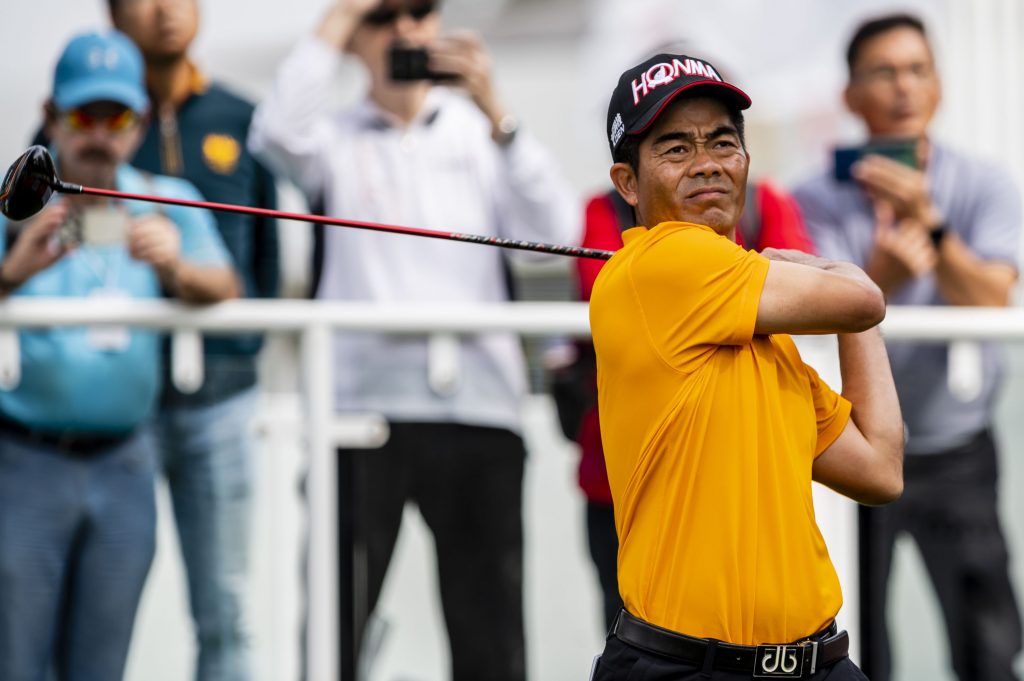
Former Asian Tour number one Liang Wen-chong, from China, has called for “everyone to work together to fight off the pandemic”, and has taken a safe and sensible approach to the life-changing developments caused by COVID-19.
Speaking from his home in Hengdian, Zhejiang Province, China ― where he is currently celebrating the Lunar New Year with family and friends ― he said: “In what has been a season of rest, for most of last year, I told myself to stay positive. The pandemic is something that will catch you off guard, but it has since become a norm for most. What we need to do is to adapt to it and make changes to our daily lives.
“It’s a new knowledge, so we need to have patience and face it with determination. Everyone needs to work together to fight off the pandemic, hoping life will return to usual in the near future.
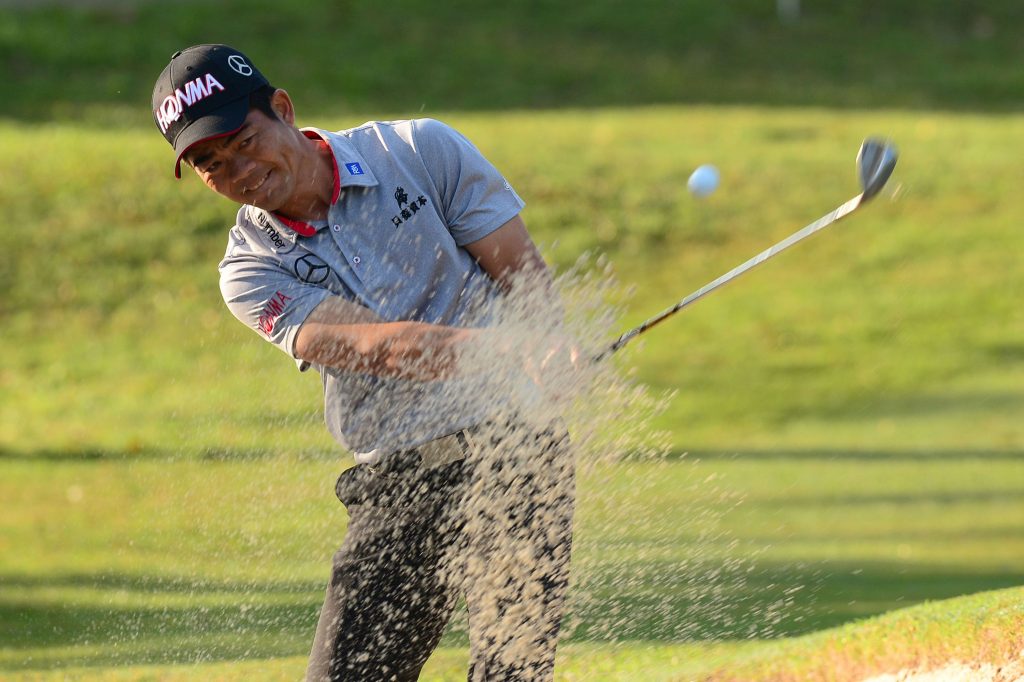
(Photo by Arep Kulal/Getty Images)
“Thanks to this pandemic, I have learned how important it is to stay physically fit. Regular exercise can improve your resistance to virus. Therefore, golf is a good option too.”
The 42-year-old played in the Asian Tour events at the start of last year, before the pandemic hit, and was able to compete in a couple of events in Japan, at the end of the year.
“The pandemic affected all golfers and Tours; schedules were changed; tournaments were postponed or suspended. I can only stay at home when there are no tournaments to play. It was back to playing my role as a father and doing my best to adhere to all safety measures.”
Liang has enjoyed a decorated career, to date.
He succeeded his mentor Zhang Lian-wei ―China’s pioneering first world-class player ― by recording achievements after achievements, including: winning three times on the Asian Tour; claiming two titles in Japan; becoming the first player from the mainland to compete in the US PGA Championship; and, at the Open in 2008, becoming the first Chinese golfer to make the cut at a Major.
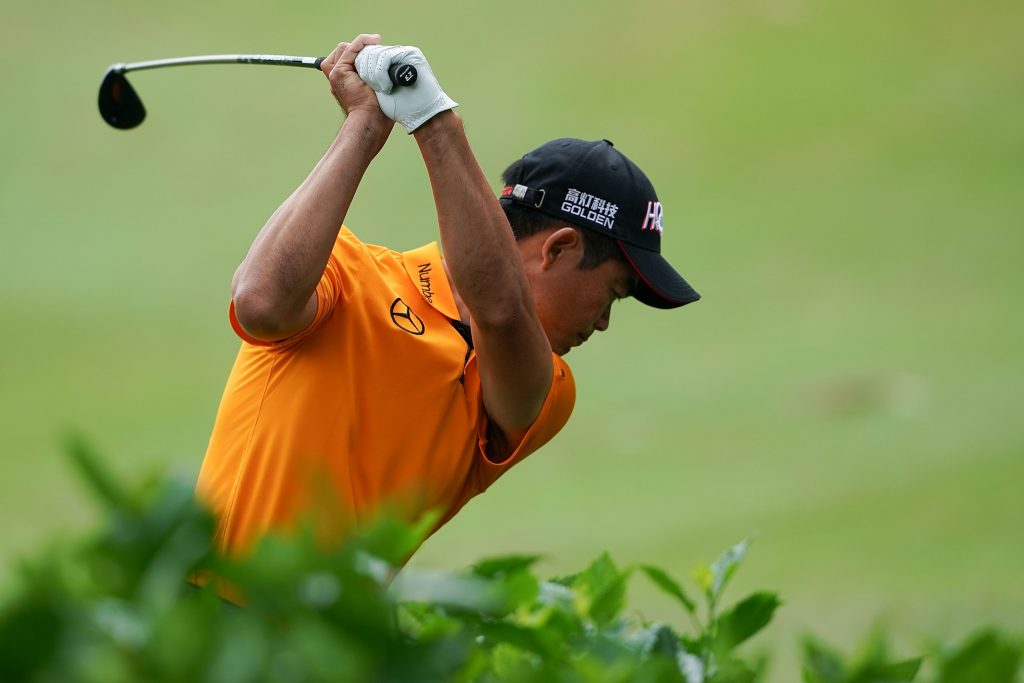
(Photo by Zhe Ji/Getty Images)
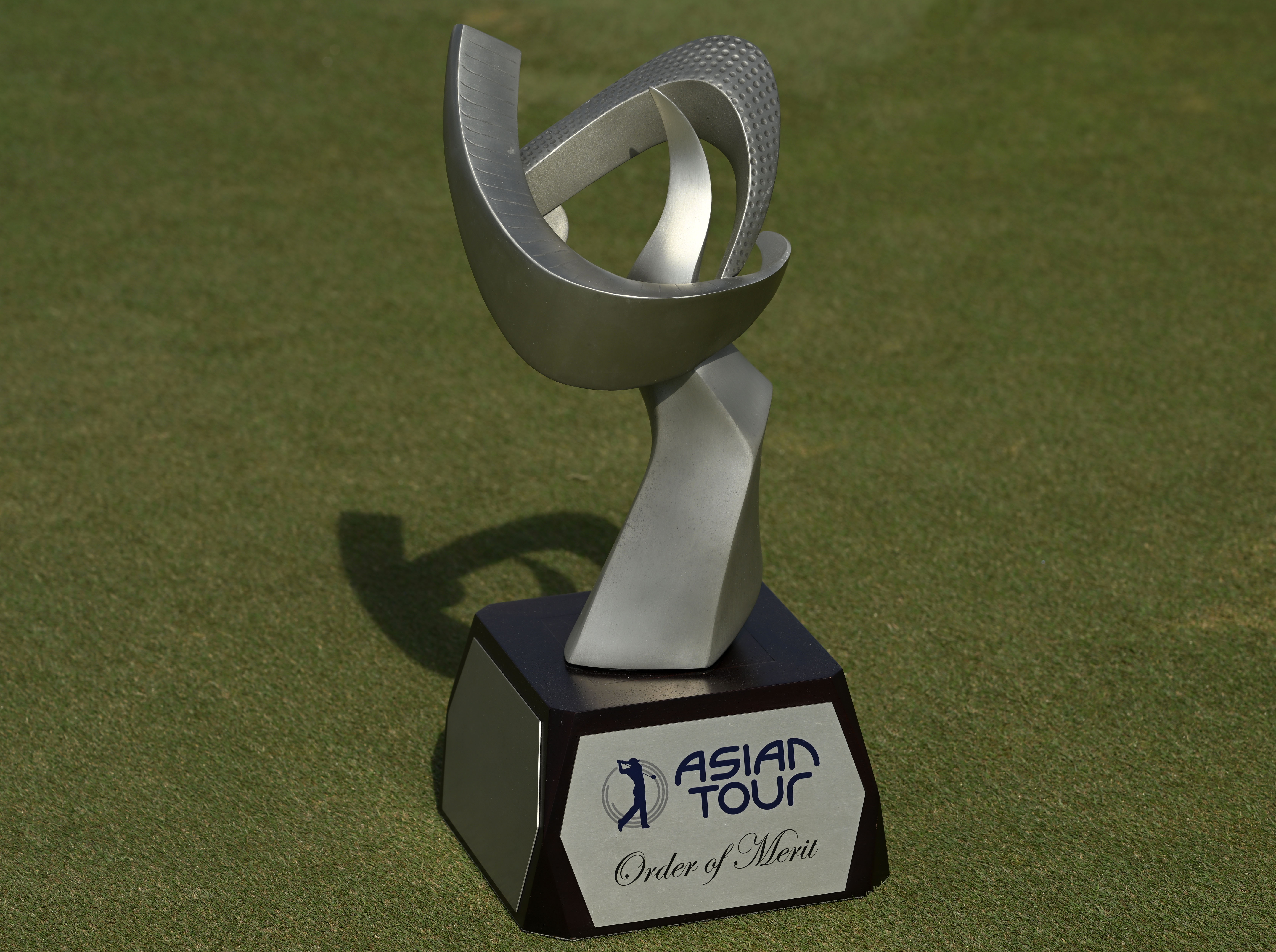
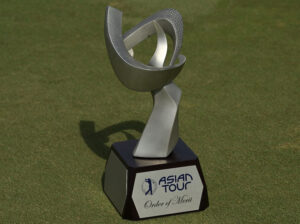
It was in 2007 when he won the Asian Tour Order of Merit title, the first player from China to achieve that feat. That year he also claimed the Singapore Masters ― which was co-sanctioned by the Asian Tour and the European Tour, and meant he became the second golfer from China to win on the European Tour, after Zhang.
“In this brand new 2021, I hope to return to the golf course for more tournaments and obtain good results,” added the Chinese star.
“My long-term goal in golf is to try and prolong my golfing career for as long as I can; maintain my competitiveness on the golf course; and at the same time, do my best in promoting and developing the game across the region.”
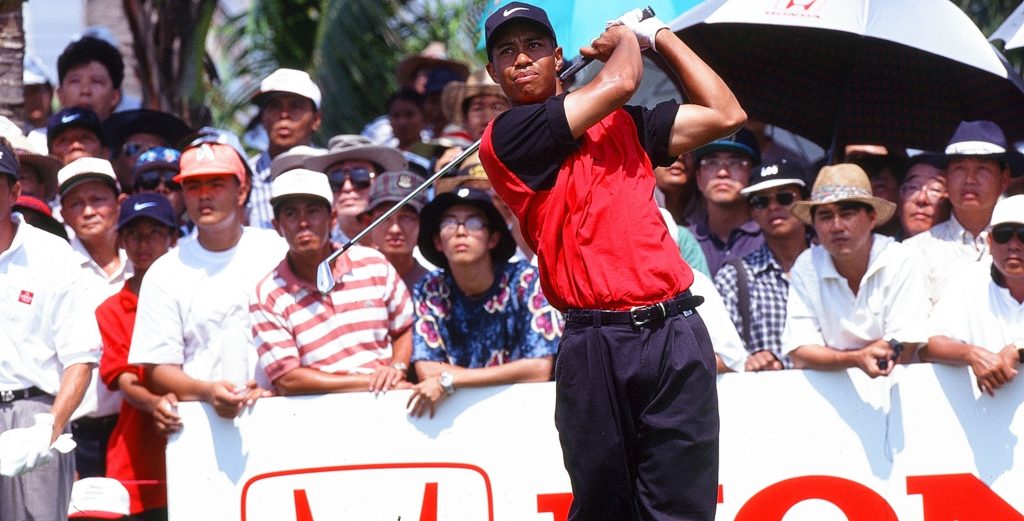
It is hard to believe that it was on this day 24 years ago when American Tiger Woods took Bangkok by storm and claimed the Asian Honda Classic at Thai Country Club, just outside Bangkok.
The region had rarely witnessed such a sporting occasion and the world’s media turned out in full force to cover his every move.
The young American had arrived in the Thai capital to much pomp and ceremony and at times frenzied excitement.
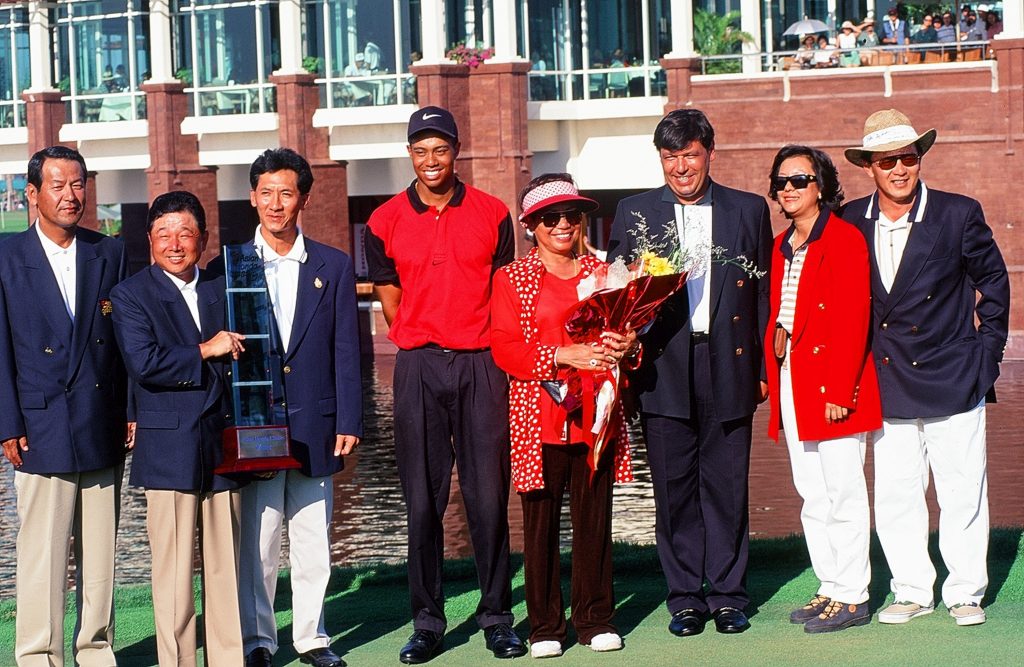
(Credit: Richard Castka/Sportfive)
He had competed in Thailand once before ― as an amateur in the 1994 Johnnie Walker Classic at Blue Canyon Country Club in Phuket ― but this was the first time he was playing there as a professional.
Aged 21 years old he was accompanied by his mother, Kultida, who grew up 70 miles north of Bangkok; she proudly chaperoned him throughout the week.
He was also surrounded by tight security during the trip ― which was much needed amid wild welcoming scenes at Don Muang airport.
Having only just turned professional the year before, he had already claimed three titles on the PGA Tour, although at this point he had not won Major.
Woods cruised to a 10-shot victory in the US$300,000 event; which also saw Australian Steve Elkington, Frank Nobilo from New Zealand and American Curtis Strange competing.
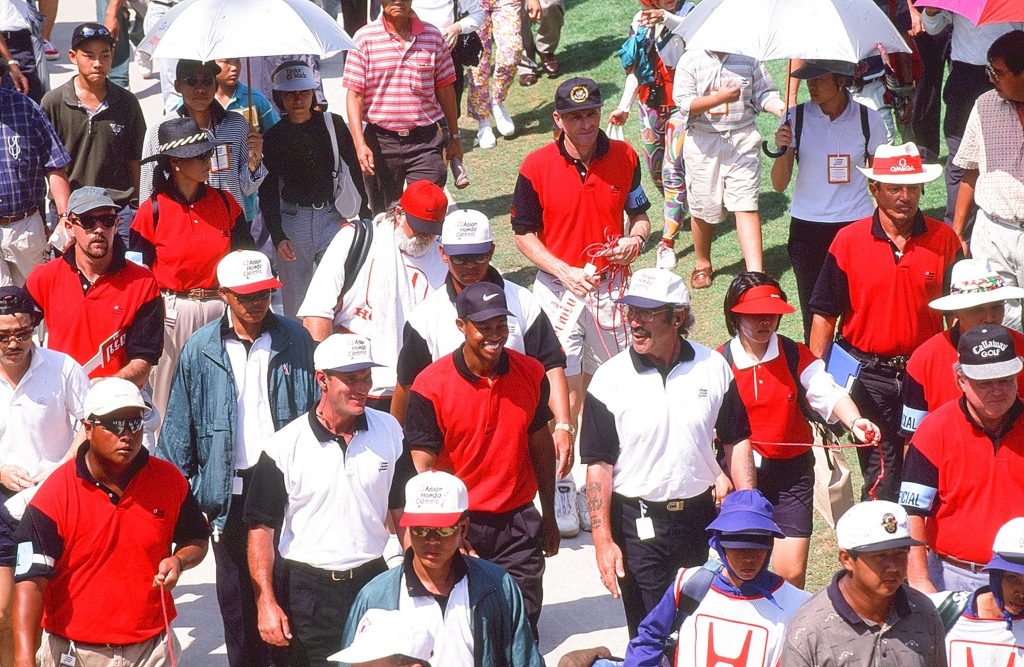
(Credit: Richard Castka/Sportfive)
He shot rounds of 70-64-66-68 for a brilliant four-round aggregate of 20-under-par 268; Korean Mo Joong Kyung secured second place.
He treated the fans to a level of golf they had never seen before, including driving the 389-yard par-four 10th hole during the third round.
It was a stunning performance, with his helicopter rides to and from the course adding to the spectacle.
Thousands of fans chanted his name as he walked down the 18th fairway on Sunday.
After the win, Tiger said: “Winning is great, but to win here in Thailand is something special. This is like home to me.”
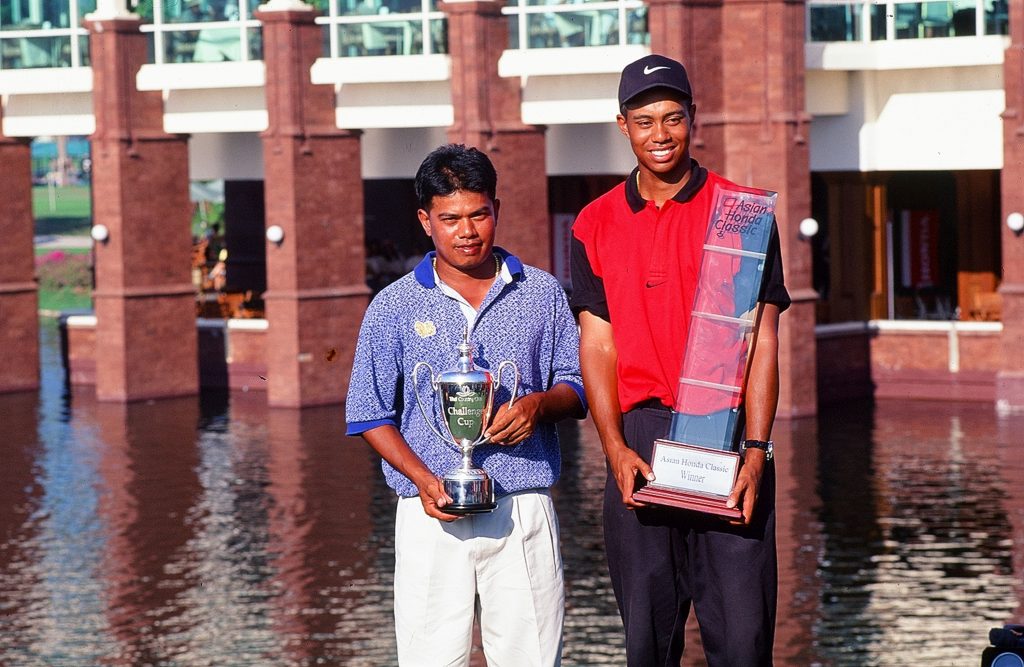
(Credit: Richard Castka/Sportfive)
“I knew my swing wasn’t working well,” added Woods. “I made some bad shots out there, but I made some key putts and that’s what wins golf tournaments.”
Woods, who earned a cheque for US$48,000, had five birdies during the final round and nearly eagled the fourth hole. He had a bogey on the 17th hole when his drive sliced into the water.
Two months later he was to go on and win the US Masters for the first time ― by the incredible margin of 12 shots ― and commence a career that would see him win 15 Majors and 82 PGA Tour titles.
But few will forget how things began for him during that unforgettable week at the Asian Honda Classic ― nearly a quarter of a century ago.
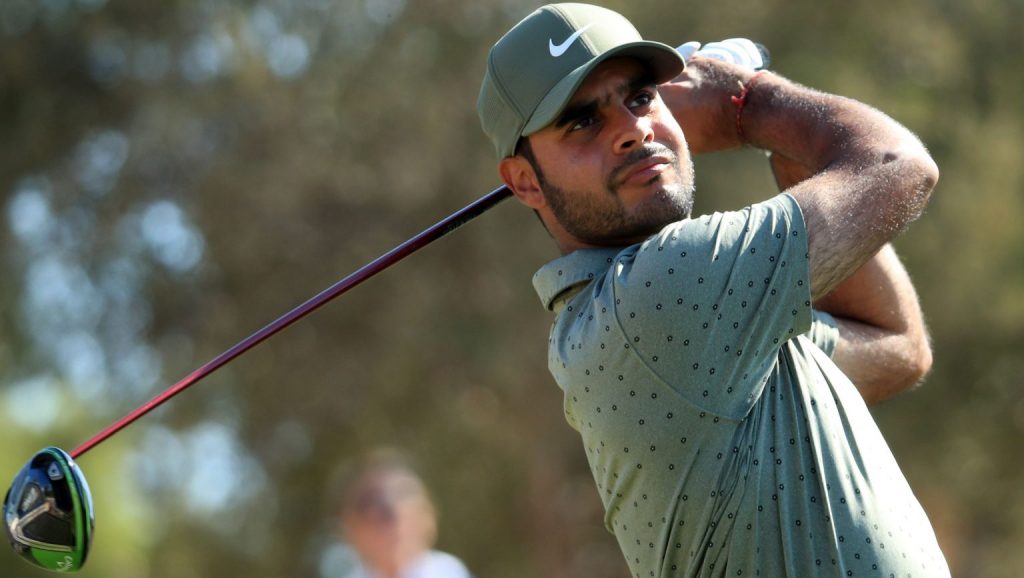
India’s Shubhankar Sharma feels he kick started his season with an encouraging performance in the Omega Dubai Desert Classic last week ― where he finished in a tie for 22nd place ― and is hoping to build upon that result in Saudi Arabia this week.
“I was playing so much better than what the score showed,” said the 24-year-old, who would have finished much higher if not for dropped shots over the closing holes. He three-putted the 15th for a bogey, dropped another shot on the next, after failing to get up and down, and made the green in two on the par-five 18th but three-putted once more.
“It was kind of a bummer in the end but it is fine. You have to look at the bigger picture and take things into perspective: I had a decent week; I played pretty solid; I hit the ball really well. I obviously left a few shots out there, especially on the weekend, but I am really happy with the way I battled hard,” added Sharma, who has been paired today with Jhonattan Vegas from Venezuela and Brandon Stone from South Africa in the first round of the Saudi International.
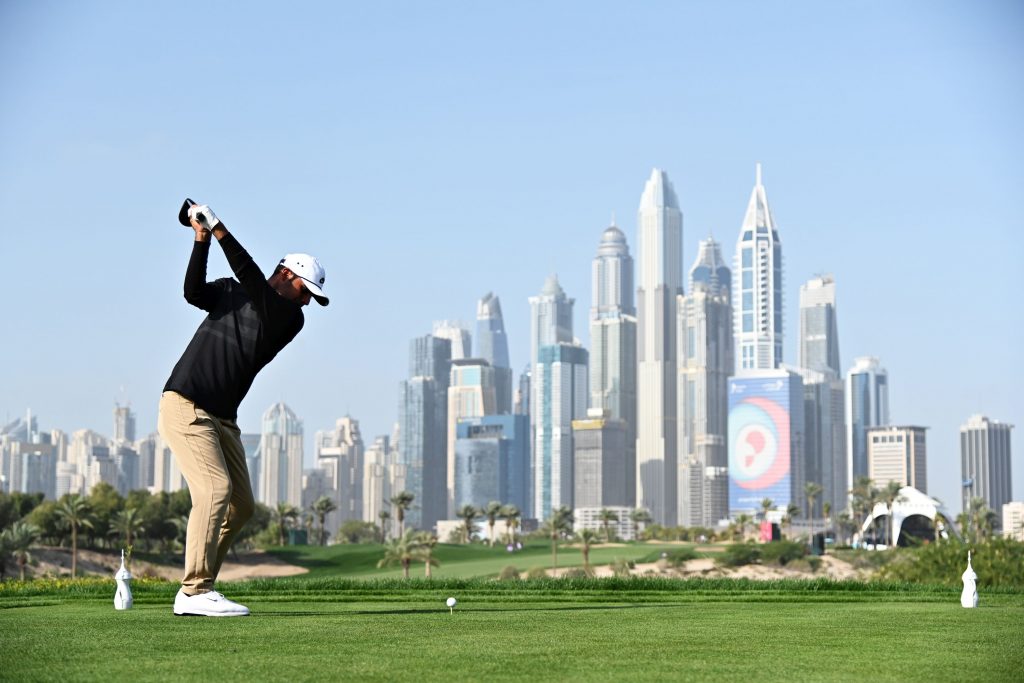
(Photo by Ross Kinnaird/Getty Images)
“We gave it our all and conditions were not easy, especially the last two days when it got really windy. We hung in there and I am pretty pleased with the result, considering it is only the second event of the season. There is still a long way to go but it gives me something to build upon now.”
The Indian star missed the cut in Abu Dhabi the previous week: which he says what partly because a fog delay on day one, which saw him get stuck in poor weather and meant he had to finish his first round on Friday, and also because he drove the ball badly.
He said: “I really worked hard on my driving after missing the cut, and it paid off as my driving was one of the best parts of my game in Dubai, and that is why I had some good scores.”
CHANDIGARH BREAK
Sharma said he was also refreshed from a month’s break, at home in Chandigarh.
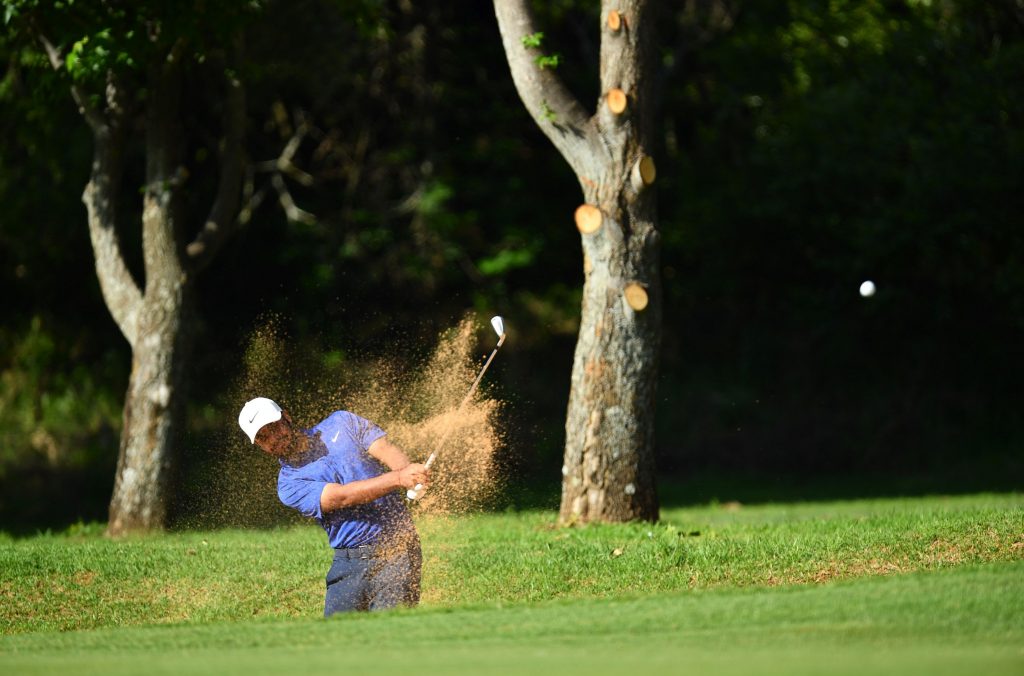
JOHANNESBURG, SOUTH AFRICA – NOVEMBER 19: Shubhankar Sharma of India plays his second shot on the 10th hole during Day One of the Joburg Open at Randpark Golf Club on November 19, 2020 in Johannesburg, South Africa. (Photo by Stuart Franklin/Getty Images)
He spent the time working with his long-time coach Jesse Grewal as well as Gurbaz Mann.
“Every time you go home you work on rectifying the mistakes of the previous year. Jesse has been my coach since I was 10 years old, while Gurbaz ― a former Asian Tour player ― came on board the last four or five years,” said Sharma.
“I worked a lot with Gurbaz: he built all my clubs, we got new irons in ― same model, just a newer set ― changed wedges and worked on the putter and the three wood, and did some tweaks. I worked on my swing with both of them. It was quite useful that one month I had back there. We worked on small things. I think every golfer has certain tendencies they are trying to avoid and it’s the same with me. I get into these bad habits and tendencies which I have to keep fixing.”
He also spent a lot of time in the gym trying help his body recover from a challenging 2020 playing on the European Tour.
He said: “Last year was especially long for me, especially towards the end; I was out there for almost five months. That definitely took a toll on the body, especially being in the bubble and not being able to travel, not being able to go outside, just being in the hotel and golf course. There were a lot of small issues in the body we had to fix. I was working a lot with my physiotherapist and my trainer back home. I think that helped me even more than going to practice.”
Sharma was stuck at home for about two months at the beginning of last year when COVID-19 first put the world into lockdown. He didn’t play any golf during that period, apart from practicing his chipping at a park in front of his house.
RETURN TO EUROPE
But he said the layoff did allow him to reset mentally and physically before returning to action on the European Tours, for their UK Swing in August.
“I was not at my best in the beginning,” said Sharma, who missed the cut in five out of his first six events.
“I was struggling with my swing – I was slightly rusty – and the weather in Europe. I made some mental mistakes in the first few rounds and that saw me exit before the weekend. But you learn so much more from being out on Tour compared with being home and practicing. You get feedback from playing in tournaments and that really helps.”
“But after that, since Portugal in September, I started to play really well. I was really happy when I played well all the weeks when it was really cold: the BMW PGA Championship, the events in Ireland and Scotland ― it was really cold and we don’t grow up playing in that weather in Asia.”
MAYBANK MAGIC
While this week he will be looking to build on his Dubai result, he will also hope to draw on what he achieved on this day three years ago: winning the 2018 Maybank Championship in Malaysia.
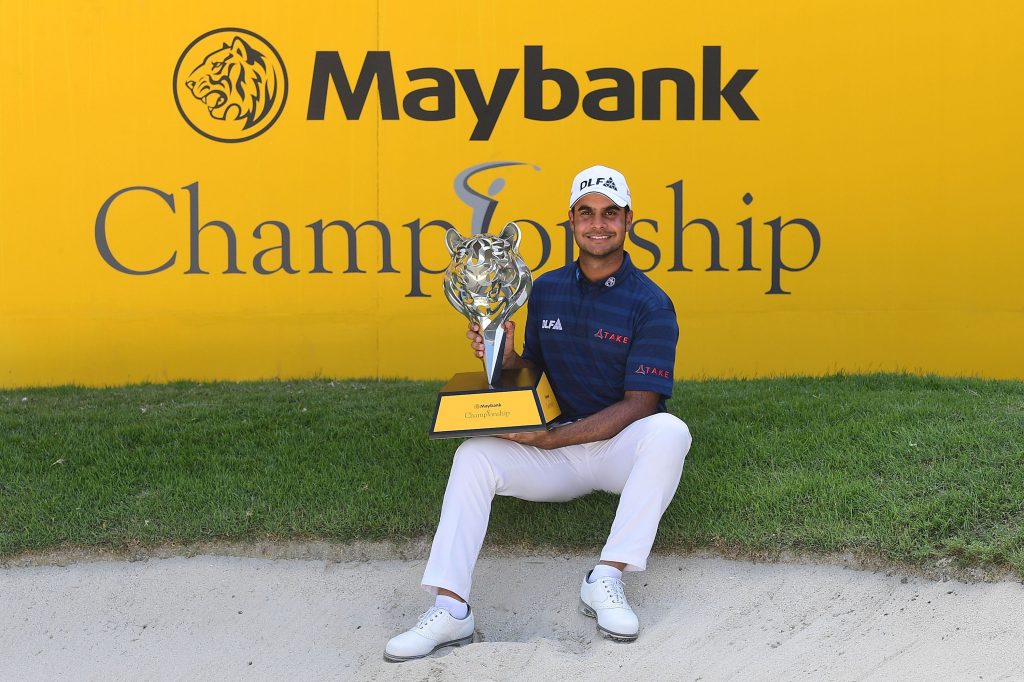
KUALA LUMPUR, MALAYSIA – FEBRUARY 04: Shubhankar Sharma of India poses with the trophy after winning the 2018 Maybank Championship at Saujana Golf and Country Club (Photo by Arep Kulal/Asian Tour/Asian Tour via Getty Images,)
“Maybank changed my life,” said Sharma.
“It got me into a lot of big events: I played all the Majors that year.”
He won the Maybank tournament ― which was joint-sanctioned by the Asian Tour and European Tour ― after shooting a final round 10-under-par 62, having started Sunday four off the lead.
The win also came less than two months after he claimed the Joburg Open ― which was also jointly-sanctioned and his maiden win on both Tours.
“I have great memories of that 62. I remember going out on the last day, I wasn’t really thinking of winning. I had a fever the week before and I was just starting to feel better that week,” he said.
“I was just hoping for a good round on the last day and finishing in top 10. I didn’t make birdie on the first hole, which is an easy par five, but I made birdie on four, five, six, seven and nine. I was five under on the front.
“It was one of those days when I wasn’t missing too many shots, and everything fell into place. I looked at the leaderboard on 16 and realized I was two or three ahead but the leaders were way behind me, on nine or 10, and so they had a lot more holes to play.
“I just told myself to keep giving myself chances and that it is not over until it’s over. I was eight under [for the round], missed a birdie on 16 but birdied 17 and 18 and once I did that I knew it would be very hard to catch me. It was a great feeling, I left it all out there.”
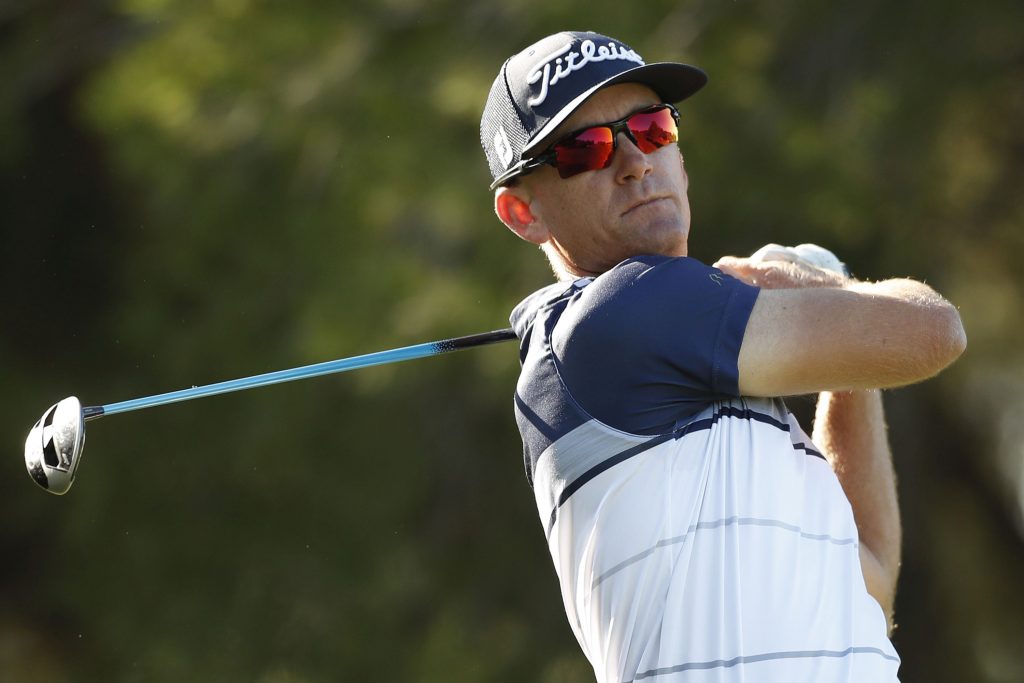
Berry Henson is one of the Asian Tour’s great personalities and, indeed, success stories: since earning his card a decade ago, he has finished in the top-50 on the Tour’s Order of Merit every year, bar one. As the game is temporarily in “recess” in Asia, we thought it an opportune time to speak to him about his career playing in the region and ask him how has been spending his time during the coronavirus pandemic. As we found out, he has been busy …
It is fair to say Berry Henson has enjoyed the best of both worlds: the two worlds being California, “The Best Coast”, as it is popularly known, and “The Kingdom” of Thailand ― the former being his place of birth and home in the United States, and the latter his adopted home for the past 10 years.
You would probably only leave California if you were going somewhere as idyllic as Thailand, but, in Henson’s case it was also a matter of urgency: he needed to secure status on one of the world’s leading Tours ― and the Asian Tour was his last chance.
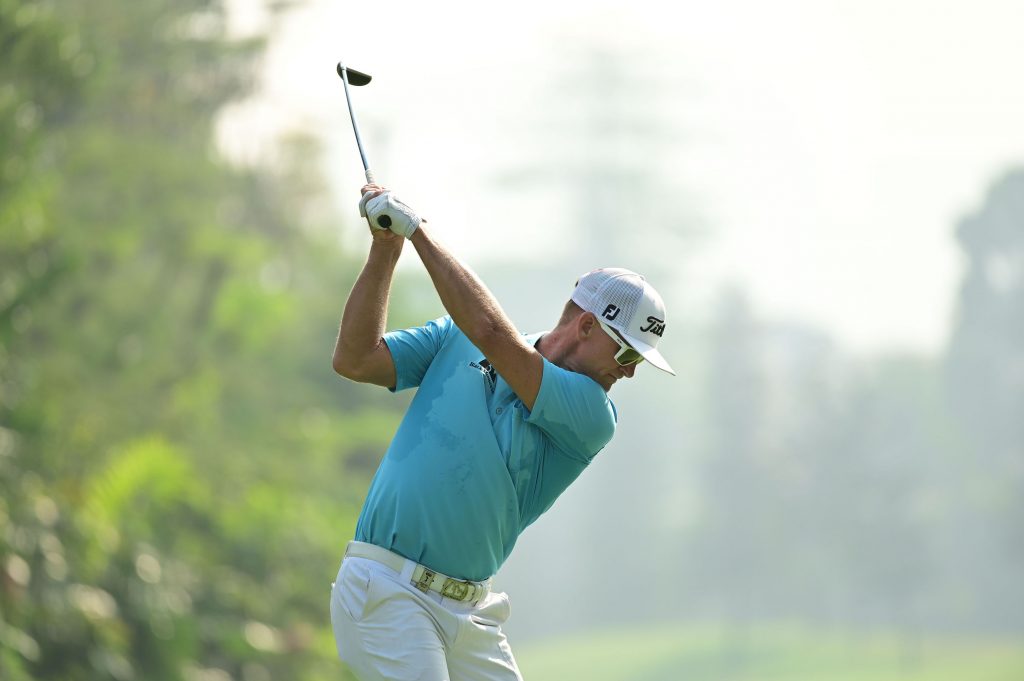
JAKARTA, INDONESIA – AUGUST 30: Berry Henson of USA pictured during the second round of the Bank BRI Indonesia Open at Pondok Indah Golf Course on August 30, 2019 in Jakarta, Indonesia. (Photo by Arep Kulal/Asian Tour/Asian Tour via Getty Images)
IN THE BEGINNING
“I remember the first day I landed in Thailand; I felt so far away from home; it was wild,” says Henson, from his condo at Black Mountain Golf Club, in Hua Hin, Thailand, this week.
“Now that I have been here for so long, it feels like I have been here my whole life. I almost feel I have lived here before, had another life here. I am lucky, I got a home here, and I have got a home in Palm Springs.”
The American arrived in Asia with just US$5,000 in his bank account and as he says: “I had one sponsor and he said, ‘hey it’s sink or swim, we either get a card or we are done’.”
There was probably no better incentive to succeed in Asia than that and it certainly proved to be the catalyst for the birth of one of the Tour’s most consistent performers.
He won the First Stage of the 2011 Qualifying School, and finished 11th in the Final Stage. Then five events later he claimed the Clearwater Masters, in Malaysia, on the Asian Development Tour, and two weeks after that he won the ICTSI Philippine Open, at Wack Wack Golf & Country Club.
“Both those victories were wire-to-wire, not a lot of people know that. Everything kind of snow balled for me out here,” adds the 41-year-old.
Surprisingly, he has not won on the Asian Tour since his victory in the Philippines but that has been compensated by consistently playing well, week in, week out, over an extended period ― something that very few golfers can achieve.
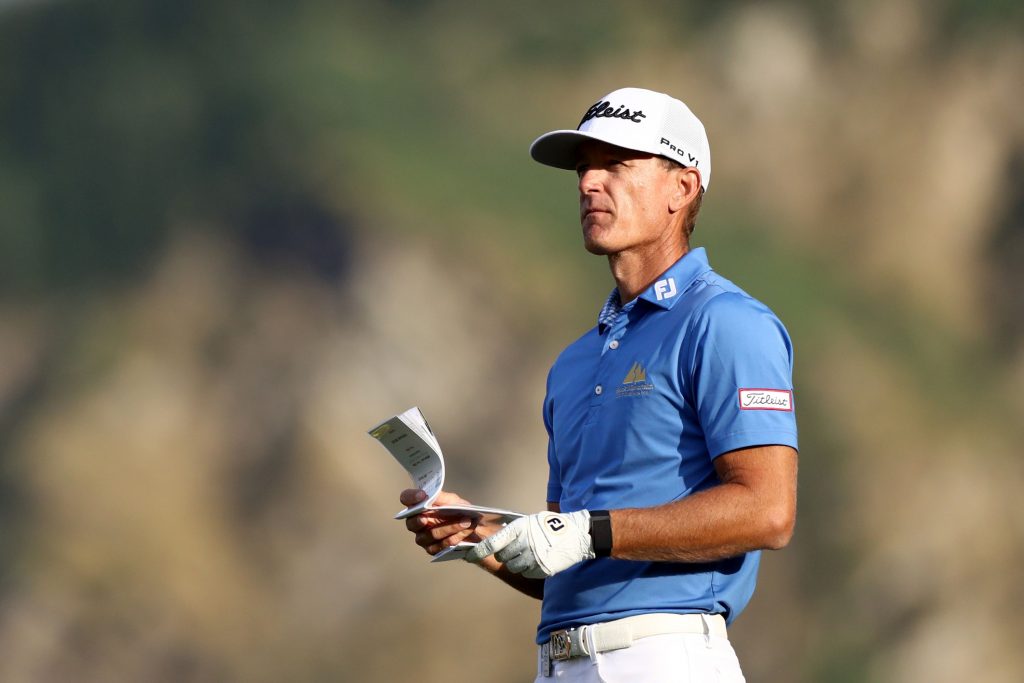
QUEENSTOWN, NEW ZEALAND – FEBRUARY 28: Berry Henson of United States looks on during day two of the 2020 New Zealand Golf Open at The Hills on February 28, 2020 in Queenstown, New Zealand. (Photo by Hannah Peters/Getty Images)
“MR CONSISTENCY”
He comfortably retained his Card in 2011, finishing 37th on the Merit list – replenishing his ailing bank account with nearly US$100,000 in earnings.
In 2018, he enjoyed his best finish on the Merit list, ending in 11th position with close to US$300,000 in winnings; while it was only when he was injured in 2016 that he finished outside the top-50, in 93rd place.
He says preparation has been the key to his success.
“Ever since I have come over here, I have felt that I am in the top percentile in preparing for golf tournaments. I feel that I am really good at picking the golf course apart. And if you look through my career, you can see I always played well on courses we have played for the first time.
“I know how to prep my game and pick apart a golf course a little bit quicker than, I think, most of the other guys do in Asia. And there are courses I always play well every year, Sentosa is one of them, Bangladesh I have always played well.”
He says he also has an ability to dig deep, never give up and make a cut when he is not playing well.
He adds: “Another thing that has allowed me to play consistently, is I have confidence over here, I enjoy playing here. I live at Black Mountain ― who have sponsored me now for seven years ― I live in Thailand, and so I am just able to prepare and feel very comfortable.”
His attribute of not giving up was never more evident than when he was beset by two wrists injuries in 2016 and 2017. He had two expensive surgeries on each wrist and played on a medical exemption in 2018.
Many may have crumbled under the pressure but he proceeded to put together what he considers his best year on Tour: he finished in the top-25 on 10 occasions, including a second-place finish in the Mercuries Taiwan Masters and five top-10s.
“I go very well when my back is up against the wall; I’ve always been a fighter. But I never had that really hot year like Jazz – but I feel like I have the ability and I am still trying. I have always played well in front, I just have not got in front enough,” says Henson, whose most recent win was the Long Beach Open in the US in 2013.
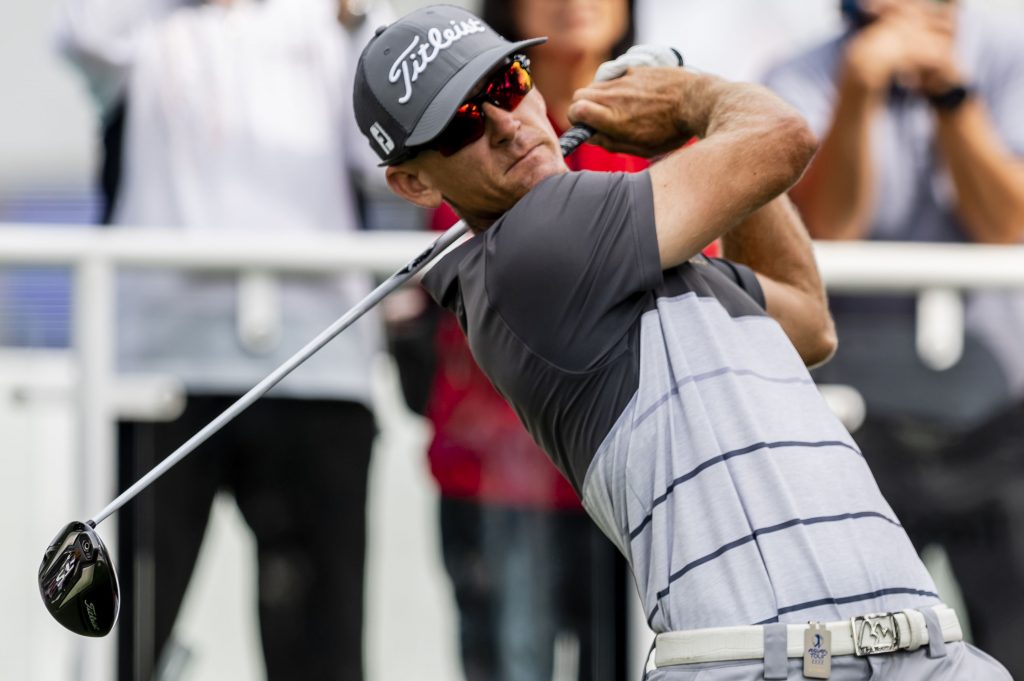
HONG KONG, CHINA – JANUARY 09: Berry Henson of United States tees off the first hole during the first round of the Hong Kong Open at the Hong Kong Golf Club on January 9, 2020 in Hong Kong. (Photo by Yu Chun Christopher Wong/Eurasia Sport Images/Getty Images)
KEEPING BUSY
And, so what has the outgoing American been up to since COVID-19 so unceremoniously stopped play on the Asian Tour, in March last year?
“It’s been difficult for everybody. The hardest part of the whole situation has been trying to decide when am I going to start playing golf again. I have kind of been going back and forth about going back to the US and I could have had a couple of starts in Europe, but I decided to stay [in Thailand] and see what was happening with the pandemic,” says the American.
“It has not been easy, it has been very difficult for me. I have always been a structured person and it’s been hard to maintain structure when there has been so much uncertainty. So I feel like I have got ready for golf about three times, and every time I get ready there is bad news. So that part for me has been pretty tough.”
He worked on gaining more swing speed during the first part of last year ― which caused a few small injuries, because as he says: “I have a mind of an 18-year-old and body of a 40-year-old”.
And, in addition to hitting the gym hard, he chose to pursue a couple of other interesting avenues.
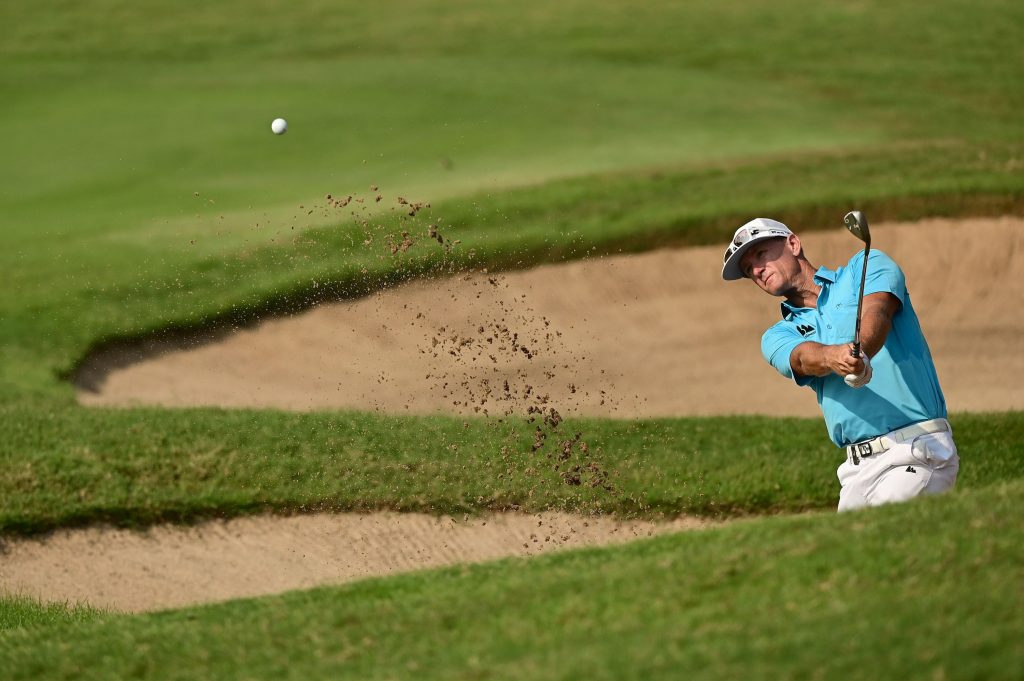
JAKARTA, INDONESIA – AUGUST 30: Berry Henson of USA pictured during the second round of the Bank BRI Indonesia Open at Pondok Indah Golf Course on August 30, 2019 in Jakarta, Indonesia. (Photo by Arep Kulal/Asian Tour/Asian Tour via Getty Images)
“I had to extend my visa, so the option was to get an education visa and study Thai. I studied Thai for four months. I did that two times a week and really picked up much better Thai vocabulary – which is a real benefit to my lifestyle,” says the American.
“But the major thing I have been doing is trading. I have always done some sort of trading, on the stock exchange, or trading cryptocurrency, but I have only dabbled in it since we have been playing but now since we have had time off I have really got into actively trading. And I started to learn about option trading and I have done very, very well. So I have turned into a workout fiend/Thai language student/day trader. And I have definitely played more videos game than I ever had before.”
More recently he also launched a social media challenge called #Thaispinner ― which sees players, some as prominent as Thai star Kiradech Aphibarnrat, submit videos showing them hit chip shots, played with the ball outside the back foot, which results in loads of back spin.
Thailand’s Thammanoon Srirot even sent one in of him skimming a shot across a lake.
Henson rejoined the Asian Tour’s Tournament Players’ Committee toward the end of last year, and is very keen to help the Tour ― and in so doing, repay them for helping his career.
“I have always tried to help the guys build their status and that is kind of what #Thaispinner is part of. Maybe some people don’t look at it that way but I like doing that stuff because it helps the Asian Tour. Those guys are so talented and everybody sees it and thinks it’s cool. Not many people in the world realize what these guys do around the greens. Building that content for not just the Thai players but the Asian Tour brings a lot of value.”
Clearly, and impressively, there is no time to rest for Berry Henson, even with an ongoing global pandemic.
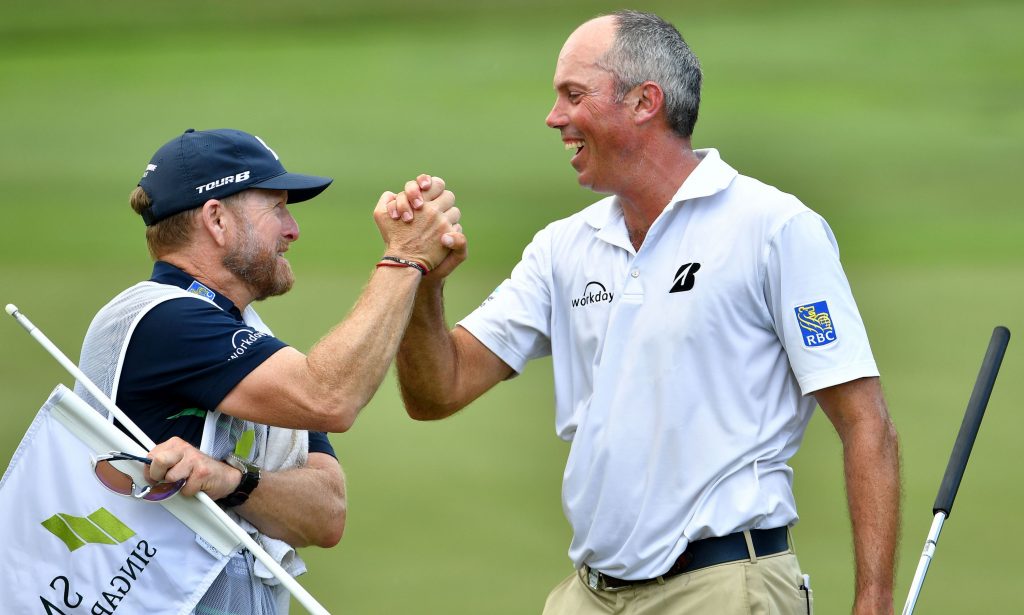
American Matt Kuchar was one of the marquee players at the SMBC Singapore Open last year, along with England’s Justin Rose and Henrik Stenson from Sweden. Having won bronze at the 2016 Olympics in Rio, behind gold medalist Rose, and silver-medal recipient Stenson, he arrived, somewhat, in their shadow. However, he proceeded to put the record straight in Singapore, by conquering the mighty Serapong course and departing like a gold medal champion. We look back at what was an epic edition of the prestigious tournament ― the final round of which was played on this day, a year ago.
Much was made of Matt Kuchar’s brave recovery from a triple-bogey eight on the seventh hole on The Serapong at Sentosa Golf Club to win the SMBC Singapore Open last year.
With England’s Justin Rose and two of Asia’s most exciting young golfers, Jazz Janewattananond from Thailand and Korean Joohyung Kim, hot on his heels the tall American shifted gear and toured the back nine in three under to triumph.
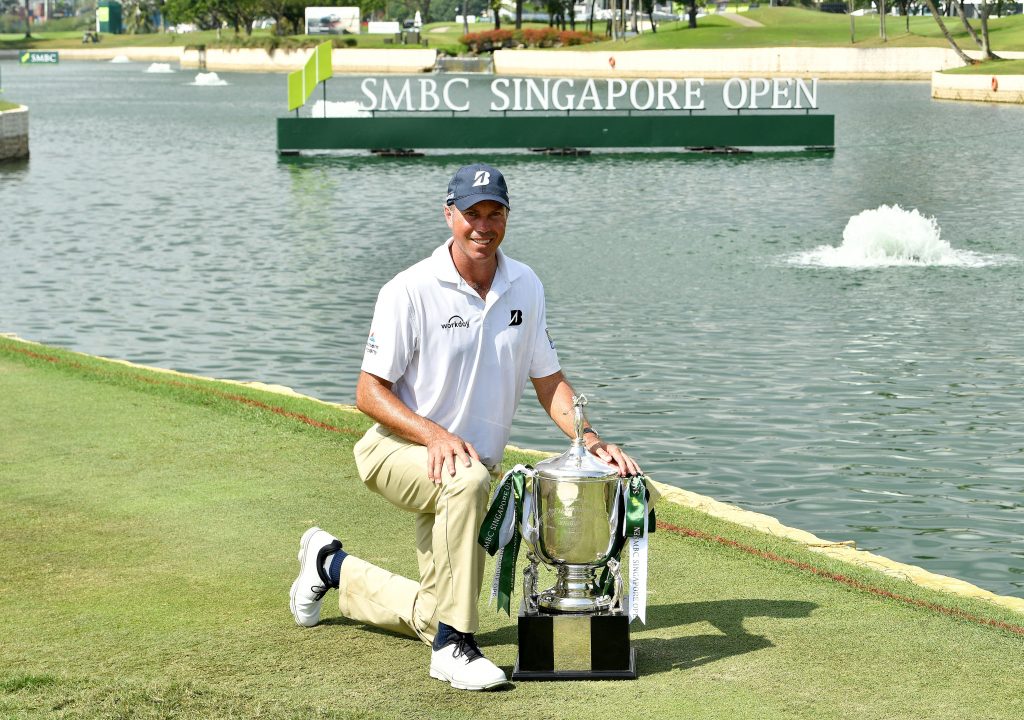
Picture by Paul Lakatos/Lagardére Sports.
But, in retrospect, there were a number of decisive moments during his march to victory ― not least an astonishing nine-under-par 62 on Saturday and a truly brave birdie on the 72nd hole, where calamity could have so easily intervened.
Kuchar, or “Kooch” as he is popularly known, was playing in Singapore for the first time and had been dialed-in all week. He fired a 66 on the first day to sit one back from the leader, Japan’s Kosuke Hamamoto.
He trailed Jazz ― an expert in this event having won it in 2019 and finished joint fourth in 2018 ― by two at the halfway mark, after shooting a 68.
And that sensational 62 on day three saw him open up a three-shot advantage from Jazz and Filipino Miguel Tabuena.
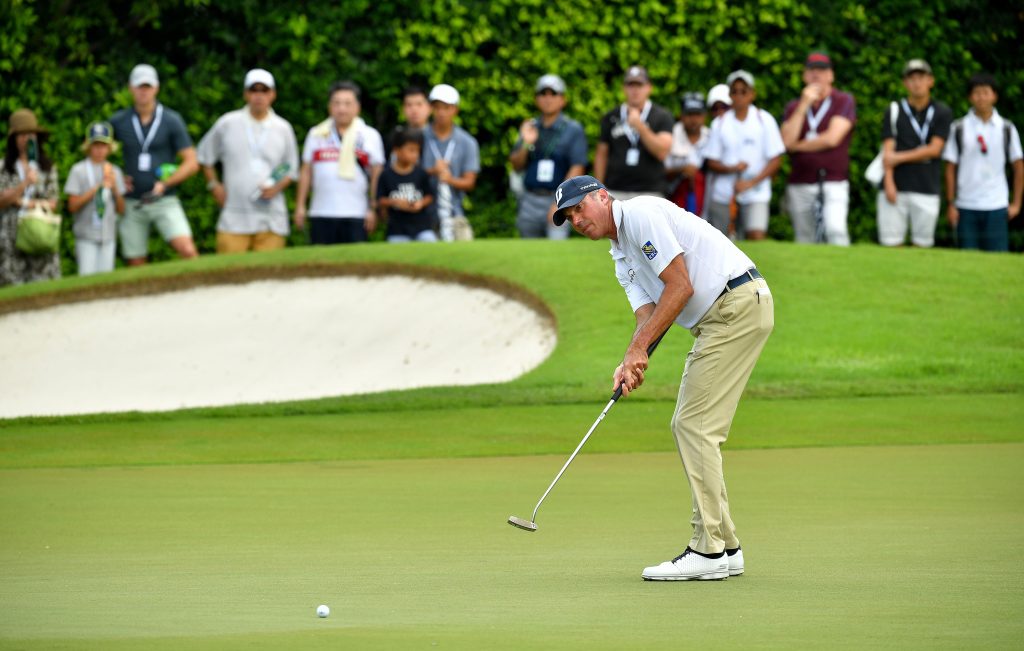
Picture by Paul Lakatos/Lagardére Sports.
The 62, was the work of a master practitioner, and was the lowest round since the Singapore Open moved to its permanent home at Sentosa Golf Club in 2005, with just three players having shot 63: Angel Cabrera of Argentina, the 2007 champion, South Africa’s George Coetzee and Song Younghan of Korea, who won in 2016.
Kuchar disarmed the Serapong with long, accurate driving, pinpoint approach shots and heat-seeking putts. Employing his trademark arm-lock putting style that he has used effectively since 2011, Kuchar needed just 25 putts in his eye-popping round that thrilled the large galleries who sent howls of approval around Sentosa.
The then 41 year old set up his birdie opportunities, the majority of them from close range, by hitting 11 out of 14 fairways with an average driving distance of 310 yards and finding 15 out of the 18 greens in regulation.
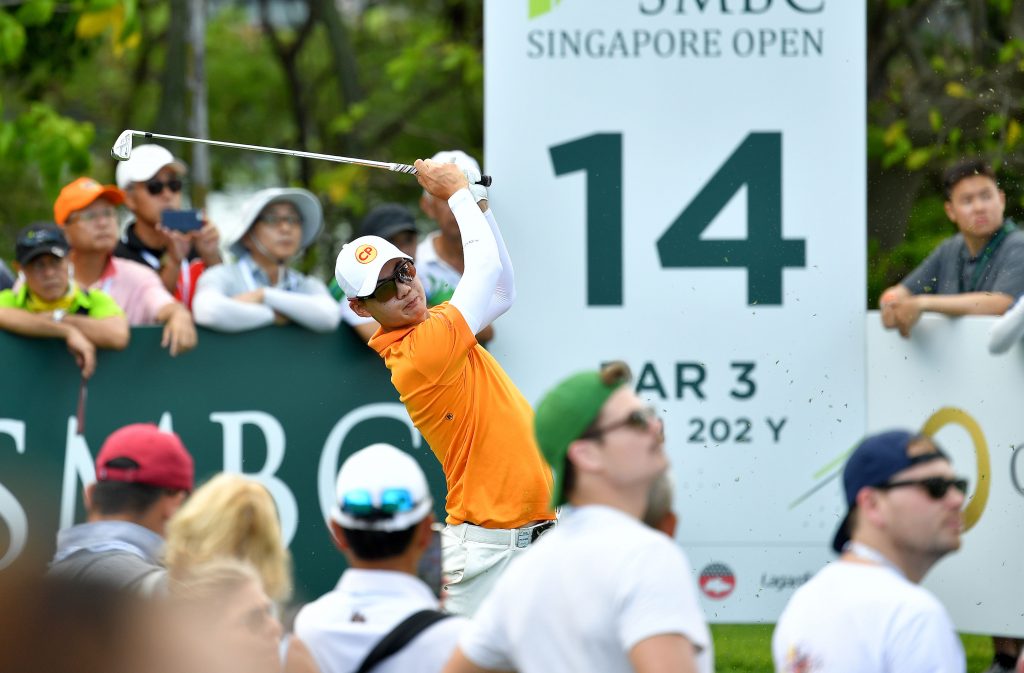
Picture by Paul Lakatos/Lagardére Sports.
He birdied the first, second, fourth, seventh, 10th, 14th, 15th, 17th and 18th in a round that will live long in the memory for those lucky enough to have witnessed it live.
On the final day, when Kuchar ― ranked world number 24 at the time ― birdied the par-five fourth to stay comfortably out in front, victory almost seemed a mere formality for the American.
But, from nowhere, a nightmare hole seven opened the door to his rivals.
He pulled his tee shot left into the trees and from there he had a bizarre air shot when trying to extricate his ball from the roots of a tree. After getting his ball back into the fairway, at the second attempt, he then lost a ball after hooking his approach into the undergrowth to the left of the green.
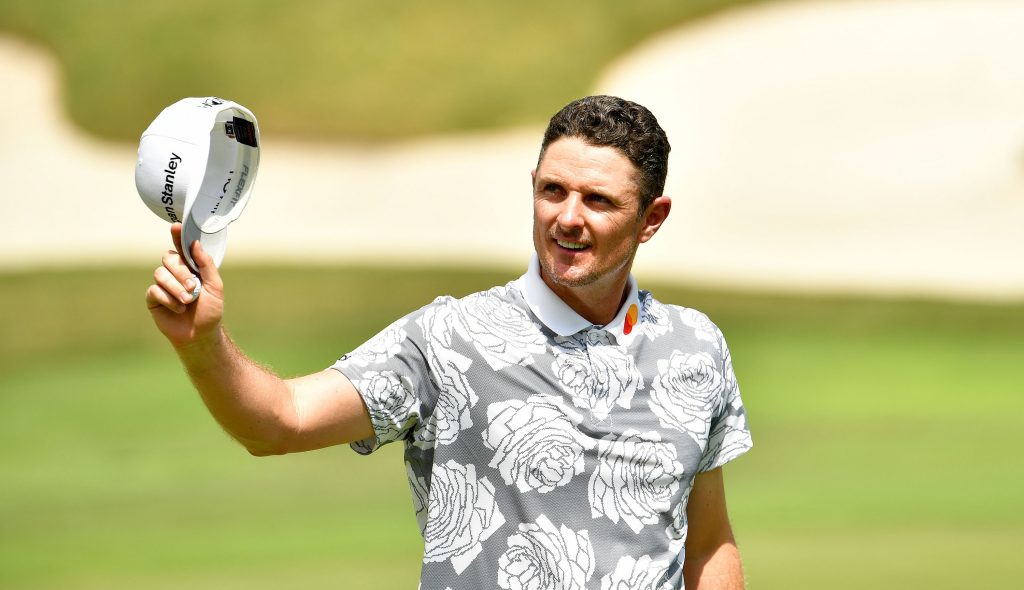
Picture by Paul Lakatos/Lagardére Sports.
His sixth shot found the green but he then faced an 80-foot putt and the strong possibility of a three putt. However, he drained his second putt, from 10 feet, for a triple, which saw him fall back into a tie with playing partner Jazz.
That setback would have been the beginning of the end for many but, clearly, eight was enough for Kuchar, as he responded magnificently to the challenge.
He did not drop a shot thereafter and birdied 11 and 16 to regain control and had a two-shot lead from Rose, playing in the group ahead, on the par-five 18th.
Trying to make sure he stayed clear of the lake on the left, he pushed his tee into a trap on the right, where he was fortunate the ball did not plug.
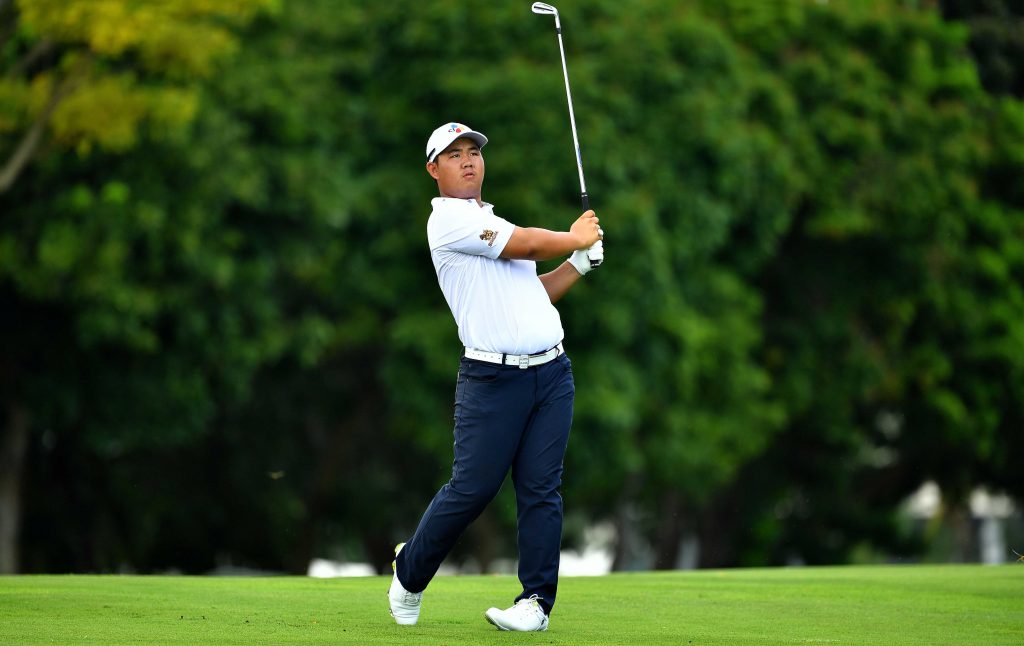
Picture by Paul Lakatos/Lagardére Sports.
He was left with a tricky bunker shot and could only splash it out into the fairway.
The American was then left with a long-shot of 230 yards to the green ― a huge challenge in the circumstances.
Remarkably, he struck one of the finest shot of his career to 20 feet and promptly holed the birdie putt for a famous victory.
His final round 70 saw him finish with a four round aggregate of 18-under-par 266 ― for which he earned a winners’ cheque for US$180,000.
“Golf and life have a lot of similarities,” said Kuchar, in his post round interview.
“When you face difficult times, it’s how you persevere and overcome those things.
“To make a great turnaround and play a great back nine to close out the tournament with birdies on the 16th and 18th was a real thrill. I’m awfully proud of being able to bounce back from adversity and not let hard things get the better of me.
Seven was a disastrous hole to make triple bogey there. I felt like I was cruising along and had a four-shot lead at that point and it was awfully comfortable.”
It was the 17th win of his career and first on the Asian Tour and Japan Golf Tour Organization.
Rose, helped by a brilliant back nine of four-under-par 31, finished three behind in second place after returning a 67.
Jazz took third spot thanks to a 71 while Kim, the 17-year-old wonder kid who had claimed his first title on the Asian Tour a few months earlier, ended in fourth place, after also signing for a 71 ― marking him down as a potential future champion of Singapore’s national Open.
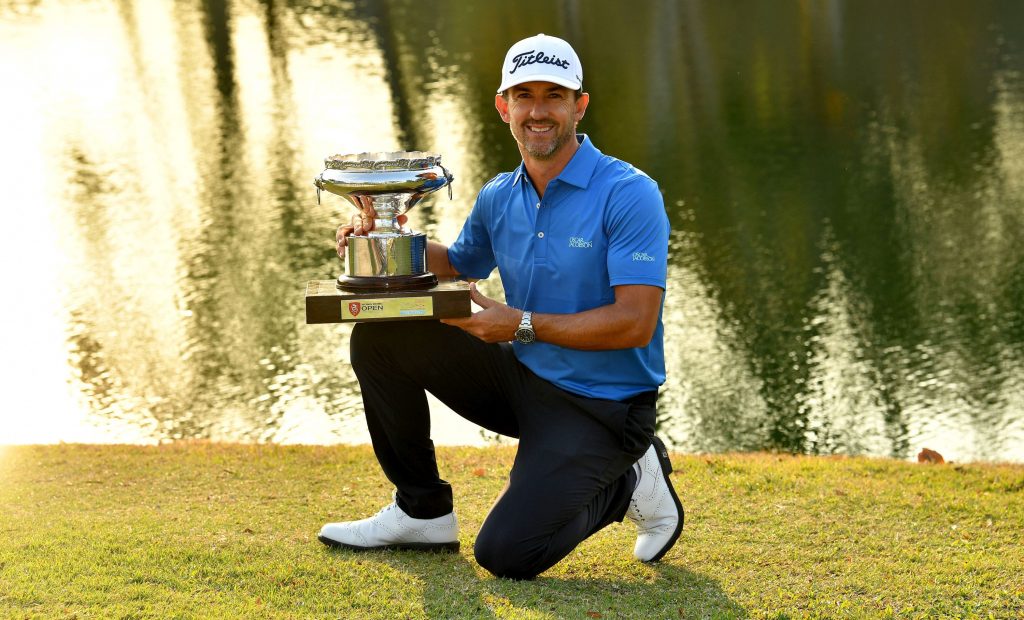
Wade Ormsby, understandably, says that after COVID-19 played havoc with last year, he almost forgot he actually won a tournament, the Hong Kong Open. But when we spoke to him, last week, about that dominant victory ― exactly a year ago today ― the memories quickly came flooding back.
To say Wade Ormsby was a driven man, seeking redemption, at last year’s Hong Kong Open at the Hong Kong Golf Club is probably an understatement.
There was real sense of commitment and purpose to his second victory in one of Asia’s blue-chip events and it all stemmed from bitter disappointment a few weeks earlier.
He had been in contention at the Australian PGA Championship at RAVC Royal Pines on the Gold Coast, but dropped shots over the inward stretch and watched his famous compatriot Adam Scott march to victory.
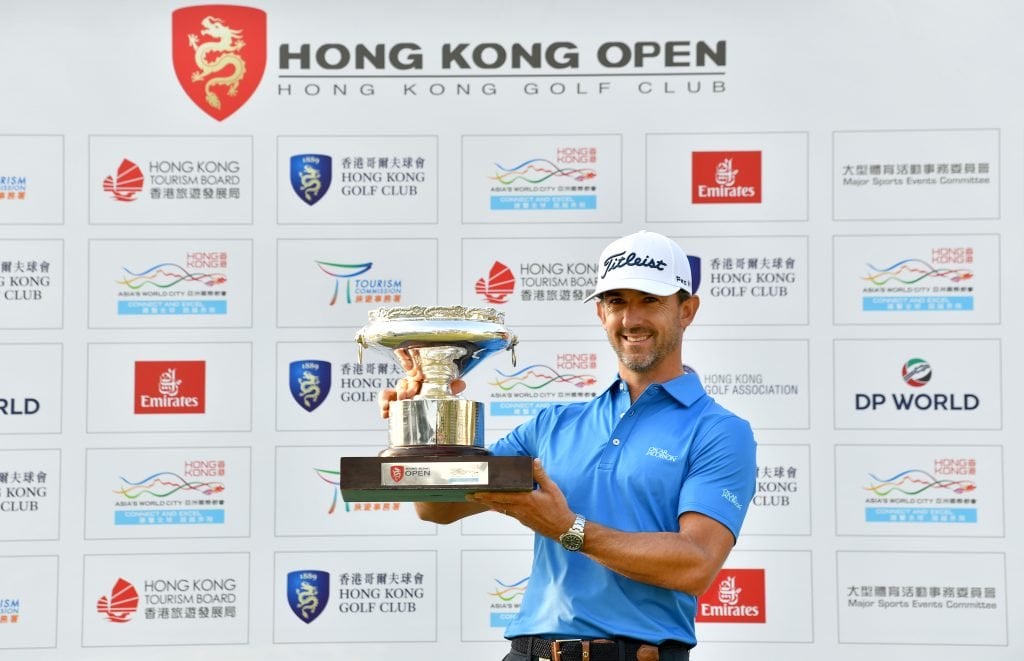
Wade Ormsby of Australia
“I gave myself plenty of opportunities, I just kept on messing up in the last 10 to 12 holes,” said Ormsby from his home in Adelaide.
“I tried to figure out what was wrong and I realised the mental part wasn’t playing ball. I had to do something about that in those few weeks off because I wasn’t a very happy camper. I was really driven after my annoying drive to the airport, Sunday night after the Australian PGA.”
And after his wife also advised him not to go back on Tour until he had fixed the issue he says he sat on the couch one night and went through all his possible solutions.
This process led him to make contact with Noel Blundell – one of Australia’s leading sports psychologists.
“He has been around a long time and I found him,” said Ormsby.
“I sent him an email and he replied to me straight away. I told him what I was feeling and we got straight to work, did a few intense sessions and away we went. I worked on getting my mind under control, working on my pre-shot routine, and just putting everything in its place from a mental point of view.”
Fast forward to Hong Kong, and Wade Ormsby 2.0 stepped onto the famous fairways at Fanling, home of the Hong Kong Golf Club.
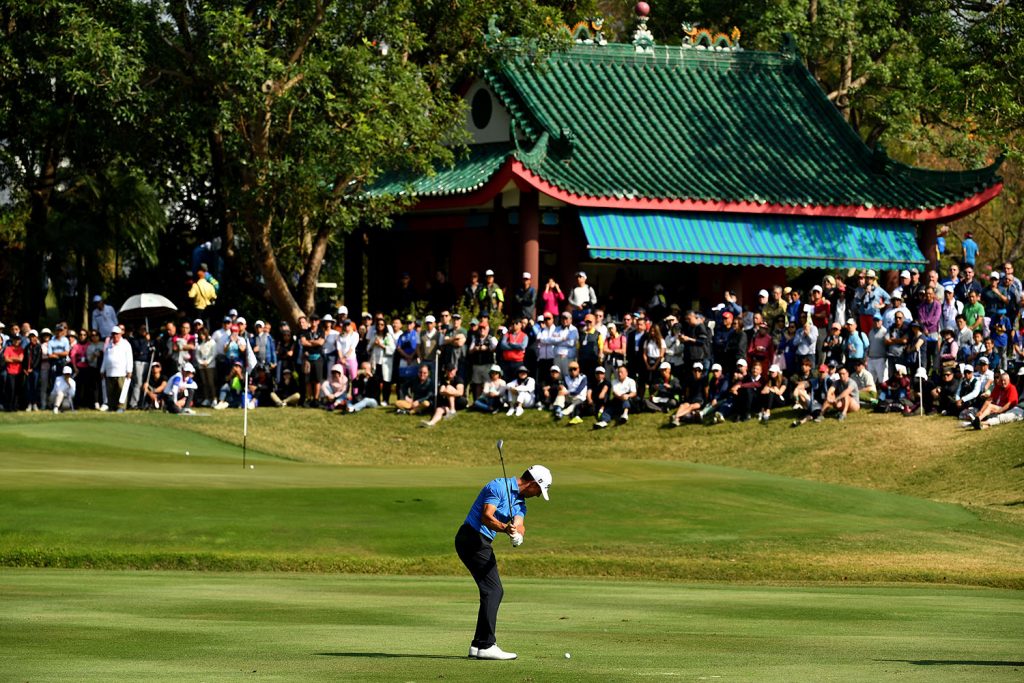
He was considerate enough to let someone share the lead with him on the first day, Japan’s Tomoharu Otsuki. They shot five-under-par 65s.
But thereafter, Ormsby was rarely challenged, thanks to three stunning 66s.
He had a two-shot lead at the halfway mark, and was three ahead after the penultimate day.
And come Sunday afternoon, his four-round aggregate of 17-under-par 263 was four better than the man in second-place, Ireland’s Shane Lowry – the reigning Open champion.
Ormsby earned a cheque for US$180,000 and became the second wire-to-wire winner of the Hong Kong Open after England’s Aaron Rai (2018).
He says: “I made a messy bogey on the first hole on Sunday. I turned a double bogey into a bogey thanks to making a 12 footer. So that was quite key. But I then birdied two, three and four and that really swung the momentum back my way. If ever there was a time I was going to stumble it would have been at that point.”
Throughout the week he drew upon the work he had done with Blundell – which was key in helping him handle the intense pressure that came with leading from start to finish.
“I felt like I knew how to control my thoughts for once. I had led the tournament that long and just figured I should keep doing what I was doing and I would be fine,” added the 40-year-old, a three-time winner on the Asian Tour who currently leads the 2020/21 Order of Merit.
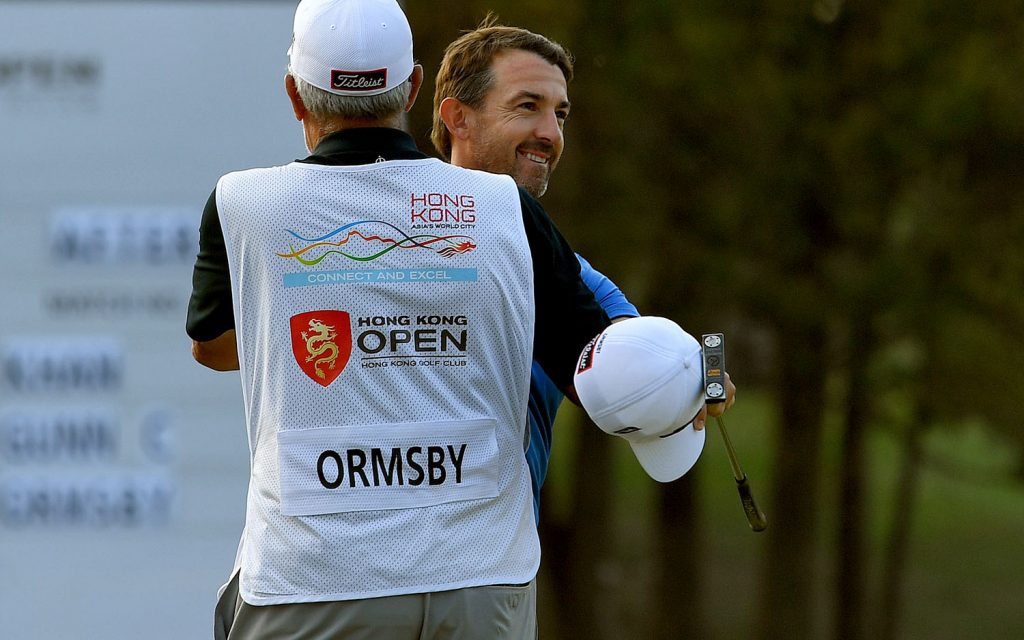
“There are a lot of different techniques sports psychologists use to work on: breathing, pre-shot routine and keeping the messages simple in your head. It is a combination of those things I used. I kept on going to them out there when you kind of need them. They don’t always work at the same time depending on your situation and how you are feeling. I was working very hard internally even though it might look pretty easy from the outside.”
He says Australian Marcus Fraser, his best friend on Tour, was there to give him a beer on 18 when he won but there was not much chance to celebrate as they flew off that night to the next event in Abu Dhabi – which is where he is heading to next week to start his season, with three events in the desert.
Ormsby triumphed in far more dramatic circumstances when he first claimed the Hong Kong Open in 2017. He was four behind SSP Chawrasia at the turn in the final round but was let back into the tournament when the Indian triple-bogeyed the ninth.
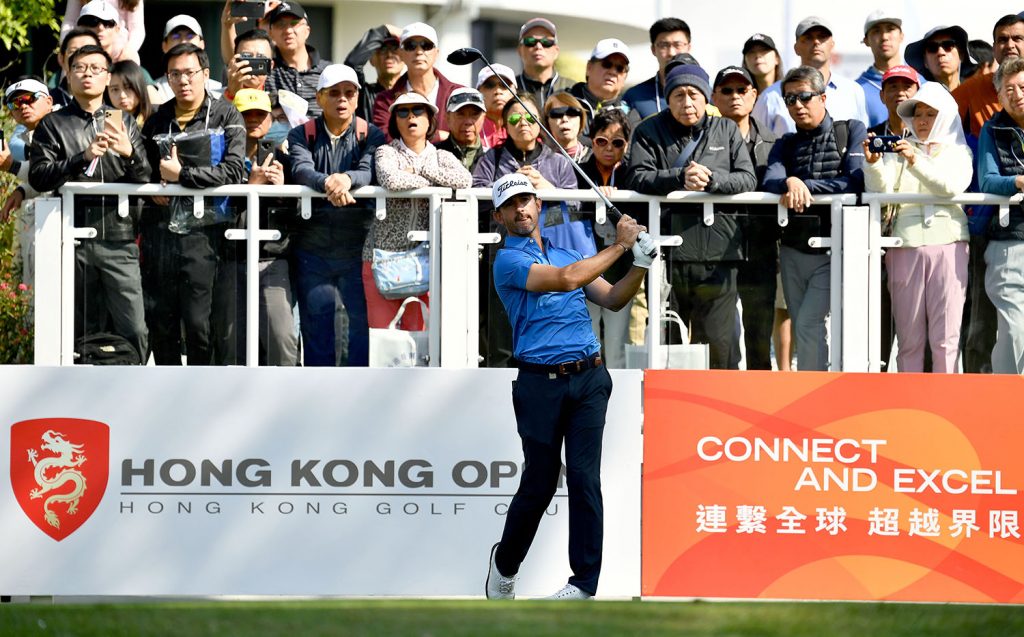
By the 18th, the Australian had a two-shot lead but he three putted for a bogey meaning Spain’s Rafa Cabrera Bello needed a birdie to win or a par to force a play-off. Fortunately for the Ormsby, Cabrera Bello carded a bogey to hand the Australian the biggest win of his career.
And why does Ormsby play so very well at the Hong Kong Golf Club?
Well, it’s just a matter of patience.
He says: “We all know Hong Kong Golf Club, it is a tricky place and you have to play it the way it is set up and don’t overpower it. Everyone has to play from the same spots more or less. It is a lot more about position and being patient. That is one of the fun things about it. And that’s why I like it so much and play well there.”
Ends.
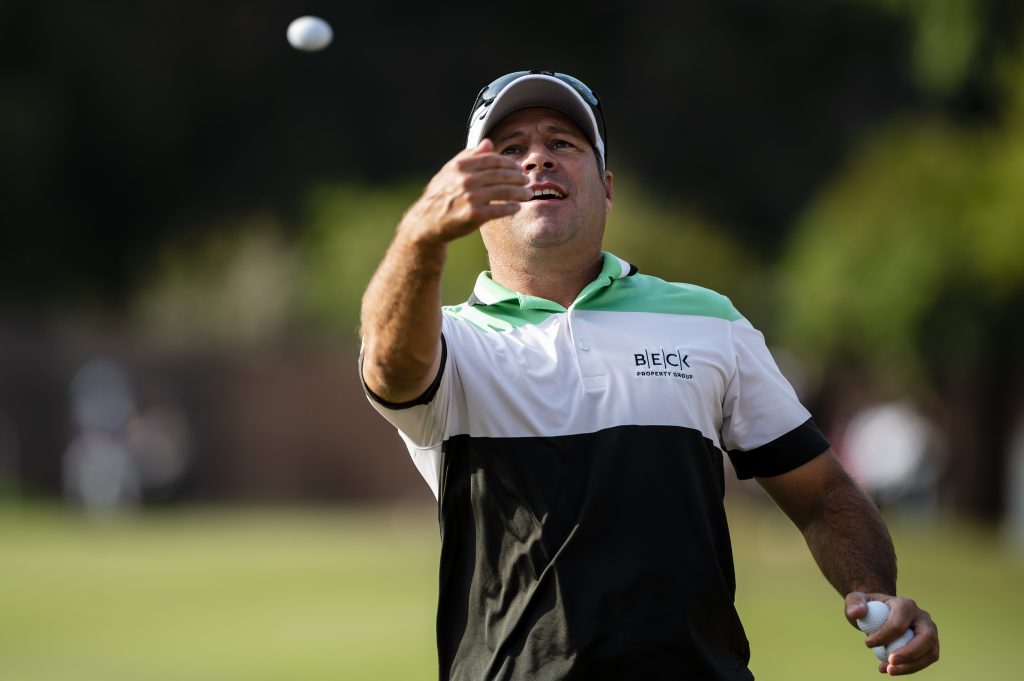
In the first of our new monthly Player Q&A series, we talk to Australian Terry Pilkadaris – not only the winner of three titles on Tour but also runner-up on nine occasions. It was a good time to speak to him as he had just come out of lockdown in Melbourne and has recently been nominated into the Asian Tour Tournament Players’ Committee.
This week the lockdown was lifted in Victoria – for the second time this year. You must be relieved. How difficult was the experience for you?
It was kind of hard. We got through it. You can’t do anything. We had a lot of restrictions: we could only travel 5km, that was the maximum we could travel, and we could only get out for an hour of exercise a day. So it was quite strict. We were locked down 23 hours a day so you look forward to your one hour of exercise.
What did you spend your time doing?
I got engaged in late August! In lockdown, Victoria and I were spending all this time together and we were getting along really well so I thought we should do the right thing. She has been great to me, we have travelled the last couple of years together out on Tour and she has been an absolute delight to be with. We have had an absolute ball.
And, I have been doing my PGA of Australia accreditation. So I was doing assignments and things like that. It is called a bridging course, so I get qualified to teach, be a club professional, and manage a pro shop.
I was teaching online as well, so people would send some stuff in and I would do some work with them.
When was the last time you played golf?
I think I played a game in June. I have basically played 18 holes since the Bandar Malaysian Open in March. I played a team event with Peter Wilson and we lost on the 19th hole and I thought, right that’s me done for now. I have been a Touring professional for 21 years and when you have no tournaments in sight there is no interest in practicing. The big thing is the thrill of the competition and we haven’t had that for a while.
But I needed a break as I was burnt out. We didn’t really stop from the end of last year. A six-week break would have been fantastic but unfortunately it’s been a lot longer, everyone has been struggling and locking down, so I have had a longer break.
Difficult to say but what are your plans?
We have just got to wait and see what happens with events. I think I would have got a start this week on the European Tour in Cyprus. There are a couple of events there. The problem we have though is I have not picked up a golf club since June, and haven’t been able to step foot on a golf course for 12 weeks. And then I would have to quarantine when I got back home – sit in a hotel for two weeks. It wasn’t a viable option to fly all the way to Europe and back. The problem with that is they also limit the number of people flying back into Australia – so it could take longer to get back.
How were you playing before lockdown in March?
I was playing pretty good. I had a top-10 in Hong Kong in January. I finished middle of the pack in New Zealand in March but I was running out of gas: I think I only had 10 days off between the Australian PGA at the end of last year and then Hong Kong this year. I was looking forward to a break but now it is frustrating, I wanna get out and play again. I will do some teaching and when we get a definite idea of when the tournaments come I will start prepping.
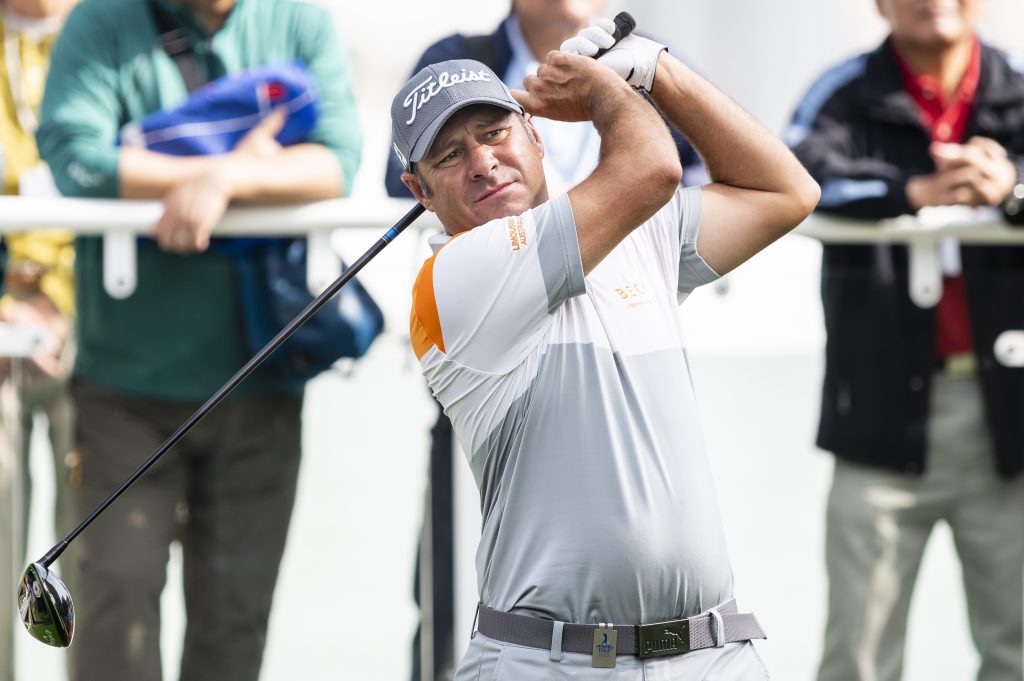
HONG KONG, CHINA – JANUARY 11: Terry Pilkadaris of Australia tees off the first hole during the third round of the Hong Kong Open at the Hong Kong Golf Club on January 11, 2020 in Hong Kong. (Photo by Yu Chun Christopher Wong/Eurasia Sport Images/Getty Images)
Have you been working on your fitness?
Yes. I am four to five weeks into a 12-week programme. It is a club head speed programme, so I am working with Paul Mews, who is a long-drive guy ranked in the top-five in Australia and also a personal trainer. He has written up some programmes for me. So I have increased my driver head speed by six miles an hour and we want to get it up to 10 miles an hour quicker – so we are on our way. It is a 45-mnute programme, five days-a-week. There is a lot of body weight stuff and band work. When I get back on Tour this will help me get some extra distance which will be a huge bonus. I need an extra 10 metres. But doing all these burpees I realize I am not 25 anymore. I don’t know what happened, I remember being 31 and now I am nearly 47!
This weekend will be the 16th anniversary of your win at the Sanya Open – which came a week after you won the Crowne Plaza Open in Shanghai. You must still remember those amazing two weeks well?
Absolutely. The first one, Crowne Plaza at Tomson Golf Club. We had played the BMW Asian Open there in May and as soon as I found out it was on I thought I can win this one because I liked the course and it just suited my eye. Leading up to it I was playing well and should have won the Korean Open but finished fourth and finished second in the Taiwan Open a few weeks later. I just played nicely and didn’t make too many mistakes. It helped the course was set up like a Sandbelt course in Australia – the greens were fast and firm.
Sanya was a different type of golf course, it was windy, but I was shooting the lights out and playing well. I ended up in a play-off with Clay Devers and I remember his caddie looked as if he had 10 Red Bulls, he was just bouncing off the walls and was really pumped up, more than Clay. I won it on the second play-off hole after hitting my second to a foot. Clay had a 40 footer for birdie and after he missed he picked up my marker and congratulated me but the ref stepped in and said no no I had to putt out. But I tapped it in and all of a sudden it’s back-to-back wins. Wow! It was bizarre.
The Korean Open was a big influence. I had the lead and I was playing with Ernie Els – who was number three in the world at that time. I was going toe-to-toe with him. I was leading by four at one point and had a one-shot lead going into Sunday but I made triple on 14. But I was talking to Ernie afterwards and I asked him what do you think of my game and he was full of praise and that gave me the confidence to go on.
This week you were elected to the Tournament Players’ Committee of the Asian Tour. What are some of the things you are hoping to achieve?
I have been out here long enough and feel like I can contribute. It’s going to be a lot of work and I am looking forward to it. I want to go more on the players perspective and I have some ideas on what I would like to see happen. Having been out here 21 years I have seen how some things have worked and how some things haven’t worked. But I am really looking forward to getting going once the Tour is up and running. I definitely feel revived and ready to go!
Ends.
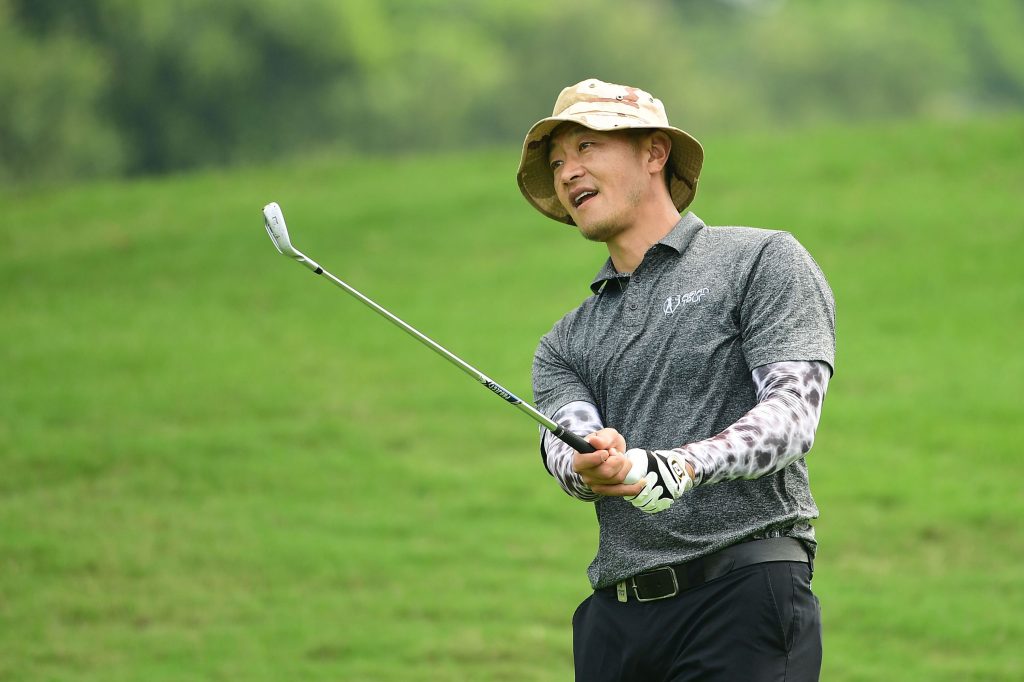
In the second and final part of our feature on three-time Asian Tour winner Anthony Kang, the American talks about his famous victory at the Maybank Malaysian Open, swing fundamentals and his transition into TV land.
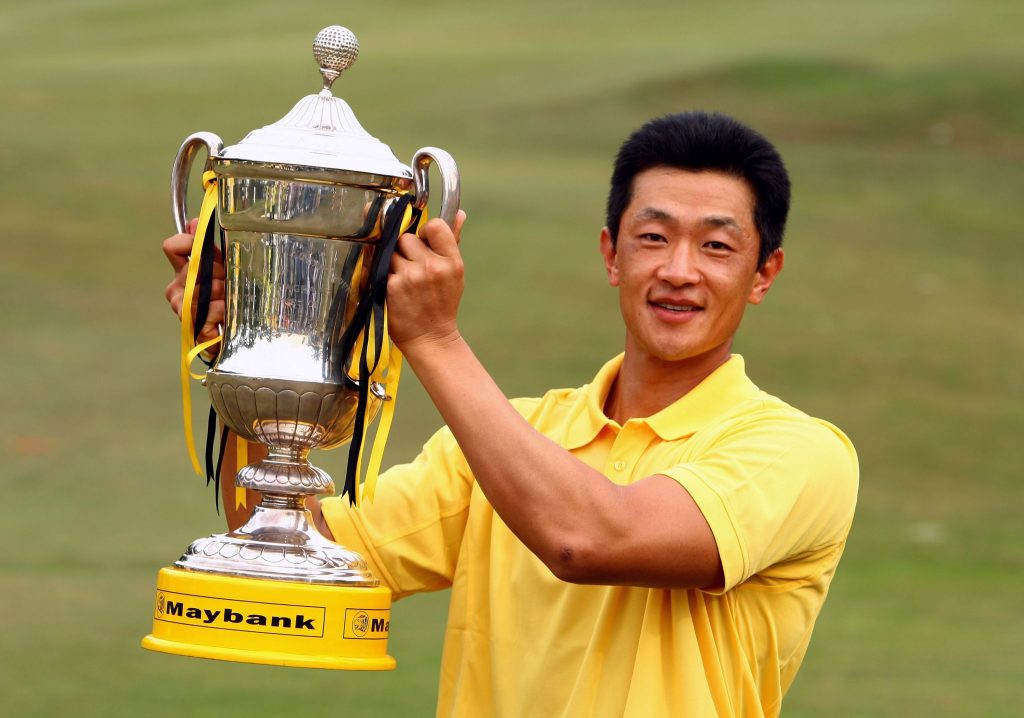
KUALA LUMPUR, MALAYSIA – FEBRUARY 15: Anthony Kang of USA poses with the trophy after winning the Final round of the 2009 Maybank Malaysian Open at Saujana Golf and Country Club on February 15, 2009 in Kuala Lumpur, Malaysia. (Photo by Ian Walton/Getty Images)
While Anthony Kang always looks back on his victory at Casino Filipino Philippine Open in 1999 as one of the great highlights of his career – because it was his maiden win – his triumph in Malaysia’s National Open 10 years later carries as much significance to him, and perhaps even more.
It is the manner of that win, which came down to a nail-biting finish, which is so important to him.
“At the Maybank Malaysian Open having a chance to hit my second shot on the par-five final hole of the tournament, the 72nd hole, and knowing if I pulled the shot off I was going to win the tournament was an incredible moment and experience.
“To me it is a rare occasion in golf to be in a position to hit that winning shot when the time is ticking off – it happens in other sports like American football, even soccer, or basketball or baseball. So I felt like it was that moment for me and to experience a moment like that, which all great players have – like Tiger Woods, Rory McIlroy and Dustin Johnson – I feel fortunate that at least in Malaysia that tournament provided me the opportunity to experience that moment and then fortunately to come out ahead on the right side of it.”
He birdied the 18th at Saujana Golf and Country Club to win by one from four players: England’s David Horsey and Miles Tunnicliff, Thailand’s Prayad Marksaeng and India’s Jyoti Randhawa.
It ended an eight-year title drought and as the event was jointly-sanctioned with the European Tour it secured him playing privileges there.
“As soon as I won, I called my brother and said do you want to come and caddie for me in Europe, because we are going to make millions!” said the American.
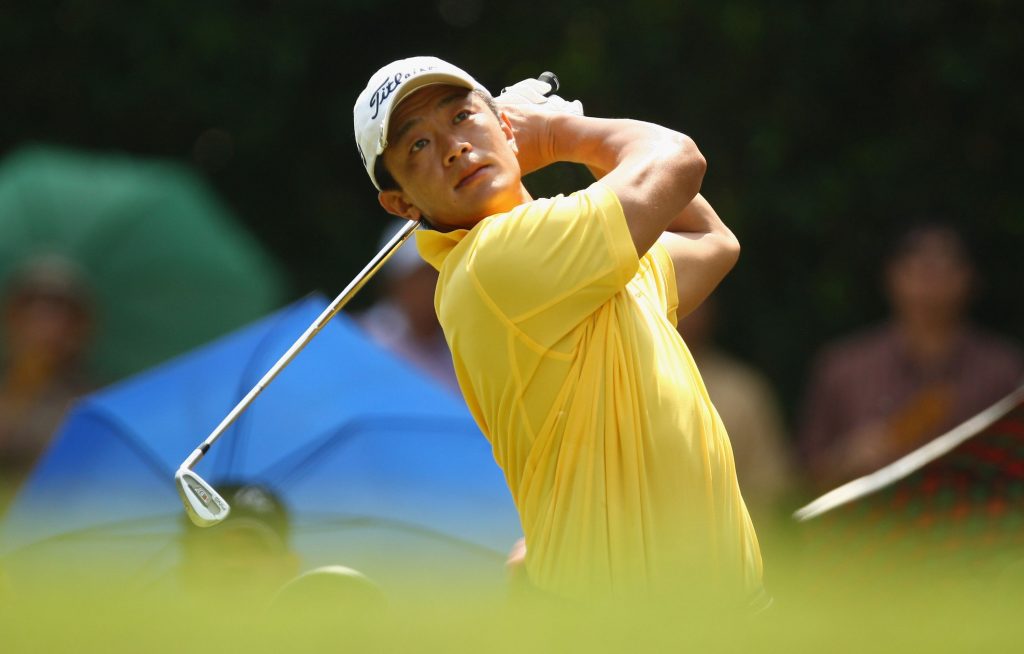
KUALA LUMPUR, MALAYSIA – FEBRUARY 15: Anthony Kang of USA in action during the Final round of the 2009 Maybank Malaysian Open at Saujana Golf and Country Club on February 15, 2009 in Kuala Lumpur, Malaysia. (Photo by Ian Walton/Getty Images)
He quickly points out that that did not come true but that the opportunity was the most important element.
He adds that his game was gathering momentum in the lead-up to Malaysia: “Before Malaysia, about two years prior to, I was playing pretty solid golf. I wasn’t hitting any wild shots. I was very consistent, week after week, and I was making putts. While I wasn’t contending very much, I still had a lot of top 10 to 20 finishes. I was loving it. I’d show up, play, make some money and sometimes have a chance to win. Week after week after week, everything was in the positive.”
Unfortunately, success at Saujana did not open the floodgates to more firsts. In fact, quite the opposite happened.
“My game started to go about one month after the Malaysian Open,” says Kang.
He remembers playing a practice tournament at the Ballantines Championship in Korea on Jeju Island with Ted Oh, Unho Park and Lam Chih Bing (his regular practice group) when things started to go wrong.
“On the eighth hole I hit this drive and it went six yards right and I couldn’t figure out why that shot happened and ever since that happened my game started to slowly erode. So every day after that I was trying to fix it – it was like that story of the kid in Amsterdam who is trying to plug the dam wall by plugging the leaks day after day.”
He feels it was his fundamentals and technique that let him down.
“My fundamentals were not very solid. I had a band aid week after week to make the ball go straighter. I was thinking if the ball went straight, whatever I was doing, that’s correct. As opposed to looking at the proper technique, proper sequence, proper timing.
“Back then the information was not available, the technology wasn’t there, the data wasn’t there, to say the swing has to be sequenced this way, the hips have to move this way – it was more trial and error. Back then it was legendary stories of Vijay Singh.
“That was the mentality I had. I needed to see the ball on the driving range going straight, didn’t matter what my swing felt or looked like.
“I think in the end having the lack of knowledge caught up to me.”
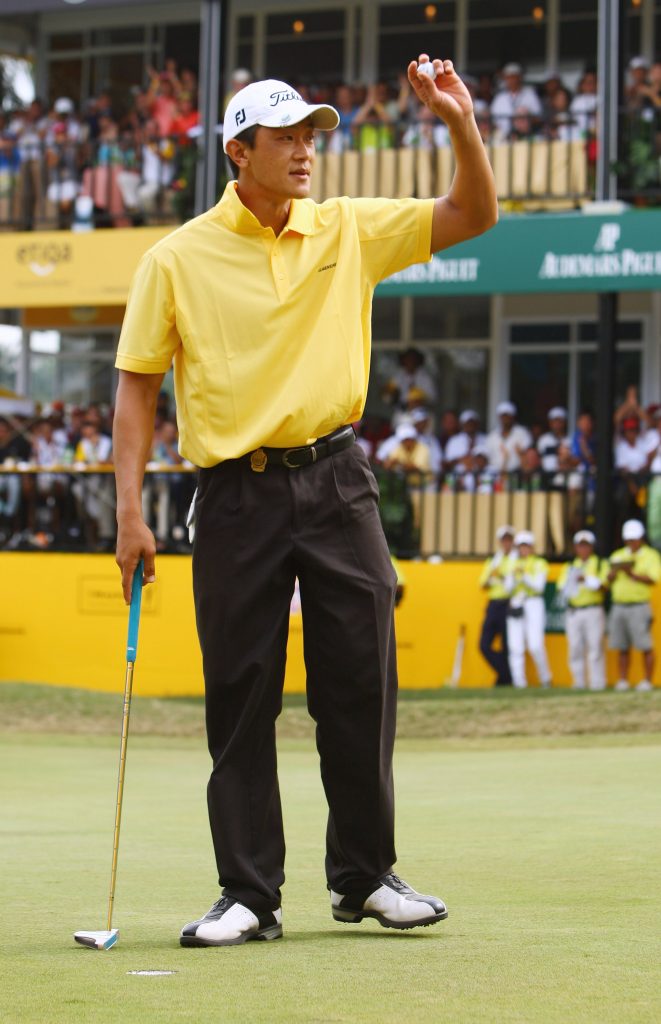
KUALA LUMPUR, MALAYSIA – FEBRUARY 15: Anthony Kang of USA celebrates after winning the Final round of the 2009 Maybank Malaysian Open at Saujana Golf and Country Club on February 15, 2009 in Kuala Lumpur, Malaysia. (Photo by Ian Walton/Getty Images)
Kang jokes that it was missing cuts that led to opportunities working in television commentary but in the ensuing years he still went on to become one of the most successful players on the Asian Tour with over US$2 million in career earnings. He currently sits in 22nd position on the Career Earnings list.
He first got into commentary at the Indonesian Open in 2014, where Dominique Boulet – a key member of Asian Tour Media broadcast team – suggested he turn his hand to some on course commentary.
“I had just missed another cut and it was a televised event and Dom came into the clubhouse and he sat down with us and asked me if I wanted to go on the golf course tomorrow and do on-course commentary. And I looked at him and I thought that might be fun. Let me give it a go,” says Kang.
“I still find it extremely difficult. It is really difficult. But it was especially in the beginning. I remember that first time in Indonesia in the morning when I arrived, I looked at the amount of people who were there and the amount of equipment. It was all foreign to me, I had never seen anything like it. And my first thought was I don’t want to be the one guy who messes this up for everybody. The first time is what like I was a soldier and I had never had any weapons training and they gave me a rifle and told me to go out there and do your thing.”
Kang was on our television screens in September working for FOX Sports covering the US Open.
“I still get very nervous before the show starts, especially the five minutes before the show starts, and probably about five to 10 minutes into it. But once you get through that you start to get into the flow of things and relax. When they say it’s going to go live it gets your nervous energy up,” he says.
“It is a lot of hard work. You do a lot more than show up and answer questions. You have to do your prep work. You have to make sure you are prepared and that you have something relevant and then on top of it you have to follow the structure of the programme.”
Kang turns 48 in November and fully intends to play the senior circuit in two years time.
He will be exempt on the European Seniors Tour (now called the Legends Tour) thanks to his win in Malaysia and says: “I am going to give that a go because through that Tour there is a very, very small window that can lead you onto the Champions Tour in the US. It is a very small window. But because of that I am going to give it a go.”
He has come a long way since growing up in Seoul before emigrating with his family to Hawaii when aged 10, in 1982 – which is when he started playing golf.
“Nobody taught us, we just went out with my Dad and Mum and played. They just thought it would be a good idea for the family to spend time at the weekend,” he says.
He picked up the game like a natural and by 1990 a couple of colleges offered him a golf scholarship but he settled on Oregon States University.
Said Kang: “I thought Oregon would be better for my golf career.”
An understatement if ever there was one and probably the most important ‘club’ selection of his career.
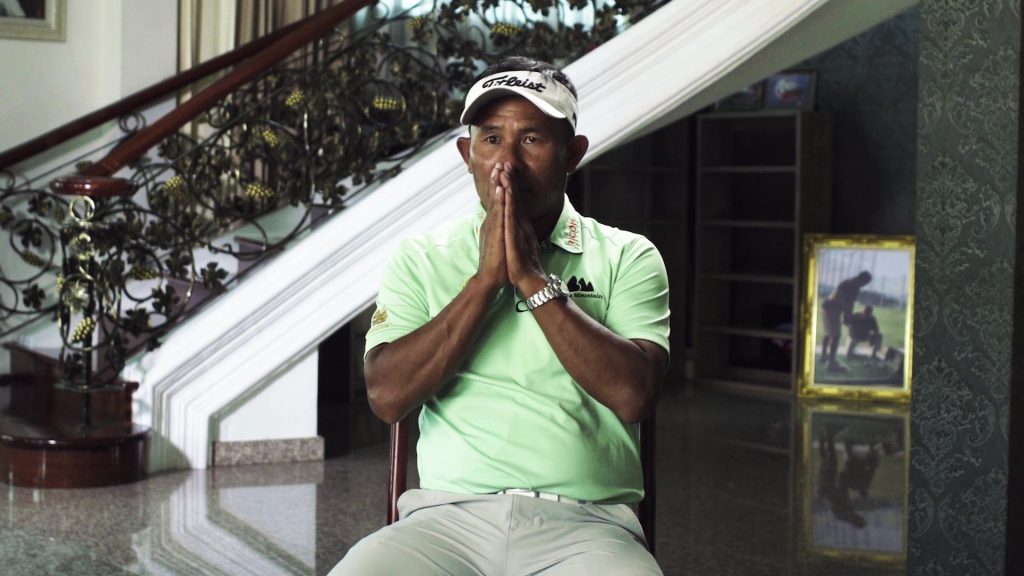
Imagine a golf course consisting of the most iconic and challenging holes on the Asian Tour.
A fictional hybrid-layout that features one of the region’s standout opening holes, one of the finest second holes and goes all the way through to an epic 18th.
A layout that would be the ultimate challenge – where breaking par is a monumental achievement.
Well, just such a virtual course now exists, as an Asian Tour panel of experts has selected the appropriate holes to make up what is the golf course of all golf courses in Asia.
With a par of 70 and length of 7,430 yards, we have appropriately named it The Asian Tour Monster.
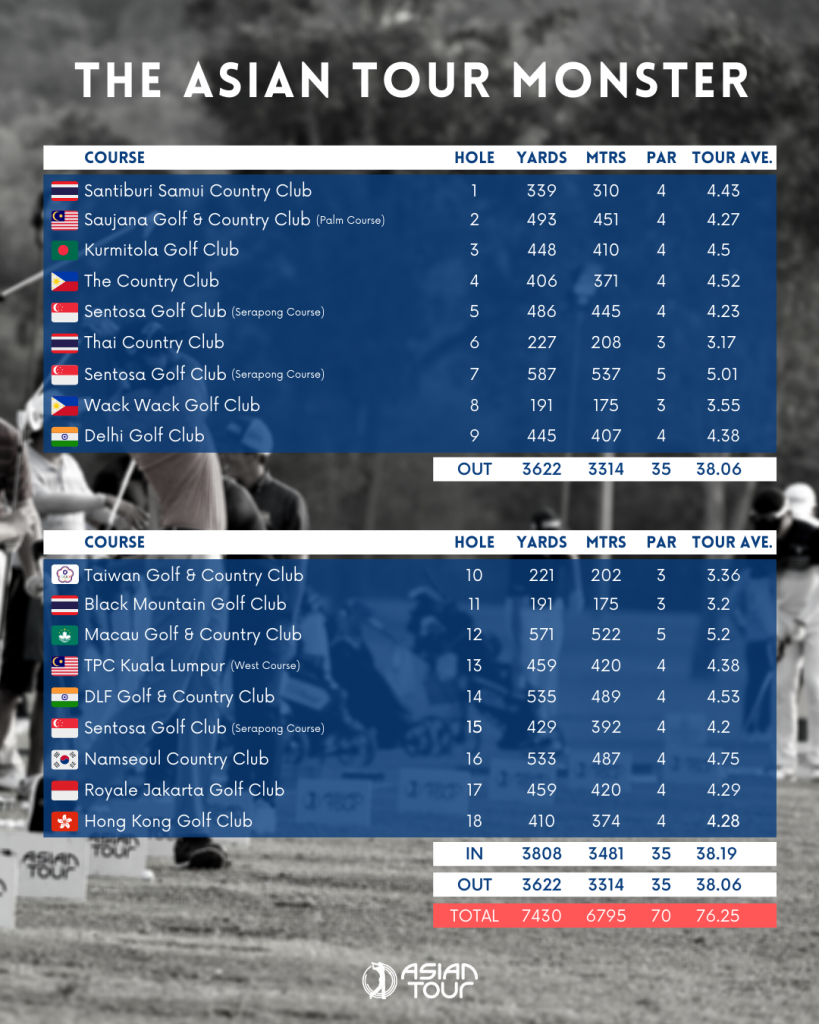
To navigate us through The Asian Tour Monster, we asked players and experts to describe each hole – all of which have played key roles in many of the biggest tournaments on the Asian Tour.
Let us know what your think on our social media channels – Facebook, Instagram, Twitter.
Feature: The Asian Tour Monster – Front nine
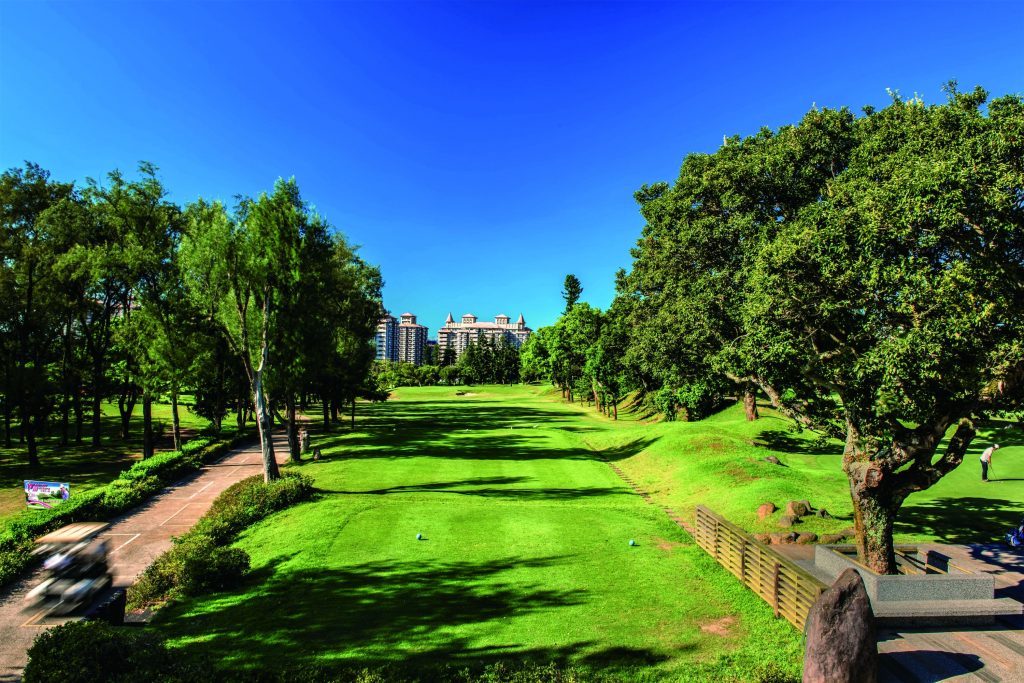
Taiwan Golf and Country Club
Hole 10 – Taiwan Golf and Country Club
Par: Three
Yardage: 221 yards
Hole scoring average: 3.36
Asian Tour event hosted: Mercuries Taiwan Masters
Hsieh Min-nan, who is one of the true legends of golf in Chinese Taipei, describes this hole as one of the most difficult par-three holes in the world. Considering his lofty standards, this hole is definitely worth including as one of the most difficult on the Asian Tour.
It has a smallish green but it looks tiny when you are standing over 220 yards away, with howling winds holding on to a three-iron or hybrid. You will end up in a deep bunker or a penalty area if you are too far to the left, while a gaping bunker guards the right side of this narrow table-top green, adding to the challenge of this beautiful beast of a hole.
Once you reach the green, you face a putting challenge like no other – the greens at Taiwan Golf and Country Club are renowned for confusing even the best of putters. It is worth noting that during the 2018 Mercuries Taiwan Masters, only seven birdies out of 349 attempts were made on this hole.
“In my opinion it’s the hardest par-three green to hit on the Asian Tour, and maybe in the world! I think I’ve only ever hit the green two times. Most of the time I’m playing to miss the green short because that green is so difficult to hold with a four iron. You can get it up and down from the front part of the green. The best shot I have ever seen on that hole was when I watched one of the Taiwan legends a couple years ago pull out driver and hit this high cut to like 20 feet. It was the best shot I’ve ever seen there. Every time I walk off that green with a par I feel like I’ve made birdie!”
Berry Henson: a winner on both the Asian Tour and Asian Development Tour, who was runner-up in the Mercuries Taiwan Masters in 2018.
Black Mountain Golf Club
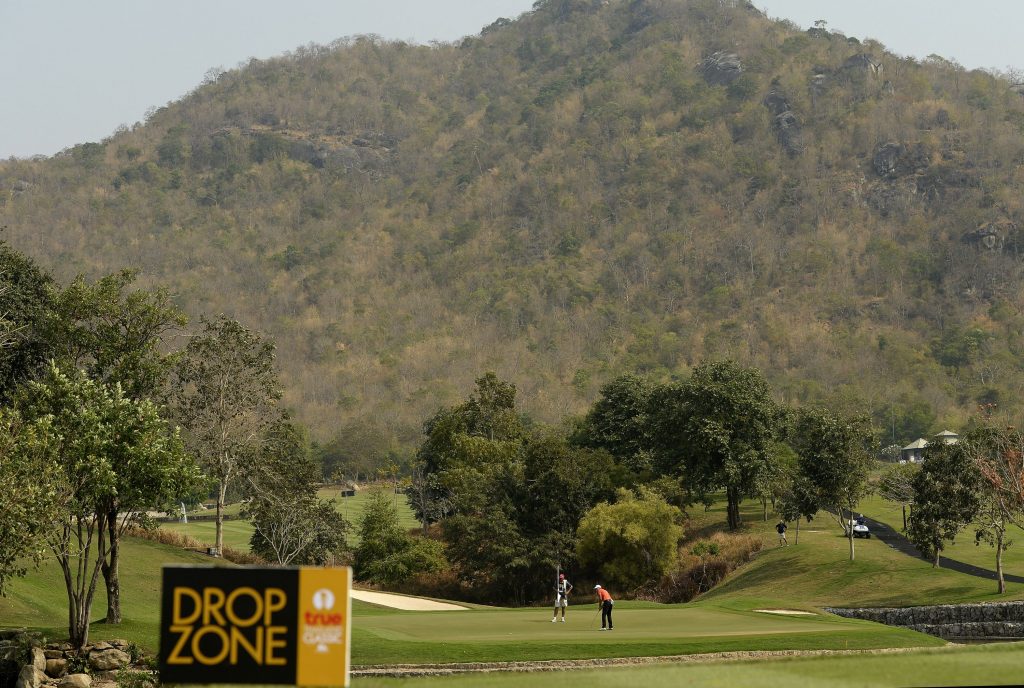
Hole 11 – Black Mountain Golf Club
Par: Three
Yardage: 191 yards
Hole scoring average: 3.2
Asian Tour events hosted: Black Mountain Masters, Thailand Classic, King’s Cup, Royal Trophy
This intimidating downhill par-three is the signature hole at Black Mountain Golf Club. It has a narrow double-tiered green, with two-thirds of it surrounded by water. A wall of trees protects the bail out area on the left, ready to deflect any shots hit in this direction back into the water.
According to two-time Asian Tour winner Rikard Karlberg and resident professional, who is also a Black Mountain club member, he says: “Never think about the water as you can lose shots very easily. You just have to aim and hit it straight to the middle of the green and hope for the best”.
“The 11th hole, the signature hole at Black Mountain, has the Black Mountain hill as its back drop. It is a tough green to hit, especially when the wind is blowing.
There is a feeling the green is an island green – even though it is not.
There is no real bail out on this par three as there is water just right of the green and if you were to pull the shot slightly left then there are over hanging trees and a stream where the ball is most likely to end up. The hole certainly is a challenge and if you walk off with par then most people will be happy.”
Simon Yates: is a two-time winner on the Asian Tour and resident at Black Mountain.
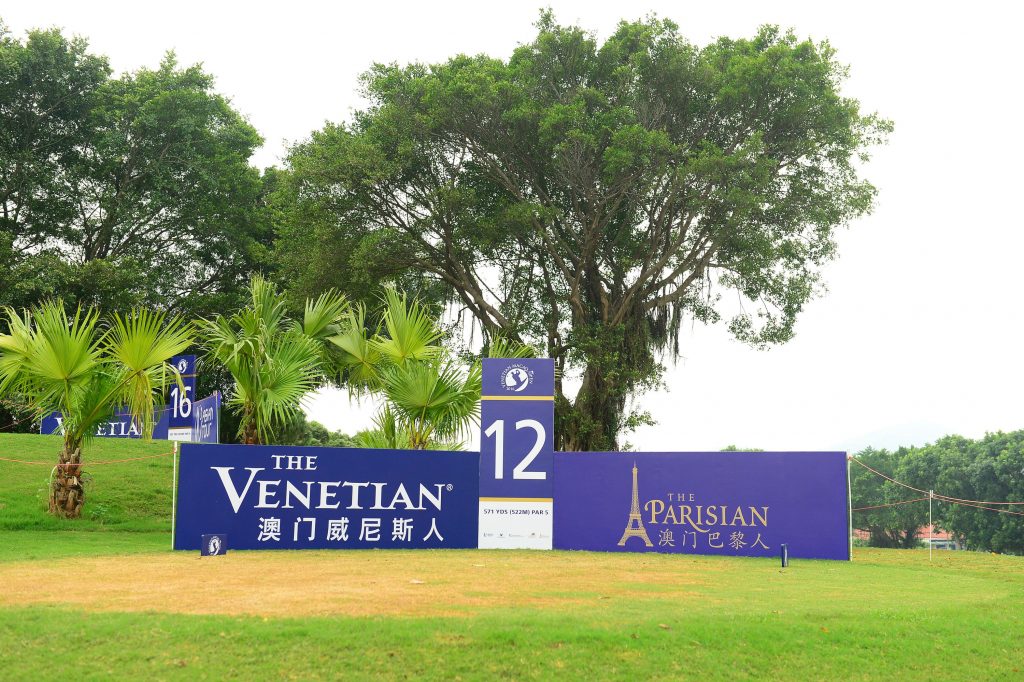
Hole 12 – Macau Golf and Country Club
Par: Five
Yardage: 571 yards
Hole scoring average: 5.2
Asian Tour event hosted: Macau Open
This hole demands astute ball control. Being a mountainous course, it can get very challenging with the wind constantly changing directions due to the many ridges and valleys that intersperse the property.
Firstly, a well struck drive is needed to avoid the troublesome fairway bunkers and to carry the ball over water. An accurate second shot is then required to avoid the bunkers guarding the lay-up area and penalty area on the left of this par five, which stretches and rises across the irregular terrain. This sets you up for a mid to short iron approach shot to a severely sloping two-tier green. Being on the correct tier with your approach shot here is paramount as this green has yielded more than its fair share of four-putts.
India’s Anirban Lahiri birdied this hole in the final round of the 2016 Venetian Macao Open – which was the first of an incredible run of seven birdies to force a play-off with Thailand’s Pavit Tangkamolprasert. Pavit eventually prevailed for this first win on the Asian Tour.
“On that final Sunday [in 2016], I used a driver for my first shot on hole 12. This hole is a long par-five – no one can really reach in two. On the second shot I used a hybrid – you just really need to get it on the fairway. Third shot I had about 100 yards left, so I used a 56-degree wedge which I pitched left of the flag and then made about a six yard putt for birdie. The hole is not as tough as 13, but the green [on hole 12] is very tough, especially if the pin is on the back as there is a huge slope.”
Pavit Tangkamolprasert – a two-time champion on the Asian Tour, and winner of the 2016 Venetian Macao Open.
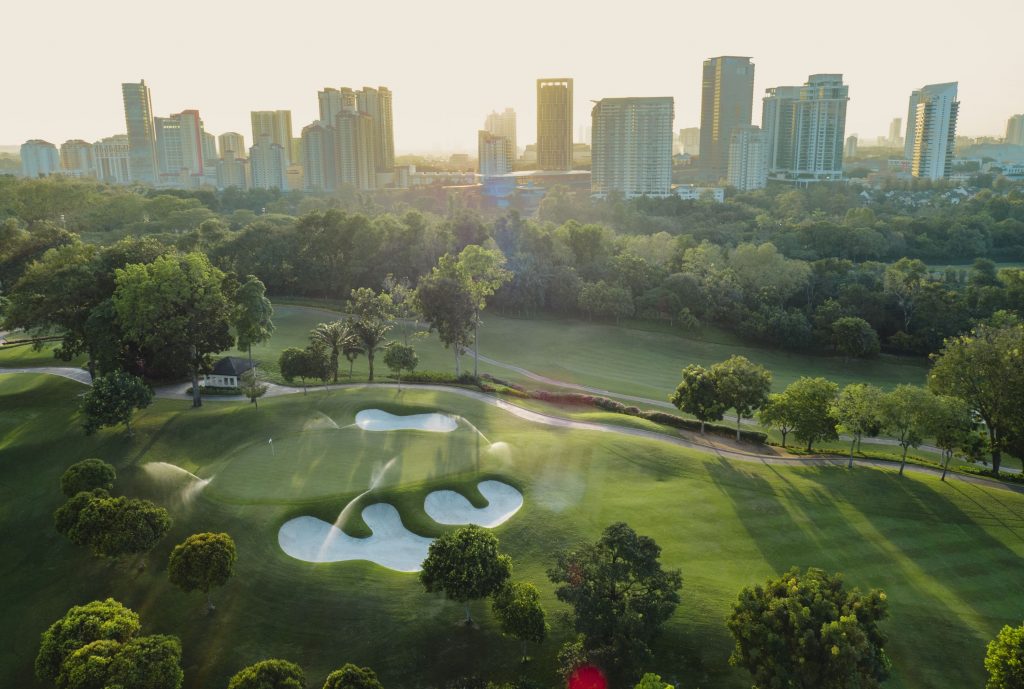
Hole 13 – TPC Kuala Lumpur (West course), Malaysia
Par: Four
Yardage: 459 yards
Hole scoring average: 4.38
Asian Tour event hosted: Malaysian Open
You will need both length and accuracy with your tee shot to play this hole – which is a lengthy uphill hole. A penalty area on the right and thick rough up the left side await wayward drives. A solid mid to long iron is then required to reach the elevated green. The right side of the green is preferred as deep bunkers guard the left side of the long and narrow green. Club selection will be important as the green has three tiers and any mis-clubbed approach shot can result in possibly having to negotiate some lengthy winding putts. Downhill putts will be especially challenging.
“I hit driver off the tee here, making sure I start my ball on the left side of the fairway. On this hole, the one place you don’t want to go is right. I try and hit a little fade as well. Most important is to keep it on the fairway. The toughest part of the hole is the second shot. There is a very high elevation, maybe about seven or eight metres up hill. I normally have a six iron in. I try to hit a draw as, if anything, you want to miss on the right side of that hole. If I walk away with par I will be very happy. So far I have played this hole well in tournaments, with a couple of birdies.”
Danny Chia: a two-time winner on the Asian Tour and four-time champion on the Asian Development Tour.
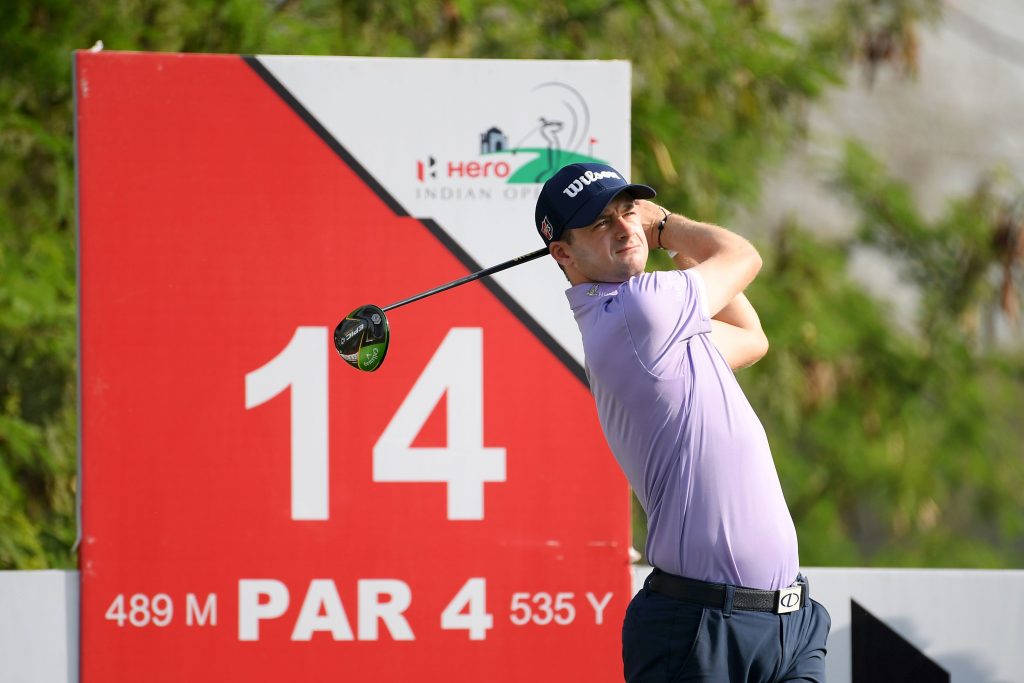
NEW DELHI, INDIA – MARCH 29: David Law of Scotland tees off the 14th hole during round two of the Hero Indian Open at the DLF Golf & Country Club on March 29, 2019 in New Delhi, India. (Photo by Ross Kinnaird/Getty Images)
Hole 14 – DLF Golf and Country Club, India
Par: Four
Yardage: 535 yards
Hole scoring average: 4.53
Asian Tour events hosted: Hero Indian Open, Avantha Masters, Johnnie Walker Classic
The 14th hole at the Gary Player-designed DLF Golf and Country Club is just a ruthless golf hole. Long is an understatement when describing this par-four which demands two massive and precise shots to reach the green. Adding to the challenge is the forced 250-yard carry off the tee over dense scrub that runs down the entire left side. Once you have the green in your sights, you will be faced with a downhill lie and needing at least a long iron to reach an elevated green with steep fall offs on either side.
It is a hole that probably cost American Julian Suri the Hero Indian Open title last year. Suri had a three-shot lead with six holes to play but made a quadruple-bogey eight, after taking six shots to get down from just off the green. He eventually had to settle for a share of fourth place.
“Normally when we play this hole, it is a par-four, otherwise for the club members it is a par-five. My personal view about that hole is that it is the toughest hole on the golf course and one of the hardest in the region. Firstly, for your tee shot you can’t hit a driver, some people do, because it is very narrow and there are some rocks placed beautifully on the right side of the fairway. Then you need to use anything from a rescue to a three-wood to a three iron depending on where your ball ends up, to a green that is a very narrow. You also come in from an angle – the green is basically towards the left side when you are standing in the middle of the fairway. Plus there is a huge swale before the green and on the right hand side of the green. And the green slopes left to right towards the swale. So it is difficult to stop the ball on the green unless you hit a high ball. Even if you try and hit a low shot and run it up you have to hit it way left because the green is all left to right and you have to have a perfect bounce.
If you go into the swale on the right … well the swale is at least 15 feet deep. During the tournament 80% of the golf balls end up there, even though players think their ball is on the green but everything slopes into the swale – where there are a lot of pitch marks. You want to make sure you hit a high lofted second shot onto the green, so it stays on the green. Some people try and take it left of the green but then what happens is it takes a big bounce and goes to the left hand side and you are left with a downhill chip and from there most of the time people chip it over into the swale on the right. Management is very important. A par on that hole is a bonus and you want to make the most of it and if you try and get too smart just try and make a bogey and move onto the next hole. I have never made a birdie there in tournaments, made a double once but normally pars or bogies.”
Jeev Milkha Singh: a two-time Asian Tour Order of Merit champion, and five-time winner on the Asian Tour. He has also claimed four titles in both Europe and Japan.
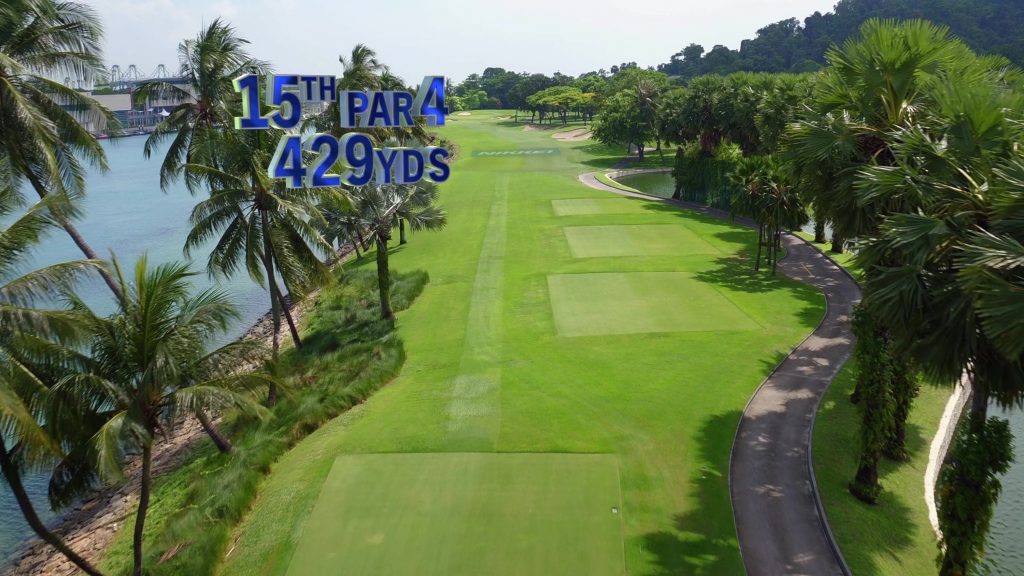
Hole 15 – The Serapong, Sentosa Golf Club, Singapore
Par: Four
Yardage: 429 yards
Hole scoring average: 4.20
Asian Tour event hosted: SMBC Singapore Open
A very intimidating par-four and one that enhances Serapong’s reputation as a true championship layout. The fairway is extremely narrow with a sea channel running all the way down the left side of the hole, where a countless number of balls have found a watery grave. It is also a long par-four that requires full concentration.
“The 15th is a really good hole. Visually intimidating off the tee, it is probably the most difficult tee-shot on Serapong, after the third hole.
I usually aim at the second bunker on the right with a three wood and play a draw. The reason for a draw is that in the worst case if you overdraw it and it ends up in the water you can at least drop the ball up in the fairway and still have a shot at the green. I have seen many players pull it straight left into the sea and have to drop the ball very near from the tee box … it’ll almost always be an automatic double when that happens.
If you are able to hit the fairway, I would say the hole becomes straight forward from there, but I have seen a lot of bail outs to the right.
If you are in the right rough, the second shot becomes tricky as you have to contend with the trees to carry for your approach.
A back left pin is the most difficult pin position on this hole. When the pin is there, we usually just aim for the middle of the green… if not you’d have to contend with the bunker and also water if you go long and left.
The majority of players will a hit fairway wood off this tee, however, there was one round when I played with Phil Mickelson and he pulled out a driver, hit it about 30 yards right of the fairway into the trees, but he was able to hit a really high shot over the trees and get away with par.”
Lam Chih Bing: a winner of 10 titles in the region including one victory on the Asian Tour at the Volvo Masters of Asia in 2008.
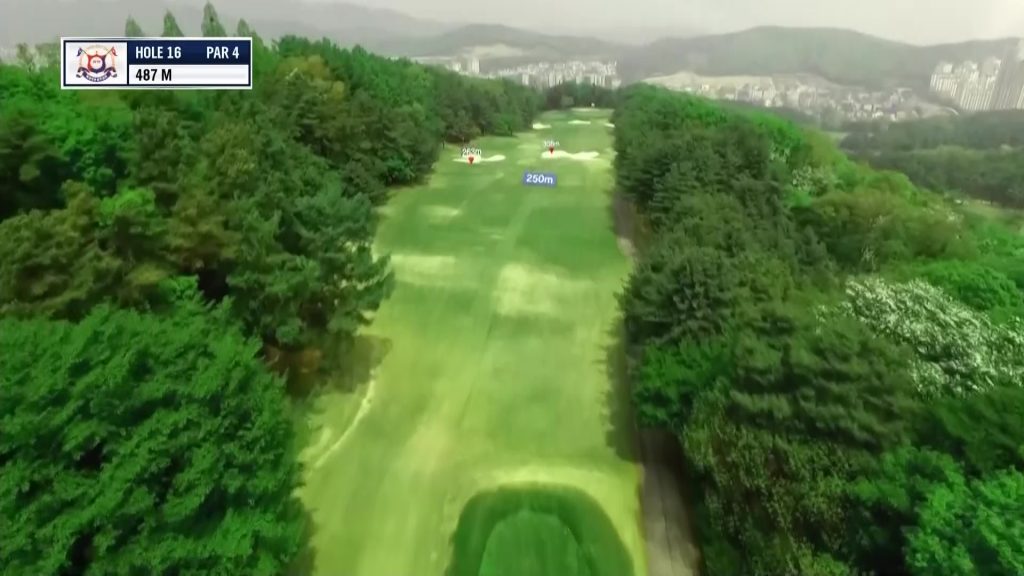
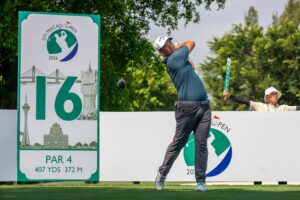
Hole 16 – Namseoul Country Club, Seoul, Korea
Par: Four
Yardage: 533 yards
Hole scoring average: 4.75
Asian Tour event hosted: GS Caltex Maekyung Open
The 16th hole is a straight and long downhill par-four with OB all the way down the right. It requires precision off the tee to a narrow fairway guarded by bunkers on the left and at the end of the landing area. A long iron or hybrid will be needed for your approach shot, however the downhill lie will hinder your efforts at keeping the ball on this green. Bunkers short and over the green are always in play with the OB once again in play down the right.
Prior to the 2017 edition of the GS Caltex Maekyung Open, this hole was played as a par-five for the tournament. After changing to a par-four, it has since become the toughest hole of the tournament for the last three years.
“Nam Seoul’s 16th hole is the hardest hole on the course. On the tee I usually hit five-wood or hybrid depending what club I use for that week. You want to hit something around 260 yards so you are just short of the fairway bunker and not too far from the hole.
I usually have about 200 to 215 for my second depending on how well I strike it. Most of the time I will use a five iron to this green. This hole is so hard because you will have to hit your second shot from a downhill slope, which it makes it so hard to stop the ball on the green, and there are two deep bunkers around the green. This hole is so hard that when I make par on this hole I feel like I made a birdie. One interesting story that I have involves the first round from last year. I had an afternoon tee time and I was playing well and I believe I was leading the tournament at that time, until the 16th hole. I don’t know what happened but I ended up making a quadruple bogey and everything went south from that point…”
Yikeun Chang: winner of the 2019 Yeangder TPC and the 2016 Qualifying School. He was also runner-up at the GS Caltex Maekyung Open in 2018.
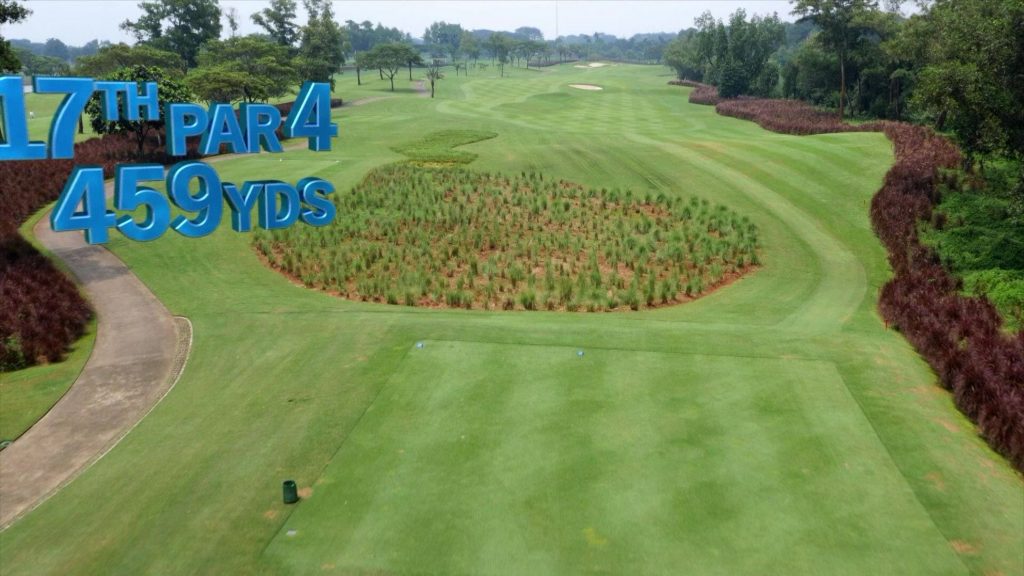
Hole 17 – Royale Jakarta Golf Club, Indonesia
Par: Four
Yardage: 459 yards
Hole scoring average: 4.29
Asian Tour event hosted: BNI Indonesian Masters
The 17th hole is a lengthy par-four at Royale Jakarta Golf Club. To master this challenging hole, you need to execute a well-struck tee shot to a less than generous fairway. A penalty area that runs all the way down the right and thick rough down the left will definitely test your nerves. And depending on the wind direction and quality of your tee shot, the approach shot can be with anything from a short-iron to a long-iron, to an undulating green that is guarded by a bunker on the left and water short and to the right of the green.
“That is a great hole, it is definitely one of the most challenging holes, especially for the 17th hole of a golf tournament. For the longest time, I have always played that hole hitting three wood over the little bunker in the middle there because to me it’s the widest part of that fairway, although it is not very wide to begin with. Once you get up to 290 to 300 yards that’s where the fairway gets narrower. Typically the rough has always been thick at Royale Jakarta but the last few years it hasn’t been so, so it’s been manageable. Teddy [Teddy Harmidy his friend, and caddie at the 2019 BNI Indonesian Masters] had me try and hit driver there when we were preparing for the tournament, a few months before. He said if I am going to caddie for you I want you to try this. So I did that and hit it out there and once I saw where my ball ended up, even if it wasn’t in the fairway, I realized I am only hitting a nine iron at most into the green. Normally with a three wood off the tee I am hitting maybe a six, seven or eight iron into the green. So it’s been an ongoing debate, what’s more important? Hitting in the fairway or long. So I started to change my mind set. And I started to realize I do hit it quite far so I should take advantage of that on some of these longer holes, even if you are going to be in the rough. The green slopes left to right and so anything left of that green is dead. Where they put the pins there is quite challenging. I actually bogeyed it the first two days last year and birdied it the third round and parred on the last day. You need to hit a good second shot with that green. There are not many flat spots on the green, maybe one. A par on the hole is very good.”
Danny Masrin: a seven-time winner on the PGA Tour of Indonesia, who finished equal fifth in the 2019 BNI Indonesian Masters.
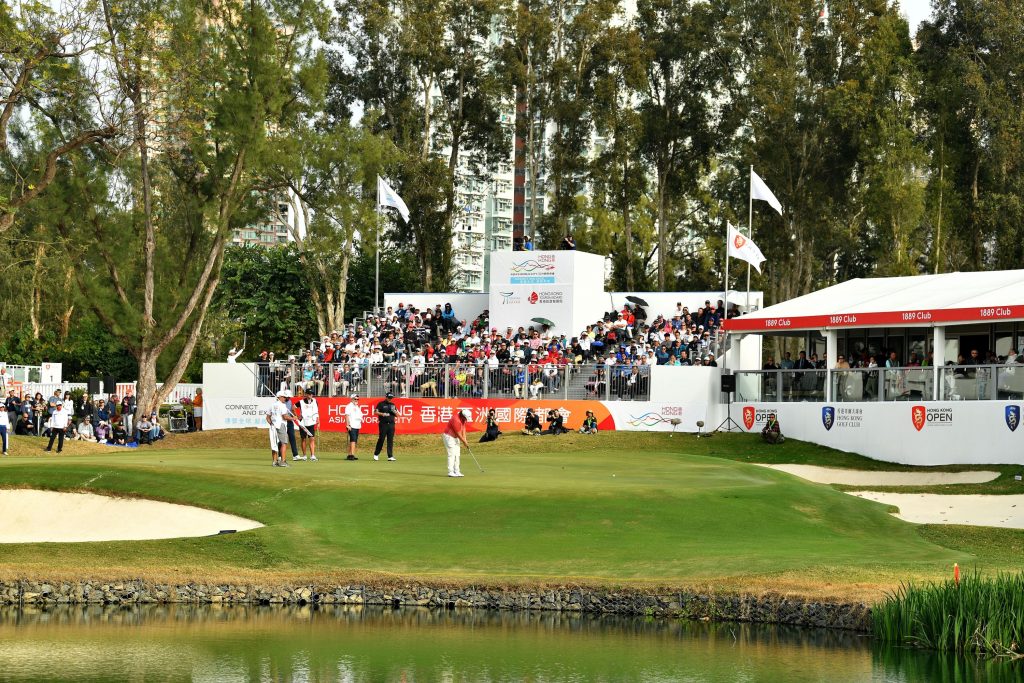
HONG KONG- The Hong Kong Open at the Fanling Golf Club, Fanling, Hong Kong, the Asian Tour USD$ 1 million event is the season opener. Picture by Paul Lakatos / Asian Tour.
Hole 18 – Composite Course, Hong Kong Golf Club
Par: Four
Yardage: 410 yards
Hole scoring average: 4.281
Asian Tour events hosted: Hong Kong Open, Alfred Dunhill Masters, Johnnie Walker Classic
Known as “The Ultimate”, this is the closing hole on the Eden Course at the Hong Kong Golf Club and also the final hole of the Composite Course – a famous layout consisting of the best holes of the Eden and New Courses, specifically configured for the Hong Kong Open.
It is a hole deeply ingrained in the rich history of Asian golf, and viewed as one of the great amphitheatres of tournament golf globally.
Though not a long par-four, by modern-day standards, it demands the utmost respect, and requires the fullest care and consideration.
The hole’s statistics at this year’s Hong Kong Open, tell a familiar story: measuring 410 yards, it was ranked the second hardest with an average score of 4.281; there were just 40 birdies, 215 pars, 101 bogeys, 19 double-bogeys and two “others”.
Off the tee, most players will favour a long iron to the widest part of the fairway on the left. However, if you are brave enough, you can choose to go with a three-wood or driver and attempt to thread the ball through the narrowest part of the fairway to set up an easier approach shot. With trees and OB threatening on the left and a dense cluster of trees and bunker to the right of the fairway, it is risk verses reward.
Having chosen your strategy and, hopefully, successfully executed it, it is time to take on the green. Although the elevated green is large, it is severely sloped from back to front, so it is always preferred to be putting from below the hole. There is a large lake in front of the green with bunkers the front and right. And any shot missed left will leave you in gnarly rough with a slim chance to get up and down.
It has been the setting for a wealth of gripping and well-documented drama over the decades.
Who can ever forget the heroics of Lin Wen-tang’s memorable play-off victory over Francesco Molinari and Rory McIlroy at the Hong Kong Open in 2008. Lin produced one of the finest shots ever seen on the 18th: after hooking his tee shot, he played a spectacular approach out of trees, over water, and a bunker, to within inches of the pin.
And, in 2011, McIlroy recorded his maiden triumph at the Hong Kong Open in remarkable fashion when he holed out from a greenside bunker at the last to finish two shots clear of France’s Gregory Havret.
“I usually hit three-wood these days, try to hit a fade off the trees on the left but usually end up in the trees! At the Hong Kong Open in 1996, I hit a two-iron off the tee and then an eight-iron to about 12-feet. I made the birdie putt to finish fourth.
In the 1996 Alfred Dunhill Masters I holed a bunker shot from the right bunker for birdie to finish T11, I think. There were massive crowds that year. Langer, Els, Ballesteros and Monty were all playing. There must have been 20,000 people there that day.”
Dominique Boulet: a former Asian Tour player and Hong Kong number one. Now a highly respected television commentator and long-time member of the Hong Kong Golf Club.

Recent Comments